Key Highlights
- Incident:A liquefied gas carrier caught fire after striking a naval mine in the Strait of Hormuz.
- Response:Emergency maritime units were dispatched to assist with firefighting and crew safety.
- Implications:The incident raises security concerns for global energy transit routes.
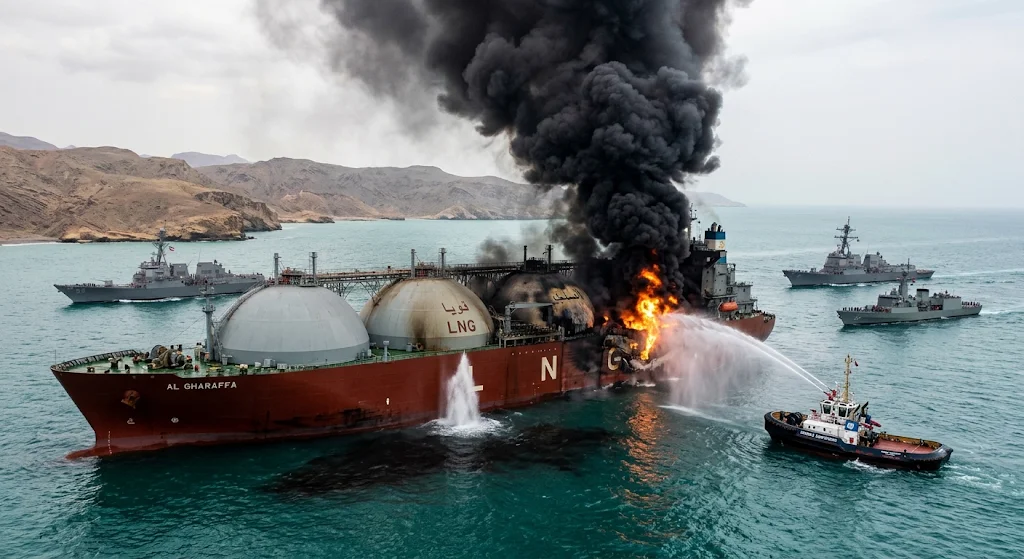
DUBAI, United Arab Emirates — A liquefied gas carrier caught fire in the Strait of Hormuz after striking a naval mine, triggering an emergency maritime response and raising fresh security concerns along one of the world’s most vital energy transit routes.
Maritime security agencies reported that the explosion occurred as the commercial vessel was transiting the strategic waterway, sparking a blaze onboard and prompting an immediate distress signal from the crew. Nearby naval vessels and regional coast guard units were dispatched to the area to assist with firefighting efforts, assess structural damage to the hull, and ensure the safety of the crew members aboard.
Initial assessments indicate that the blast caused localized damage to the vessel, though emergency teams worked rapidly to contain the fire and prevent it from reaching the ship's pressurized cargo tanks. No immediate fatalities were confirmed, and maritime authorities advised commercial shipping in the vicinity to exercise extreme caution and maintain a safe distance from the incident zone.
The Strait of Hormuz, a narrow maritime corridor connecting the Persian Gulf to the Gulf of Oman and the Arabian Sea, handles roughly a fifth of global seaborne oil and liquefied natural gas trade. Any disruption or security threat in the channel carries immediate implications for international shipping lanes, marine insurance rates, and global energy markets.
Naval forces operating in the region have launched an investigation to determine the origin of the mine and conduct sweep operations along adjacent shipping lanes to ensure no additional explosive hazards remain in the waterway.
Salvage tugboats and specialized marine firefighting crews have since been mobilized to stabilize the damaged carrier and prepare it for towing to a nearby port for comprehensive structural repairs. Port authorities and environmental monitoring teams are also maintaining close surveillance around the vessel to ensure there is no fuel oil leakage or secondary safety hazard during the recovery operation.
Meanwhile, international maritime security coalitions and shipping industry associations issued updated transit advisories urging commercial operators to heighten bridge watch protocols and maintain continuous communication with regional naval command centers. Energy market analysts noted that while broader tanker traffic through the strait continued to move under heightened escort and monitoring, underwriters are closely evaluating potential war-risk premium adjustments for vessels operating in the Gulf.
Published by Banx Network. This article is part of the Banx decentralized media programme, powered by the BXE token on the XRP Ledger.