
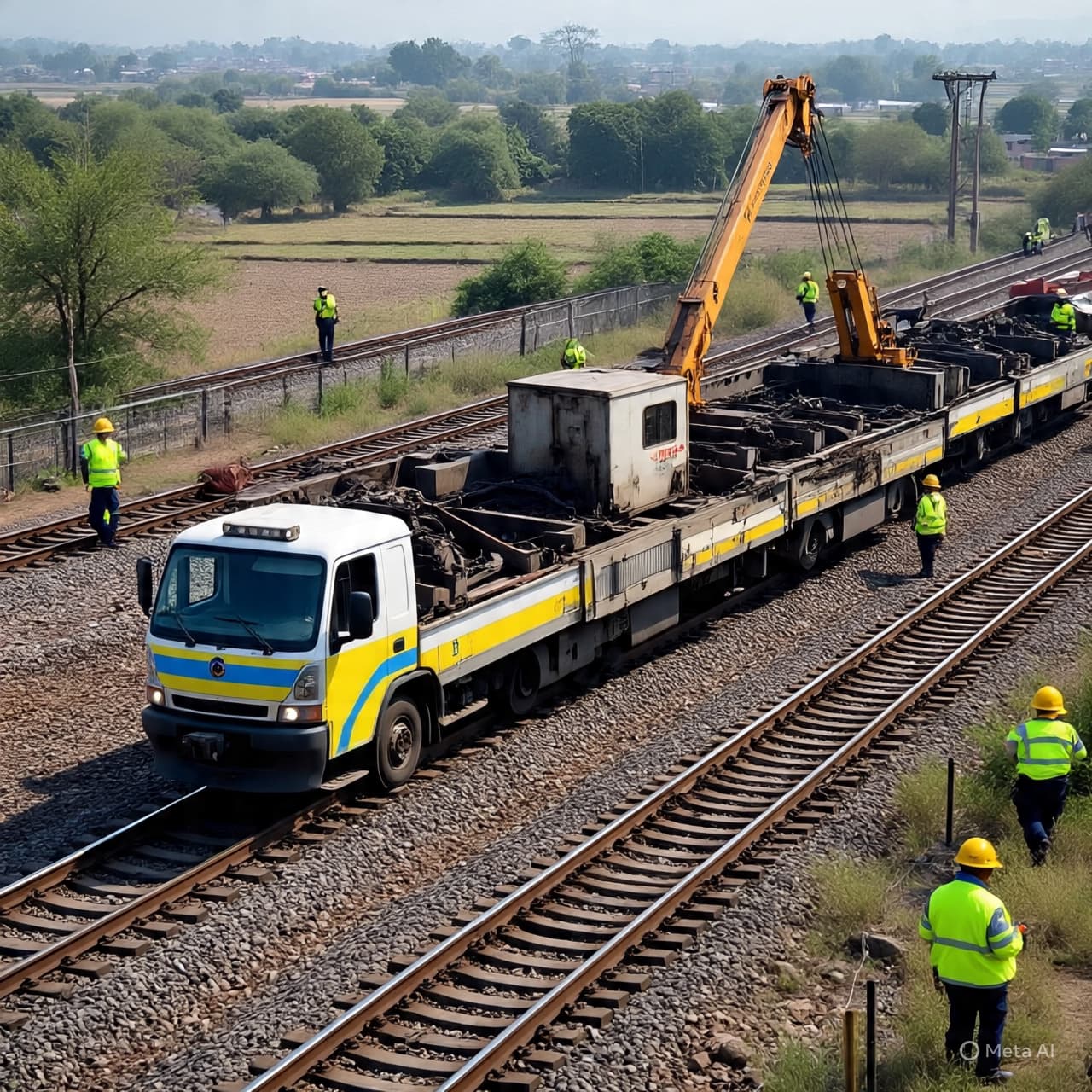
Key Highlights
- Incident:A train derailment in Oaxaca, Mexico, resulted in at least 13 fatalities and nearly 100 injuries.
- Political Response:Opposition parties are calling for investigations into safety and oversight failures.
- Ongoing Investigation:President Claudia Sheinbaum promises a thorough inquiry into the incident's causes.
On a quiet stretch of rail in Oaxaca, southern Mexico, a journey intended to link communities and commerce across the Isthmus of Tehuantepec turned tragic in late December, leaving at least 13 people dead and nearly 100 injured. The derailment occurred on the Interoceanic Train, a passenger service that is part of a sprawling ambition to build a modern transport corridor between the Pacific and Gulf coasts — a project once framed as a national boost for trade and development.
The tragedy has rippled beyond immediate grief and rescue efforts, inspiring renewed debate about infrastructure oversight, project design, and operation. For some critics — particularly opposition political figures — the derailment has revived long-standing allegations of corruption and lax regulation linked to major rail projects championed in recent years. These projects, including the Interoceanic Corridor and its rail component, were initiated under former President Andrés Manuel López Obrador and have been at the center of questions about governance, transparency, and quality control.
The Interoceanic Train was inaugurated in 2023 as part of the broader Interoceanic Corridor of the Isthmus of Tehuantepec, envisioned as an alternative trade route that could help diversify Mexico’s freight and passenger transport and rival options like the Panama Canal. The line is overseen by the Mexican Navy, and its construction and management have periodically drawn scrutiny over costs, procurement practices, and the extent of military involvement in civilian infrastructure.
Following the fatal derailment, opposition politicians were swift to voice their concerns. Leaders from parties such as the PRI and PAN have pointed to past allegations — including controversies around related national rail projects such as the Maya Train — arguing that weak oversight and alleged corruption may have contributed to safety lapses. The PRI’s president called for independent audits and thorough inquiries, citing earlier instances where construction irregularities and cost overruns raised red flags. Meanwhile, the PAN has framed the derailment as symptomatic of broader governance failures, accusing the ruling party of neglecting proper controls.
On the other side, Mexico’s current president, Claudia Sheinbaum, has vowed a comprehensive investigation into the cause of the derailment, emphasizing support for victims’ families and coordination among federal agencies. Officials have underscored that the immediate priority is rescue and medical care, while investigators work to determine the technical or operational factors that led to the train leaving the tracks near the town of Nizanda.
The tragedy also resonated with ordinary passengers and local residents, many of whom are still processing the loss and the sudden disruption to a line intended to enhance connectivity. For them, the derailment is not just a statistic but a painful reminder of how infrastructure — meant to bind people and prosperity — can, in rare and catastrophic moments, fail those it is supposed to serve.
While the investigation continues and political arguments unfold, families and communities carry the immediate burden of loss and recovery. In this way, the derailment has become a somber inflection point in Mexico’s broader story of ambitious transport expansion, demanding reflection not only on how to build, but how to ensure that progress is safe, transparent, and accountable for all.
Published by Banx Network. This article is part of the Banx decentralized media programme, powered by the BXE token on the XRP Ledger.



