In the pale light before dawn, borders are not lines but quiet tensions—ridges of earth where history lingers like dust. Along the mountainous seam between Afghanistan and Pakistan, winter wind moves through valleys that have known empires, insurgencies, and the long echo of unfinished wars. It is here, in terrain both beautiful and burdened, that new statements have begun to settle over old disputes.
After Pakistani airstrikes inside Afghanistan targeting suspected militants, the United States said it supports Pakistan’s “right to defend itself” against threats posed by the Tehrik-i-Taliban Pakistan (TTP). The remarks came amid renewed friction between Islamabad and the Taliban authorities in Kabul, who have denied harboring militants and condemned cross-border attacks as violations of sovereignty.
For Pakistan, the strikes reflect a familiar calculus: a belief that militant networks operating from Afghan soil have carried out or planned attacks across the border. Islamabad has long argued that the TTP—distinct from but historically aligned with the Afghan Taliban—has used remote provinces as staging grounds. In recent months, Pakistani officials have pointed to a rise in violence, including ambushes and bombings targeting security forces, as justification for stronger action.
Across the border, the Taliban government has rejected the accusation. Since returning to power in 2021, it has insisted that Afghan territory will not be used against other nations, even as regional observers and United Nations reporting have noted the continued presence of various armed groups within the country. Kabul’s response to the latest strikes was swift and sharp, describing them as an affront to Afghanistan’s sovereignty and a threat to fragile stability.
Washington’s position, expressed through State Department remarks, reflects a balancing act shaped by years of entanglement in the region. The United States, which withdrew its forces from Afghanistan in 2021, has maintained limited diplomatic engagement with the Taliban authorities while emphasizing counterterrorism concerns. Its endorsement of Pakistan’s right to self-defense underscores longstanding security ties with Islamabad, even as broader U.S.–Pakistan relations have evolved since the end of the Afghan war.
The mountains do not move when governments speak, but the lives beneath them often do. Border villages have seen displacement before; the Durand Line, drawn in the 19th century, remains contested in sentiment if not in practice. Military exchanges, even when brief, carry the risk of escalation in places where allegiance and identity do not always follow cartography.
Analysts note that the tension between Pakistan and the Taliban government has been building, particularly over the TTP’s operational freedom. Efforts at negotiation in recent years faltered, and ceasefires collapsed. Each cross-border strike sharpens a dilemma: how to contain militant violence without igniting broader conflict between neighboring states whose histories are tightly intertwined.
As statements circulate through diplomatic channels and headlines, the air over the frontier returns to its stillness. Yet the question lingers in the valleys—how security is defined, and by whom, when sovereignty and survival appear to pull in different directions. For now, Washington’s words have aligned with Islamabad’s stance, even as Kabul holds firm to its own. The terrain remains unchanged; the political weather, less so.
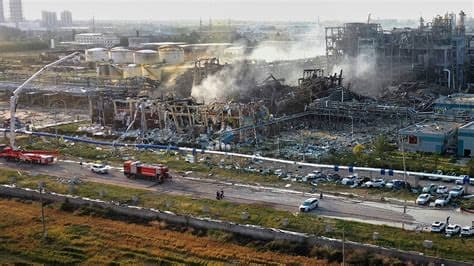
AI Image Disclaimer
Illustrations were created using AI tools and are not real photographs.
Sources
U.S. Department of State
Reuters
Al Jazeera
Associated Press
United Nations Security Council reports
Published by Banx Network. This article is part of the Banx decentralized media programme, powered by the BXE token on the XRP Ledger.