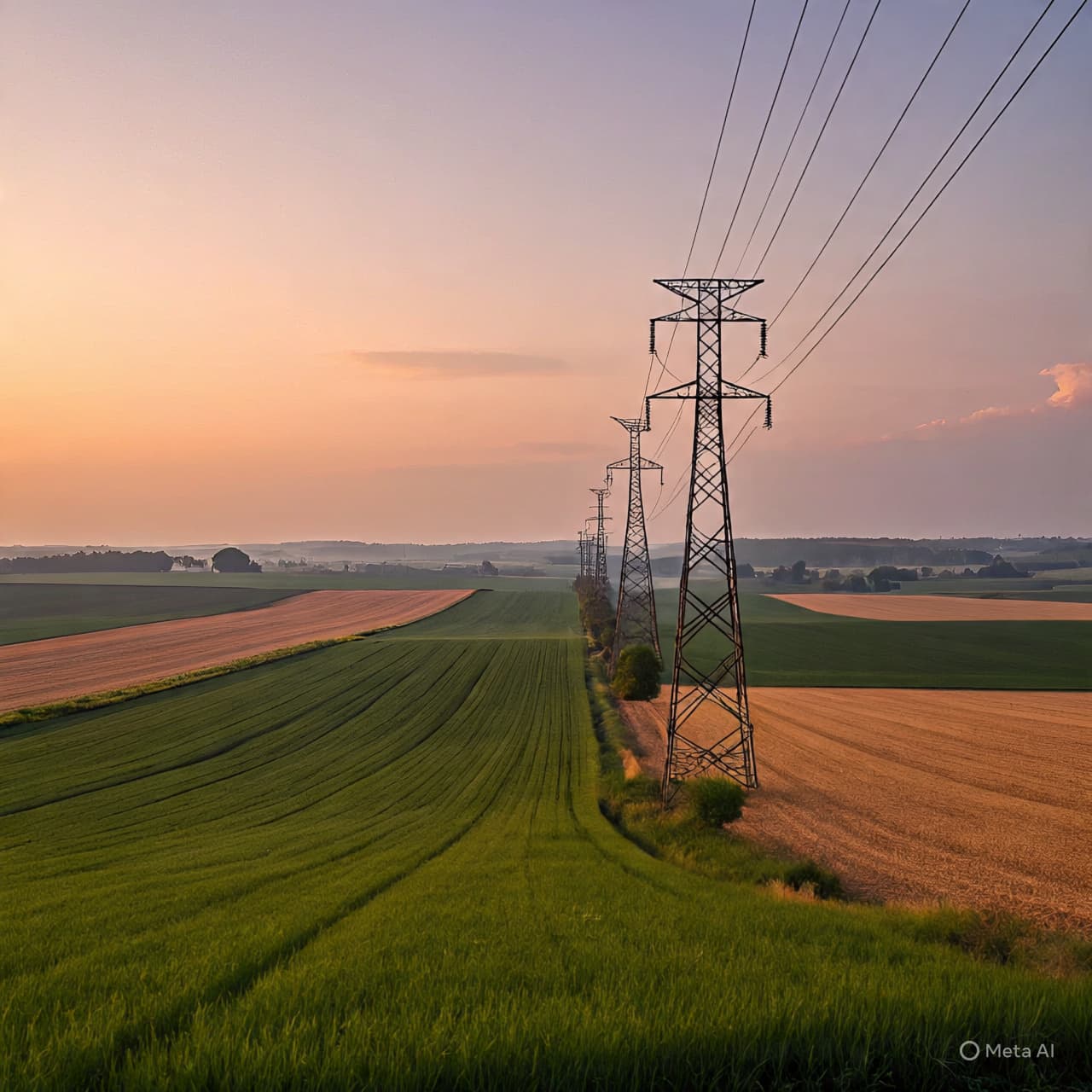
At dusk, the transmission lines stride across the hills like quiet sentinels, their cables catching the last light before fading into silhouette. Beneath them, paddocks settle into evening stillness, and farmhouses glow with the hum of appliances powered from distant rivers and wind-carved ridgelines. Electricity moves invisibly, but its pathways are deliberate, mapped across decades. Now, those pathways are under renewed negotiation.
New Zealand’s national grid operator, Transpower, says it needs a “fit for purpose” overhaul of the Public Works Act 1981 to expand the country’s electricity transmission system at the pace the energy transition demands.
The call comes as demand forecasts point upward. Electrification of transport and industry, population growth in certain regions, and the gradual shift away from fossil fuels are placing new emphasis on grid capacity. Wind farms rise in exposed landscapes; solar arrays spread across flatlands; geothermal stations pulse steadily beneath the earth. But generation is only half the story. Power must travel — often over long distances — to reach homes, factories, and charging stations.
The Public Works Act, which governs how land can be acquired for infrastructure projects, was written in a different era. Transpower argues that while the law provides essential protections for property owners and communities, its processes can be lengthy and complex when applied to modern, large-scale transmission upgrades. In some cases, negotiations for easements or land access can stretch for years, slowing projects intended to strengthen energy resilience.
Executives have emphasized that the request is not about bypassing consultation but about clarity and efficiency. Transmission corridors frequently cross private farmland, conservation areas, and peri-urban developments. Each route requires environmental assessments, iwi engagement, and detailed design work. In a system where one delayed segment can stall an entire upgrade, time becomes a tangible constraint.
The broader policy context is one of ambition. Successive governments have set targets to reduce emissions and increase renewable electricity generation. Meeting those goals will require not only new generation projects but reinforcement of substations, additional high-voltage lines, and in some regions, entirely new corridors.
Energy analysts note that transmission infrastructure is inherently long-term. Lines built today may carry power for 50 years or more. Decisions made under the current legislative framework will shape the physical and economic landscape well into mid-century.
For landowners, however, the issue is immediate and personal. Transmission towers alter horizons; easements affect land use and property values. The Public Works Act exists precisely to balance public benefit with private rights. Any reform would need to preserve that balance while addressing the urgency of national energy needs.
Government ministers have acknowledged the pressures facing infrastructure providers and indicated that reviews of planning and land acquisition laws are under consideration. Whether those reviews result in targeted amendments or broader reform remains to be seen.
In the meantime, the wires continue their quiet work, carrying current from lake to suburb, from turbine to workshop. They are physical expressions of collective intent — to power homes, to fuel industry, to light winter evenings.
As the country looks toward a more electrified future, the conversation turns to the laws that make such movement possible. The question is not whether the grid must expand, but how the path forward can be shaped — carefully, deliberately — so that the lines drawn across maps remain steady threads of connection rather than lines of division.
AI Image Disclaimer Visuals are AI-generated and serve as conceptual representations.
Sources Transpower Ministry of Business, Innovation and Employment New Zealand Infrastructure Commission Parliament of New Zealand
نُشر بواسطة Banx Network. هذا المقال جزء من برنامج الوسائط اللامركزية من Banx، مدعومًا برمز BXE على شبكة XRP Ledger.