There are moments in astronomy when discovery does not arrive with an explosion but with a pattern. A quiet alignment. A structure that had always been there, patiently waiting for someone to notice how the pieces fit together.
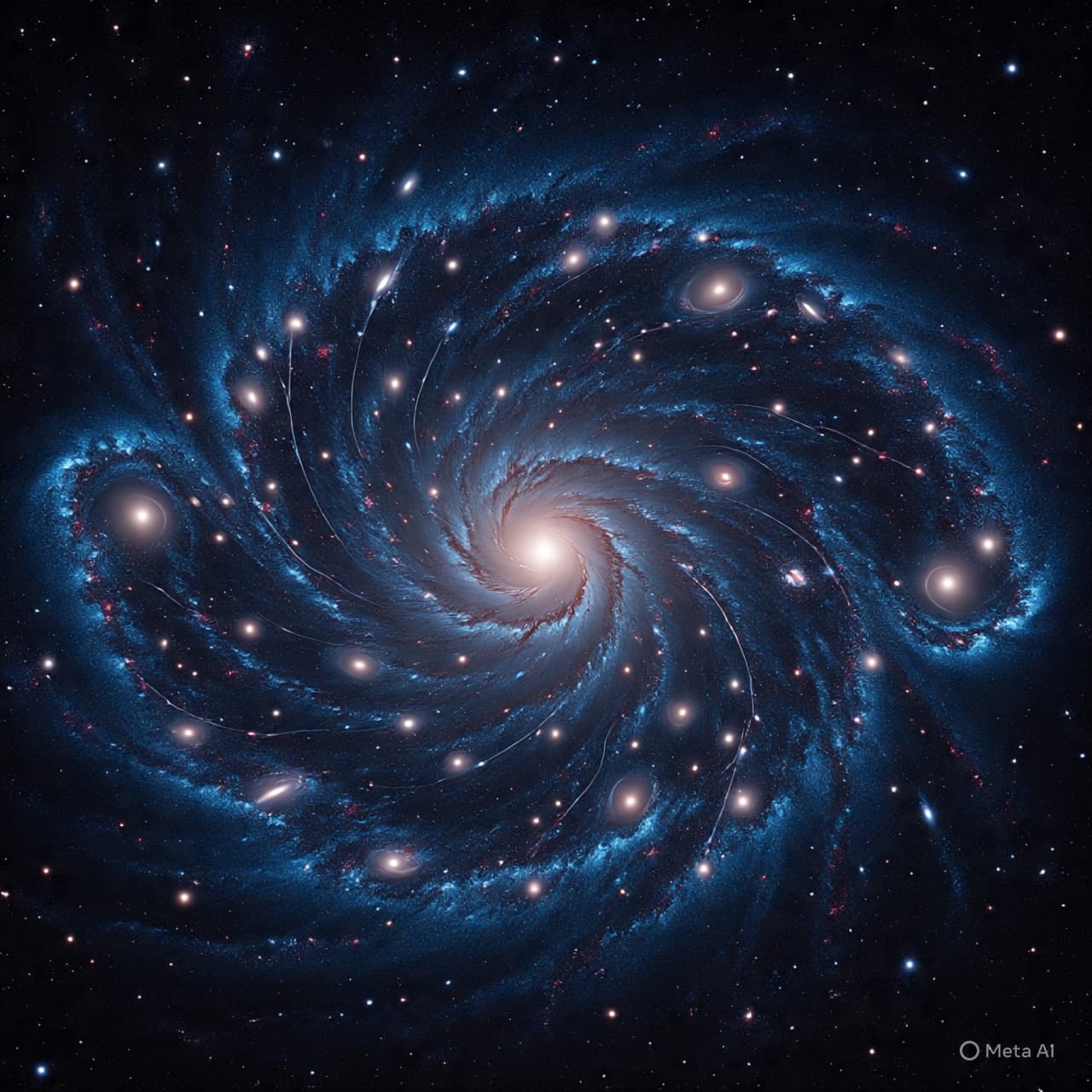
Across the enormous scale of the universe, galaxies rarely drift alone. Instead, they gather into filaments, clusters, and walls that together form what scientists often call the cosmic web—a vast architecture woven from gravity and time. Now, astronomers say our own galaxy may sit within a newly recognized piece of that structure: a giant, sheet-like formation stretching across the local universe.
The Milky Way, it seems, is not simply part of a random scattering of galaxies. Rather, it may lie within a large cosmic sheet, a flattened arrangement of galaxies extending through our region of space.
To understand this discovery, it helps to imagine the universe not as an empty ocean with islands scattered randomly, but more like a three-dimensional map of filaments and surfaces. On the largest scales, gravity gradually pulls matter into patterns resembling threads, sheets, and clusters. Galaxies form along these structures, tracing the invisible influence of dark matter.
Astronomers studying the positions and motions of nearby galaxies recently identified evidence for a vast planar structure surrounding the Milky Way and neighboring systems. This sheet includes galaxies belonging to the Local Group, the modest cluster of galaxies that contains our own Milky Way, the Andromeda galaxy, and dozens of smaller companions.
What surprised researchers was how neatly many of these galaxies appear to lie along the same broad surface, rather than being distributed randomly in space. The arrangement suggests that our galaxy’s neighborhood may be part of a larger cosmic sheet embedded in the cosmic web.
Such structures are not unusual on the grand scale of the universe. Astronomers have long observed immense walls of galaxies—such as the Sloan Great Wall—that stretch hundreds of millions of light-years across space. But identifying a similar structure close to home provides a new perspective on the Milky Way’s cosmic environment.
The finding also helps explain certain long-standing puzzles about how nearby galaxies move and interact. If many galaxies lie along a shared cosmic surface, their gravitational interactions and trajectories may follow patterns shaped by that underlying structure.
Mapping these patterns requires immense observational data. Astronomers rely on surveys that measure the positions, distances, and velocities of galaxies, allowing them to reconstruct three-dimensional maps of the local universe. With increasingly precise measurements, subtle alignments that once appeared random can now be recognized as parts of larger structures.
In this way, astronomy often advances not by seeing new objects, but by recognizing new relationships among familiar ones. Galaxies that were once thought to drift independently can reveal themselves as neighbors on the same vast cosmic surface.
For researchers, the discovery offers another clue about how the universe evolved from the smooth distribution of matter after the Big Bang into the richly structured cosmos seen today. The cosmic web—its filaments, sheets, and clusters—represents the long work of gravity sculpting matter over billions of years.
And the Milky Way, it seems, may rest along one of those quiet surfaces.
Astronomers emphasize that research into the structure is ongoing. Future galaxy surveys and improved measurements will help refine the map of our cosmic surroundings and determine how extensive the sheet truly is.
For now, the discovery adds a gentle layer of perspective: our galaxy, along with its neighbors, may be part of a much larger page in the universe’s unfolding architecture.
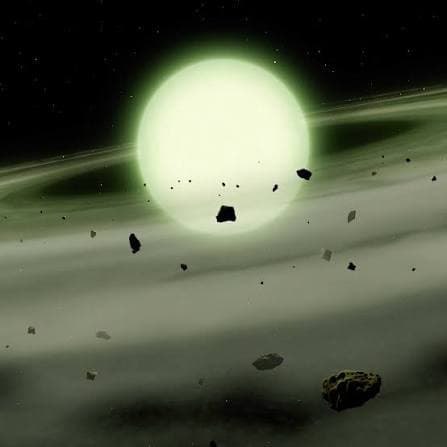
AI Image Disclaimer Graphics are AI-generated and intended for representation, not reality.
Source Check (Credible Media) Credible coverage of the giant cosmic sheet discovered around the Milky Way does exist. Examples include:
Space.com Live Science ScienceAlert Universe Today New Scientist
Published by Banx Network. This article is part of the Banx decentralized media programme, powered by the BXE token on the XRP Ledger.