Sometimes the universe speaks in whispers—subtle signals hidden in distant starlight. Other times, it sends something far more dramatic: a beam so powerful and persistent that astronomers pause in quiet astonishment, wondering what extraordinary event could produce it.
Recently, researchers studying distant galaxies confirmed the presence of an immense cosmic signal described as a “mega-laser.” The phenomenon, detected from roughly eight billion light-years away, appears to be an extremely powerful natural laser-like emission traveling across intergalactic space.
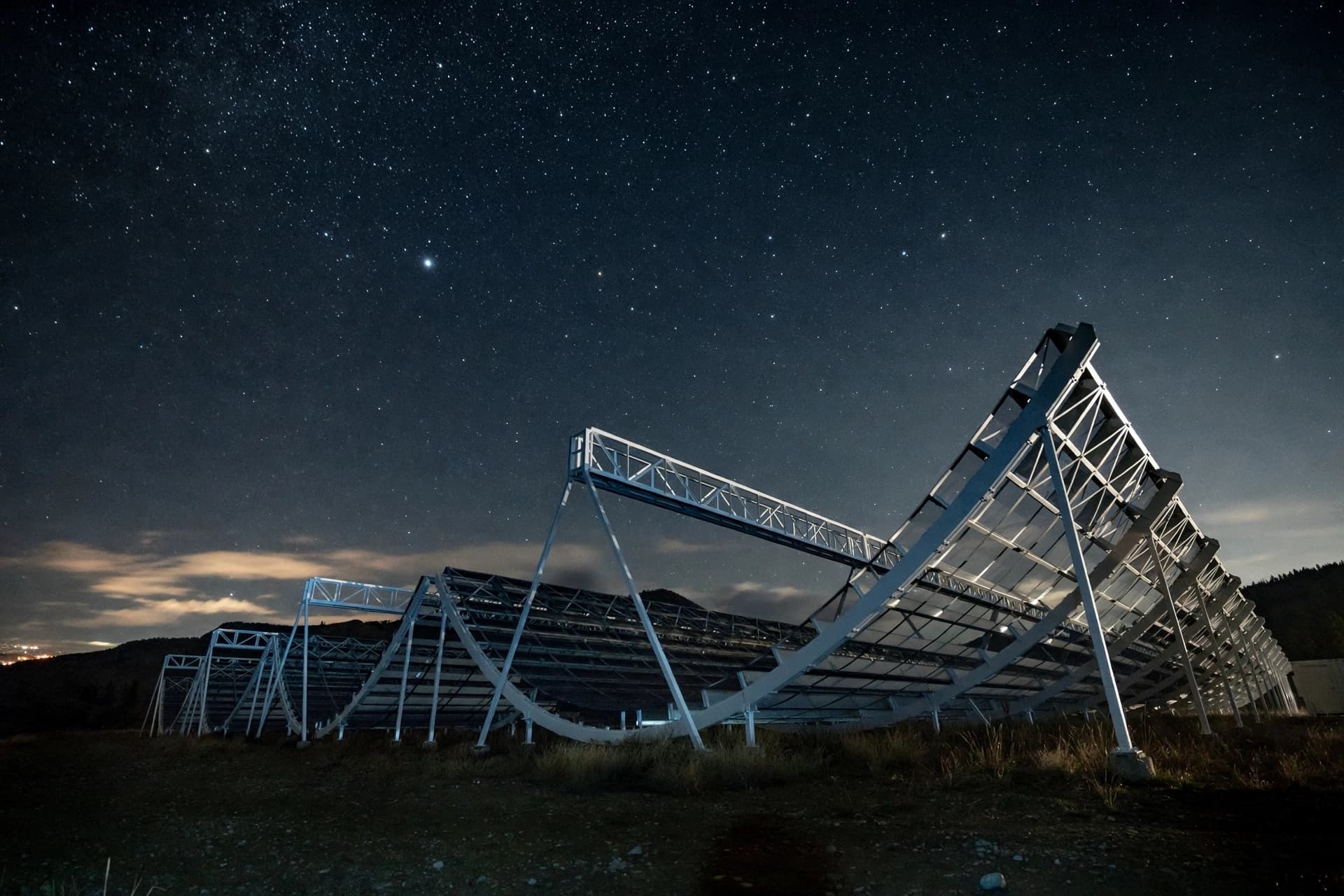
The discovery was made using observations from advanced radio telescopes that scan the cosmos for unusual bursts and patterns of energy. What scientists found was not a brief flash or transient signal, but a beam that seems remarkably steady—refusing to fade even after careful monitoring.
In astronomy, such emissions are known as signals. Unlike familiar lasers that emit visible light, masers produce intense beams of microwave radiation. They occur naturally when specific conditions allow molecules in space to amplify radiation in a way similar to laboratory lasers.
But this newly confirmed signal appears to belong to a far rarer category often called a megamaser—a version millions of times more powerful than typical cosmic masers. These phenomena are usually linked to highly energetic environments around distant galaxies, where enormous gravitational forces and dense clouds of gas create the perfect conditions for amplified radiation.
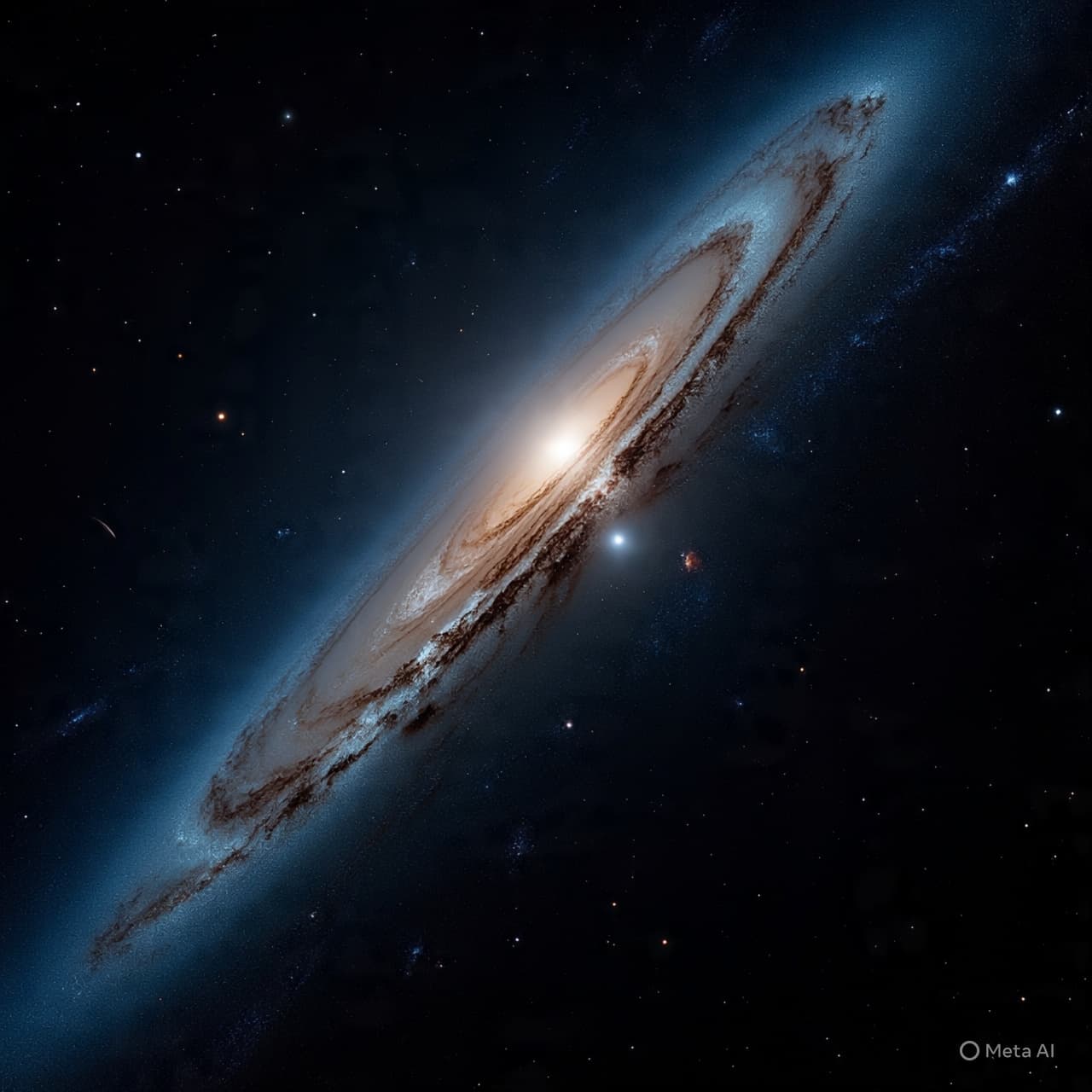
Astronomers believe the signal originates from a galaxy whose core likely hosts a . In these extreme regions, swirling gas and powerful radiation fields can energize molecules such as hydroxyl or water vapor, triggering maser emissions that travel vast distances across the universe.
What makes this discovery particularly intriguing is the signal’s persistence. Many cosmic bursts—such as fast radio bursts or gamma-ray flashes—appear suddenly and vanish almost instantly. This mega-laser, by contrast, continues to shine steadily, offering astronomers a stable beacon from a time when the universe was roughly half its current age.
Because the signal has traveled eight billion years to reach Earth, observing it today allows scientists to peer deep into cosmic history. The light began its journey when galaxies were evolving rapidly, black holes were actively feeding, and the structure of the universe was still taking shape.
Megamasers also serve as valuable scientific tools. Their highly precise signals can help astronomers measure distances between galaxies, map the rotation of galactic disks, and better understand how matter behaves near supermassive black holes.
Each new detection adds another piece to the puzzle of how galaxies grow and how energy flows through the vast cosmic web.
The universe remains full of signals waiting to be interpreted. Some arrive as faint echoes from ancient stars; others appear as brilliant beams cutting through the darkness of space.
And sometimes, like this persistent mega-laser from a galaxy billions of light-years away, they remind scientists that the cosmos is not only vast—it is also capable of astonishing displays of power that continue shining long after their journey began.
AI Image Disclaimer Graphics are AI-generated and intended for representation, not reality.
Source Check Credible sources covering the topic “Astronomers confirm a ‘mega-laser’ beam signal from 8 billion light-years away”:
Space.com New Scientist Live Science Nature Astronomy Scientific American
Published by Banx Network. This article is part of the Banx decentralized media programme, powered by the BXE token on the XRP Ledger.