In the dark expanse of space, a single bright dot can stir wonder — and draw eyes across millions of miles. That is precisely what happened when the spacecraft JUICE, on its journey toward the icy moons of Jupiter, turned its gaze toward a very different destination: the interstellar visitor known as 3I/ATLAS. In November 2025, for a fleeting moment, human-made instruments and cosmic history met — and the result may reshape how we view objects from beyond our solar system.
3I/ATLAS is no ordinary comet. Discovered in July 2025 by the ground-based survey telescope ATLAS, it carries the distinction of being the third known interstellar object — a traveler from another star system passing through ours. Since its detection, astronomers worldwide have mobilized to observe it using ground telescopes, space telescopes, and now even distant interplanetary probes.
During its November passage, JUICE used not just its scientific instruments — the high-resolution cameras, spectrometers, and particle detectors — but also its navigation camera (NavCam) to capture images of 3I/ATLAS. The NavCam is not designed for detailed science, but for helping the spacecraft steer. Yet in this case, even those coarse-resolution frames revealed something remarkable: the comet appeared active, with a visible coma or halo around its nucleus, signaling gas and dust being ejected as 3I/ATLAS warms up while moving through the inner solar system.
Why is this important? For one, it confirms that 3I/ATLAS — though from another star system — behaves in familiar ways once exposed to the Sun’s warmth. Observations from other spacecraft — including those orbiting Mars and solar-watching missions — already detected water vapor, carbon-dioxide–rich gas plumes, and other volatiles coming off the comet, implying a composition echoing the icy building blocks common in comets of our own solar system.
These signals matter deeply for science: every piece of data from 3I/ATLAS is a rare note in a cosmic message, offering insights into the chemistry and formation of distant planetary systems. If this comet really embodies ice, dust and gas from a different star’s protoplanetary disk, then its behavior sheds light on how planetary systems — perhaps including those far different from ours — build worlds. Cometary activity — dust, gas, jets — becomes an echo from beyond, captured now via our own instruments.
That said, we should temper enthusiasm with patience: JUICE’s full science-quality data from its instruments will not reach Earth immediately. Because the spacecraft is currently near the Sun, it is using its main antenna as a heat shield. As a result, data transmission is slower, meaning the detailed results of JUICE’s 2025 observations of 3I/ATLAS won't arrive until early 2026. But even the preliminary NavCam frames are already a triumph — a testament to human curiosity and our growing ability to study visitors from the stars.
In those simple, fuzzy images lies something grand: a cosmic traveler, a system beyond our own, a silent emissary now drifting through our celestial neighborhood — and a reminder that the universe doesn’t save its surprises for distant corners alone.
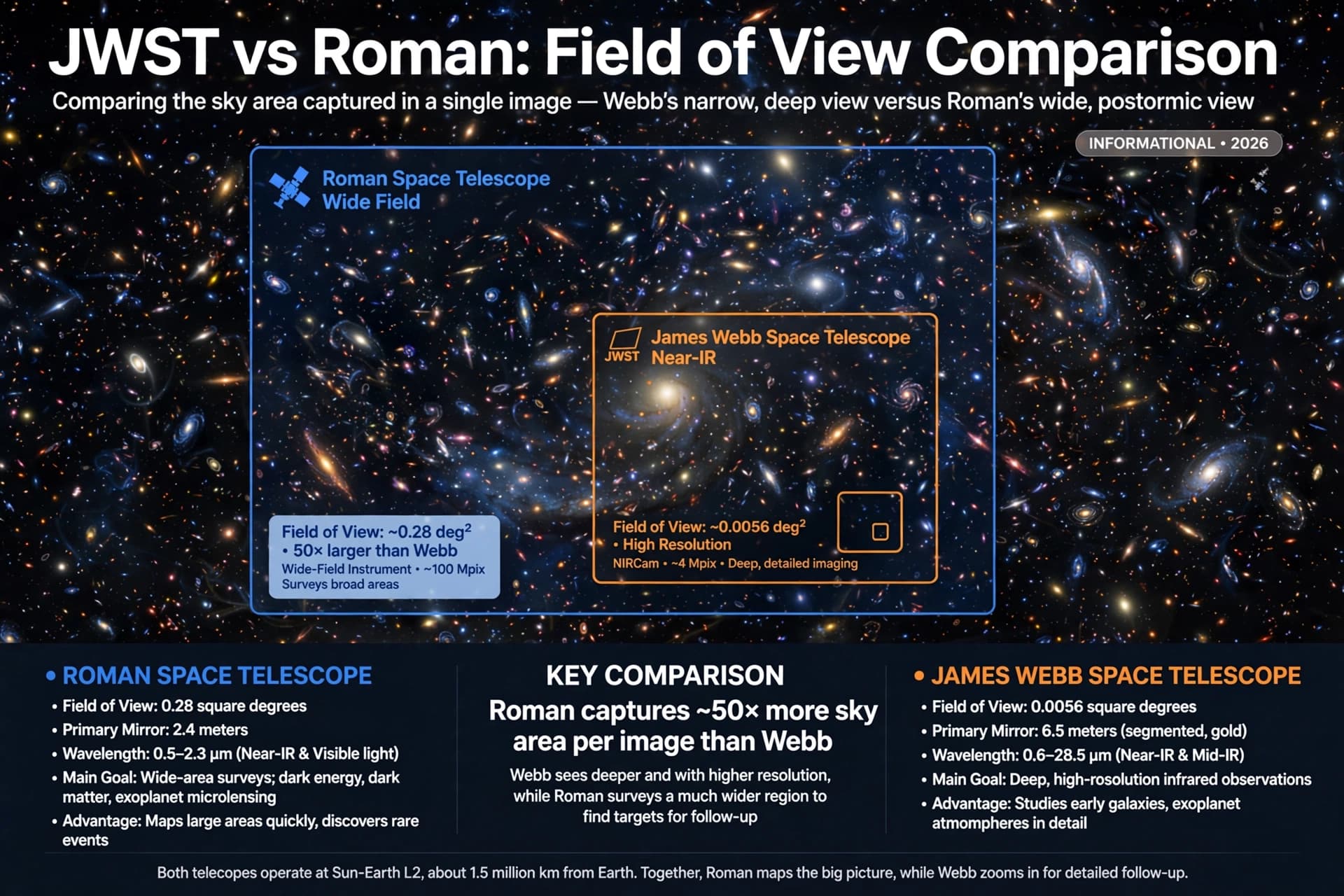
AI Image Disclaimer Graphics in this article are created with AI tools and meant only as conceptual renderings — not actual photographs.
Sources European Space Agency (ESA); NASA / JPL; NASA MAVEN, STEREO, PUNCH missions; Peer-reviewed comet science studies from 2025.
Published by Banx Network. This article is part of the Banx decentralized media programme, powered by the BXE token on the XRP Ledger.