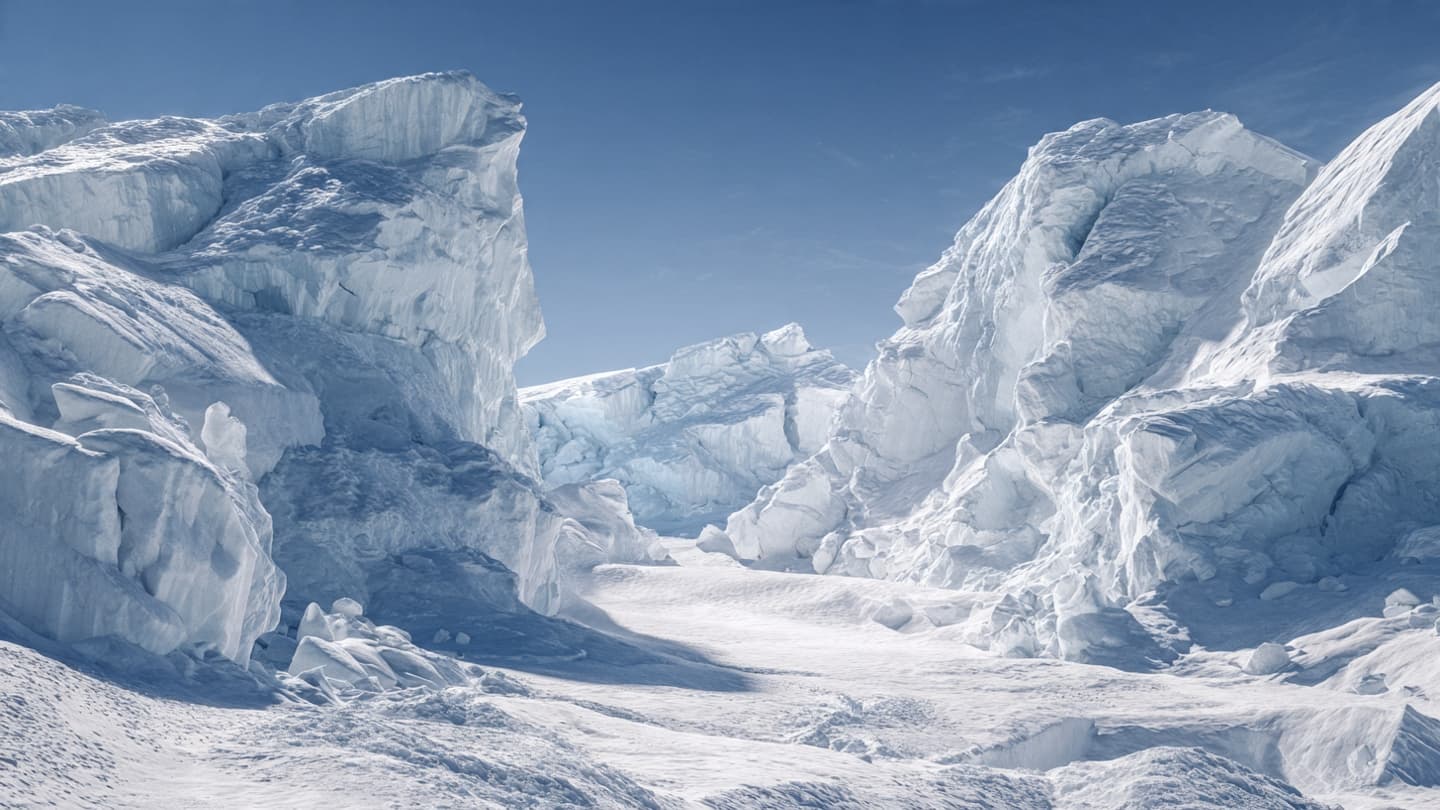
In the stark, frozen expanse of Antarctica, where ice stretches to the horizon and silence reigns supreme, there exists a phenomenon that defies the monochrome landscape. Blood Falls, a rusty-red cascade oozing from the Taylor Glacier, has long intrigued scientists with its surreal appearance. But beyond its striking color lies a deeper mystery: a hidden subglacial lake that has been isolated for millions of years. Recent studies suggest that this ancient reservoir may harbor microbial life, offering a rare glimpse into an ecosystem that has evolved in complete darkness and isolation. It is a testament to the resilience of life, thriving in one of the most extreme environments on Earth.
The red hue of Blood Falls is caused by iron-rich brine that oxidizes upon contact with air, creating a rust-like effect. However, the water itself originates from a subglacial lake trapped beneath hundreds of meters of ice. This lake, known as Lake Whillans or part of the broader subglacial network, has been cut off from the surface for over a million years. In this dark, cold, and salty environment, traditional photosynthesis is impossible, yet life persists.
Researchers have discovered microbial communities within this brine that rely on chemosynthesis, deriving energy from chemical reactions involving sulfur and iron compounds rather than sunlight. These microorganisms represent a unique branch of the tree of life, adapted to conditions that would be lethal to most other forms. Their existence challenges our understanding of habitability, suggesting that life can flourish in places previously thought to be barren.
The discovery of these ancient microbes has profound implications for astrobiology. If life can survive in the isolated, icy depths of Antarctica, it raises the possibility that similar organisms could exist in the subsurface oceans of icy moons like Europa or Enceladus. Blood Falls serves as a terrestrial analog for these extraterrestrial environments, providing a natural laboratory for studying the limits of life.
Studying this ecosystem requires careful techniques to avoid contamination. Scientists use sterile drilling methods and remote sensing to sample the brine without introducing modern microbes. The integrity of the sample is crucial, as even a small amount of external DNA could skew the results. This meticulous approach ensures that the findings accurately reflect the ancient nature of the subglacial community.
The chemical composition of the brine also offers clues about Earth’s geological history. The high salinity and mineral content suggest that the water is a remnant of an ancient ocean that was trapped when the Antarctic ice sheet formed. Over millennia, the freezing process concentrated the salts, creating a dense, liquid layer that remains unfrozen despite the sub-zero temperatures.
For the scientific community, Blood Falls is more than a curiosity; it is a window into the past. By analyzing the genetic makeup of the microbes, researchers can trace their evolutionary lineage and understand how they have adapted to isolation. This knowledge helps build a clearer picture of how life on Earth has persisted through periods of global glaciation.
As research continues, Blood Falls remains a symbol of nature’s hidden wonders. The potential for ancient marine life within its icy veins reminds us that even in the most desolate corners of our planet, life finds a way. In protecting and studying this unique site, we gain not only scientific insights but also a deeper appreciation for the tenacity of the biosphere.
AI Image Disclaimer: The visuals accompanying this article are AI-generated illustrations designed to represent the themes of extreme ecology and subglacial exploration.
Sources: Nature Communications, Smithsonian Magazine, Live Science, University of Colorado Boulder
Published by Banx Network. This article is part of the Banx decentralized media programme, powered by the BXE token on the XRP Ledger.