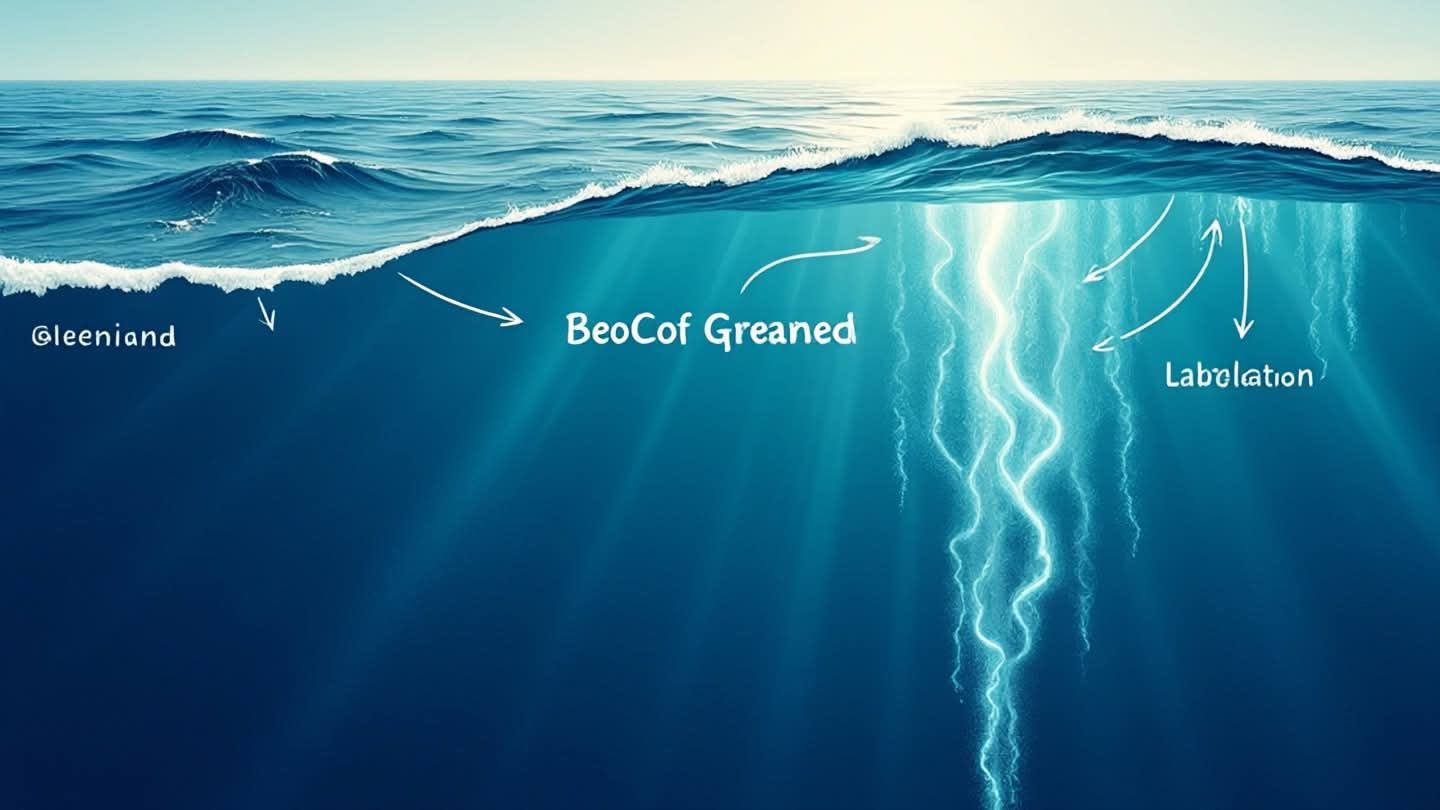
In the vast, dark depths of the Atlantic Ocean, life thrives in silence, sustained by a breath taken thousands of miles away. The Labrador Sea, a cold and turbulent expanse between Canada and Greenland, acts as a lung for the deep ocean. Each winter, its surface waters cool and sink, carrying dissolved oxygen from the atmosphere down into the abyss. This natural process, known as deep water formation, is essential for sustaining marine life across the globe.
Recent studies have quantified this vital flow, revealing that the Labrador Sea supplies between 42% and 71% of the oxygen consumed by deep-sea life between the equator and Antarctica. This oxygen travels via fast-flowing boundary currents, reaching even the remote depths of the Pacific and Indian Oceans. It is a global conveyor belt of life, connecting distant ecosystems through the invisible thread of breathable water.
The mechanism is simple yet profound. As surface water cools, it becomes denser and sinks, dragging oxygen-rich air with it. This process replenishes the deep ocean, which would otherwise become depleted due to the respiration of countless organisms. Without this annual injection of fresh oxygen, the deep sea would become a dead zone, unable to support the diverse array of fish, crustaceans, and microbes that call it home.
Climate change poses a significant threat to this delicate balance. Rising global temperatures are warming the surface waters of the Labrador Sea, making them less dense and less likely to sink. If this mixing slows or stops, the supply of oxygen to the deep ocean could be severely reduced. This would have cascading effects on marine biodiversity, fisheries, and the overall health of the planet’s oceans.
Researchers have used advanced sensors and moored instruments to measure this oxygen export over time. Their findings highlight the variability of the process, influenced by weather patterns and ice cover. Understanding these dynamics is crucial for predicting how the ocean will respond to future climate scenarios. It underscores the importance of monitoring remote regions that play outsized roles in global systems.
The implications extend beyond ecology. Many communities rely on deep-sea fisheries for food and livelihoods. A decline in deep-oxygen levels could disrupt these resources, affecting economies and food security worldwide. Protecting the Labrador Sea is thus not just an environmental concern but a socio-economic imperative. It requires international cooperation and a commitment to reducing carbon emissions.
Conservation efforts must focus on preserving the integrity of the Labrador Sea’s mixing processes. This includes protecting marine habitats, reducing pollution, and addressing the root causes of climate change. By safeguarding this "ocean lung," we ensure that the deep sea remains a vibrant and productive part of our planet’s biosphere. It is a reminder that local actions have global consequences.
As we continue to explore the mysteries of the deep, the Labrador Sea stands as a testament to the interconnectedness of Earth’s systems. Its cold waters breathe life into the darkest corners of the ocean, reminding us that even the most remote places are vital to our survival. Protecting it is a duty we owe to the sea and to ourselves.
AI Image Disclaimer: Images accompanying this report are AI-generated artistic interpretations of ocean currents and deep-sea environments, intended to visualize the flow of oxygen.
Sources: Eos.org, CBC News, Biogeosciences, GEOMAR Helmholtz Centre
Published by Banx Network. This article is part of the Banx decentralized media programme, powered by the BXE token on the XRP Ledger.