
Key Highlights
- Discovery:Researchers found 60 million fish nests beneath Antarctica's ice.
- Species:The crocodile icefish thrives in extreme conditions without hemoglobin.
- Climate Impact:Thinning ice shelves threaten these hidden ecosystems.
Beneath the thick, frozen lid of Antarctica lies a world of darkness and cold, long assumed to be barren of complex life. Yet, recent discoveries have shattered this perception, revealing a sprawling metropolis of marine activity hidden from human eyes. Scientists have identified a vast breeding ground beneath the ice shelf, home to an estimated 60 million fish nests. This underwater city, teeming with life in one of Earth’s most extreme environments, invites us to reconsider the resilience of nature and the secrets still locked within the polar ice.
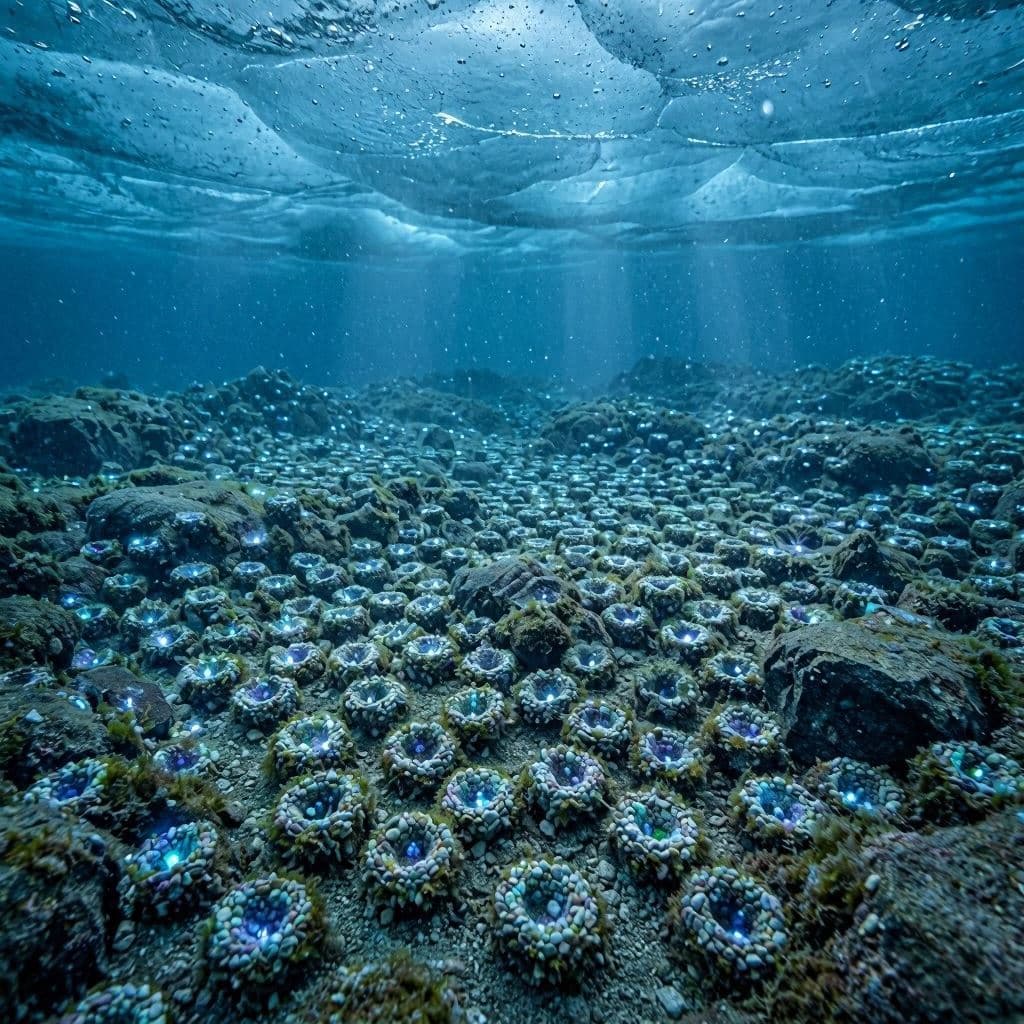
The discovery was made using advanced remote-operated vehicles (ROVs) capable of navigating the tight spaces beneath the ice. What researchers found was not a random scattering of eggs, but a structured, dense aggregation of nests belonging to the crocodile icefish. These nests, each carefully guarded by a parent, form a continuous carpet across the seafloor, stretching for hundreds of square kilometers. The scale of the colony is unprecedented, challenging previous estimates of biomass in polar regions.
The crocodile icefish is unique among vertebrates for lacking hemoglobin, the protein that carries oxygen in blood. Instead, they rely on the oxygen-rich cold waters of the Antarctic to survive. Their ability to thrive in such conditions is a testament to evolutionary adaptation. The sheer number of nests suggests that this species has found a safe haven beneath the ice, protected from predators and insulated from surface fluctuations.
This finding has profound implications for our understanding of Antarctic ecosystems. The ice shelf, often viewed as a static barrier, is revealed to be a dynamic habitat that supports complex life cycles. The presence of such a large breeding population indicates that the area is a critical node in the Southern Ocean’s food web, supporting everything from krill to whales. Protecting this hidden city is essential for the health of the broader marine environment.
The discovery also raises questions about the impact of climate change. As global temperatures rise, ice shelves are thinning and retreating. The stability of these underwater habitats is directly linked to the integrity of the ice above. If the ice shelf collapses, the delicate balance of temperature and salinity could be disrupted, threatening the survival of the icefish and the myriad other species that depend on them.
Scientists are now working to map the extent of these nesting grounds and monitor their health over time. Non-invasive techniques, such as acoustic monitoring and environmental DNA sampling, are being employed to study the population without disturbing it. This careful approach ensures that research contributes to conservation rather than harm.
The "underwater city" metaphor captures the imagination, but it also underscores the interconnectedness of life. Just as human cities rely on infrastructure and community, this marine colony relies on the physical structure of the ice and the social behavior of the fish. It is a reminder that even in the most isolated corners of the planet, life finds a way to build, sustain, and flourish.
The revelation of 60 million fish nests beneath Antarctica’s ice is a humbling reminder of how much remains unknown. It calls for greater stewardship of these fragile environments and a deeper appreciation for the hidden wonders of our planet. In the dark cold, life persists, waiting to be understood.
Published by Banx Network. This article is part of the Banx decentralized media programme, powered by the BXE token on the XRP Ledger.



