

Key Highlights
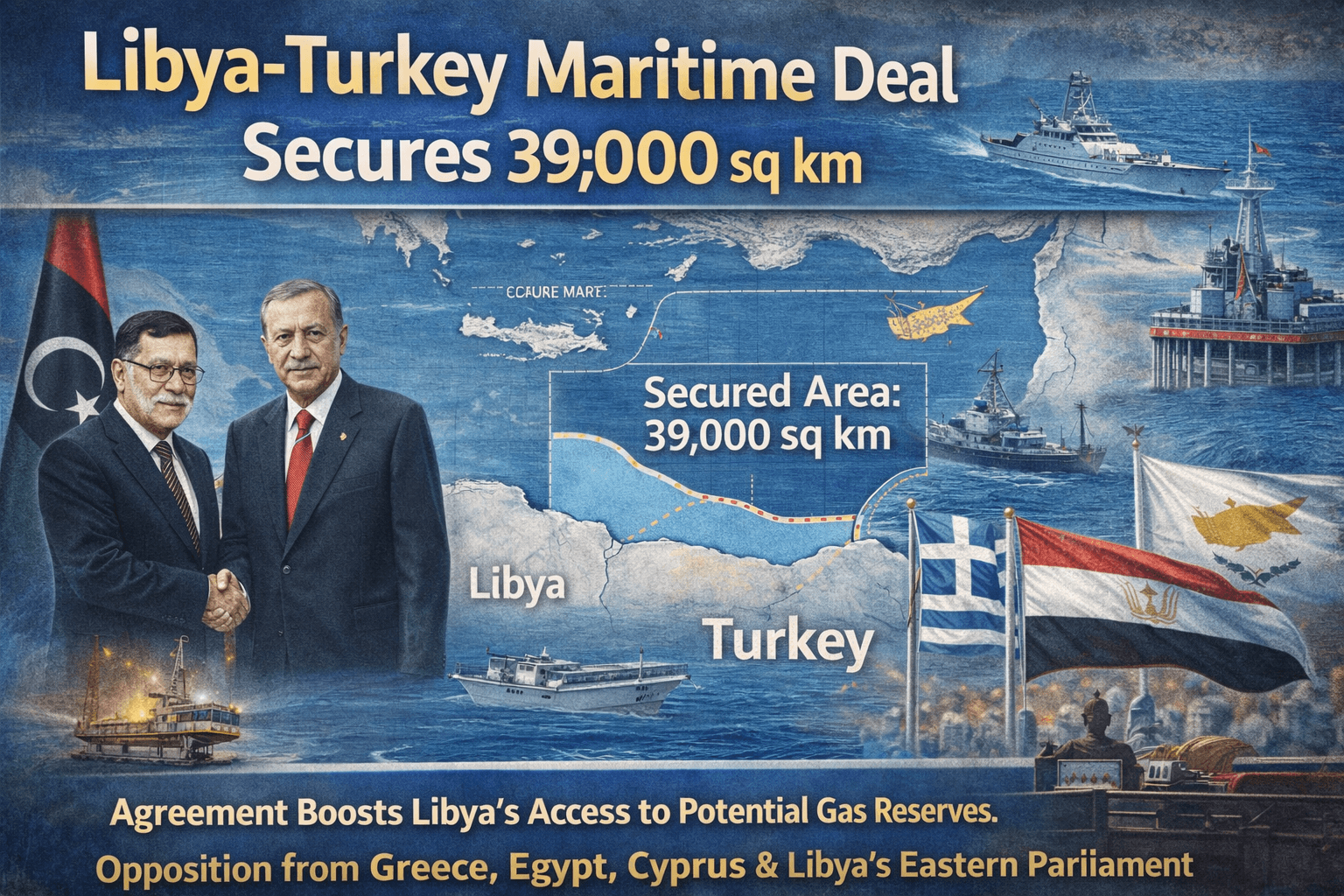
- Maritime Deal:Libya and Turkey secure 39,000 square kilometers of maritime space.
- International Response:Greece, Egypt, and Cyprus oppose the agreement, citing legal violations.
- Internal Divisions:Libya's eastern House of Representatives declares the deal void.
Tripoli, Libya — A long-disputed maritime boundary agreement between Libya and Turkey has been highlighted for securing an area of about 39,000 square kilometers of maritime space for Libya, according to retired Turkish Admiral Cihat Yaycı, the architect of the pact. He stated that the deal clearly defines Libya’s maritime rights and prevents other states from claiming the area, which he asserts contains valuable natural gas reserves.
The 2019 Memorandum of Understanding (MoU) on maritime boundary delimitation was signed by the internationally recognized Government of National Accord (GNA) and Turkey, and later registered with the United Nations. This agreement establishes zones in the Eastern Mediterranean that both countries argue reflect their rights under international maritime law. The deal is seen as a strategic move for Libya, which is looking to bolster its claims over potentially resource-rich waters.
However, regional opposition has been vocal. Greece, Egypt, and Cyprus reject the claims that the memorandum is legally valid, arguing it violates the UN Convention on the Law of the Sea (UNCLOS) by ignoring the maritime rights of nearby islands such as Crete. They describe the deal as illegal and void, insisting it cannot override their own exclusive economic zones and continental shelf rights. This opposition highlights the complex geopolitical landscape of the Eastern Mediterranean, where energy resources are a significant point of contention.
Internally in Libya, political divisions persist. The eastern-based House of Representatives has declared the agreement “null and void” due to a lack of parliamentary ratification. This internal dissent complicates the situation further, as Turkish and Libyan officials continue diplomatic engagement on maritime cooperation. The lack of consensus within Libya raises questions about the legitimacy and future of the agreement.
The dispute underscores ongoing geopolitical tensions in the Eastern Mediterranean over offshore energy resources and competing maritime claims. The Libya-Turkey deal is at the center of broader questions about sovereignty, resource rights, and international law. As countries in the region navigate these complex issues, the implications of this maritime agreement will likely resonate beyond the immediate parties involved, affecting international relations and energy policies in the Mediterranean.
Published by Banx Network. This article is part of the Banx decentralized media programme, powered by the BXE token on the XRP Ledger.




