

Key Highlights
- Date of Strike:April 19, 2026, marked a significant escalation in U.S. military operations.
- Death Toll:The strike raised the total fatalities in the counter-narcotics campaign to at least 181.
- Operation Southern Spear:This military initiative has faced increasing scrutiny from human rights organizations.
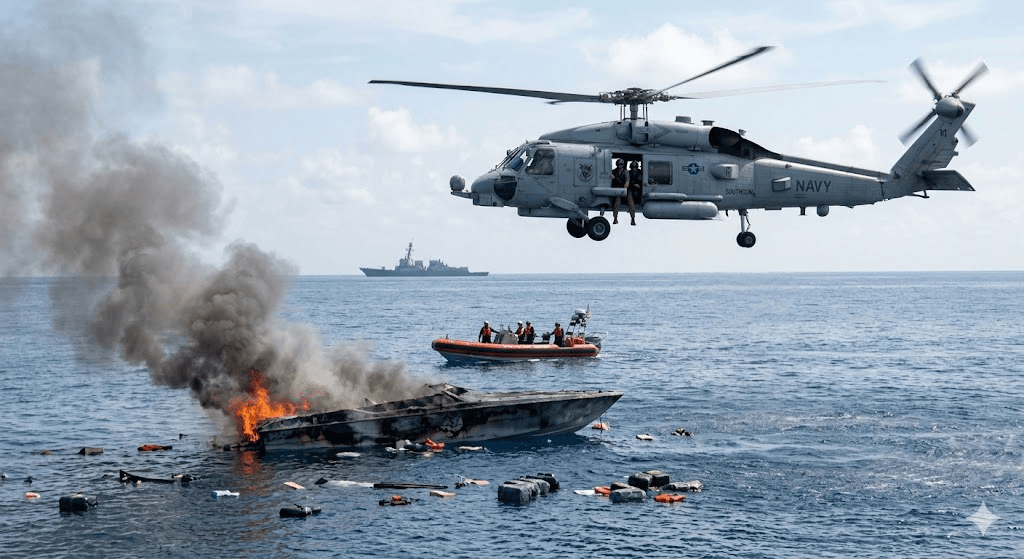
The U.S. military has confirmed a lethal strike on a suspected drug-trafficking vessel in the Caribbean Sea, which occurred on Sunday, April 19, 2026. This operation, part of a broader counter-narcotics campaign, has now resulted in a total of at least 181 deaths since its inception. The Pentagon's actions have drawn both domestic and international criticism, raising questions about the legality and morality of such military engagements.
According to a statement from U.S. Southern Command (SOUTHCOM), the vessel was intercepted along a known smuggling route and was reportedly operated by groups classified as "Designated Terrorist Organizations." Video footage released by the military depicted the vessel before it was destroyed in a significant explosion, although no evidence of narcotics on board has been provided. This lack of transparency has fueled skepticism regarding the justification for these strikes.
This incident marks the 54th military engagement in what has become a sustained campaign known as Operation Southern Spear, initiated in September 2025. The operation was initially described as an experimental shift in maritime interdiction but has escalated into a full-scale military effort against suspected drug traffickers. A spokesperson for SOUTHCOM emphasized the seriousness of the threat posed by these organizations, stating, "We are applying total systemic friction on the cartels. These are not just smugglers; they are narco-terrorists who pose a direct threat to our national security."
Despite the U.S. government's assertions of being in an "armed conflict" with Latin American cartels, the campaign has faced intense backlash from international human rights organizations. Critics, including the United Nations and various non-governmental organizations, have condemned the operations as extrajudicial killings, arguing that they violate due process and international law. The diplomatic fallout has been significant, with countries like Venezuela denouncing the strikes as violations of their sovereignty.
Moreover, analysts within the U.S. have raised concerns about the effectiveness of this military strategy. While the strikes have intensified, the majority of fentanyl and synthetic drugs continue to enter the U.S. through land ports, suggesting that maritime operations may not be addressing the root causes of the drug crisis. This ongoing debate highlights the complexities of the U.S. approach to drug trafficking and its implications for regional stability.
The escalation of military actions in the Caribbean coincides with a broader military buildup in the Western Hemisphere, particularly following the January 2026 capture of former Venezuelan President Nicolás Maduro. As the U.S. grapples with geopolitical tensions in various regions, the rising death toll in the Caribbean indicates that the War on Drugs has entered a particularly violent and controversial phase.
Published by Banx Network. This article is part of the Banx decentralized media programme, powered by the BXE token on the XRP Ledger.




