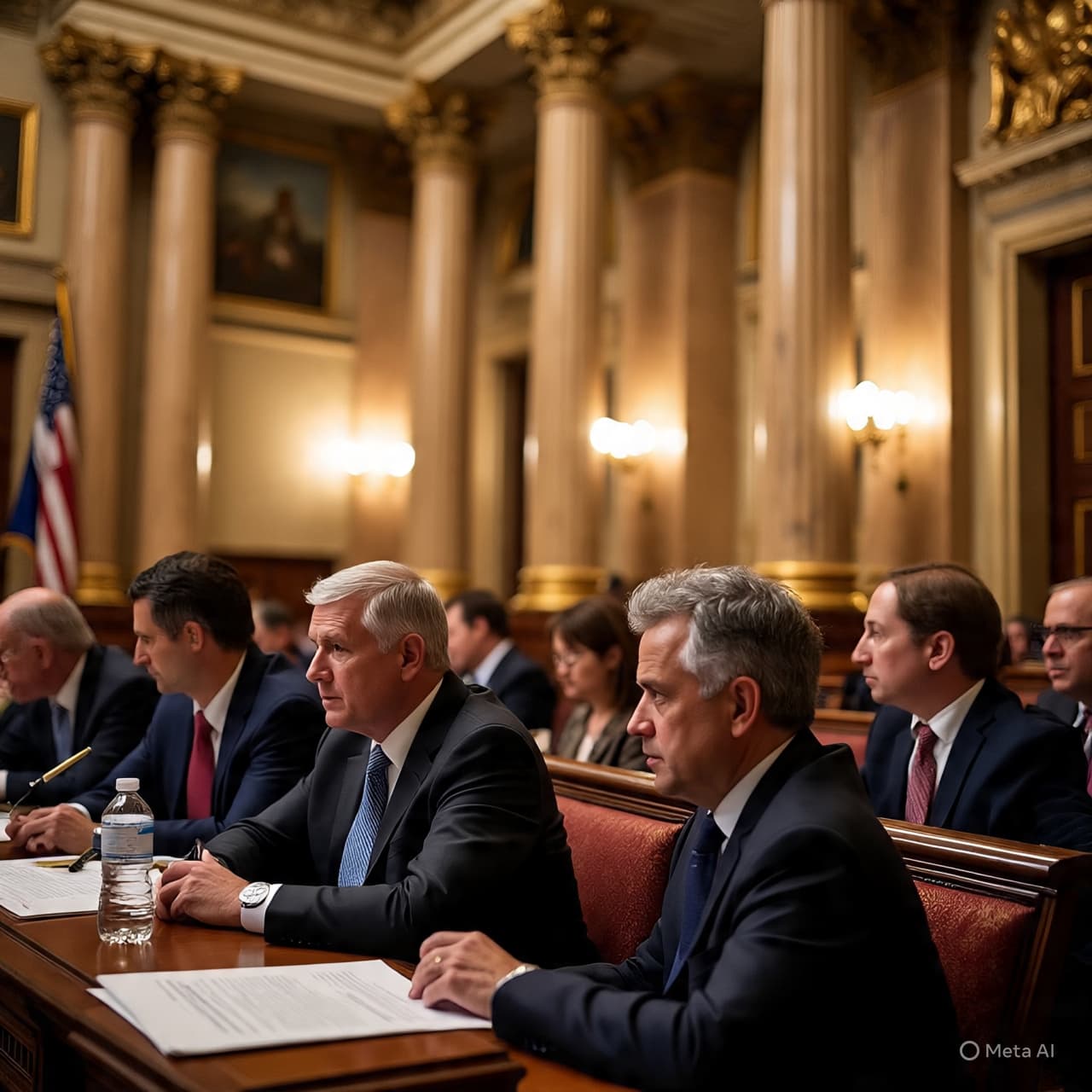
Opening
In Washington, debates often arrive like weather fronts slowly visible on the horizon before their winds are finally felt. On this occasion, the gathering clouds hover over cryptocurrency, a technology still learning how to stand within the long shadows of American law. As senators exchange letters and concerns, the moment feels less like confrontation and more like a pause in conversation, a breath taken before deciding how firmly the ground beneath digital finance should be set.
Content
The discussion centers on a cryptocurrency market structure bill advanced by Senator Tim Scott, an effort intended to bring long-sought clarity to an industry that has grown faster than its rules. Yet clarity, when drafted narrowly, can cast unintended silhouettes. Senators Chuck Grassley and Dick Durbin, drawing on years of institutional memory and jurisdictional stewardship, have raised concerns about provisions they believe may stretch beyond their intended reach.
Their focus rests largely on language affecting non-custodial software developers individuals and teams who build tools but do not directly hold or manage users’ assets. Grassley and Durbin have suggested that such provisions touch on areas traditionally overseen by the Senate Judiciary Committee, noting that consultation across committee lines was limited before the latest version of the bill appeared. Their message carries a familiar legislative caution: innovation deserves space, but oversight deserves inclusion.
Around this exchange, other voices have also entered the room. Industry participants have questioned whether the bill, as written, could unintentionally constrain decentralized activity or discourage development within U.S. borders. These responses have not halted the process, but they have slowed it, allowing lawmakers time to reconsider phrasing, intent, and consequence. The bill’s progress now reflects a broader truth of policymaking rules written for emerging technologies rarely arrive complete on the first draft.
Throughout, the tone has remained notably restrained. No side has closed the door on compromise. Instead, the conversation has emphasized balance: between investor protection and creative freedom, between regulatory certainty and technological evolution, between speed and care.
Closing
For now, the legislation remains under discussion, with revisions and negotiations expected as senators seek common ground. Grassley and Durbin’s concerns have added another layer to that process, underscoring the importance of cross-committee dialogue as crypto regulation takes shape. As deliberations continue, the bill’s future will likely be defined not by a single viewpoint, but by how patiently those viewpoints are brought together.
AI Image Disclaimer (Rotated Wording) “Illustrations were produced with AI and serve as conceptual depictions.”
Sources Reuters The Block Barron’s Investors.com (Investor’s Business Daily) Crypto.News / CCN
Published by Banx Network. This article is part of the Banx decentralized media programme, powered by the BXE token on the XRP Ledger.