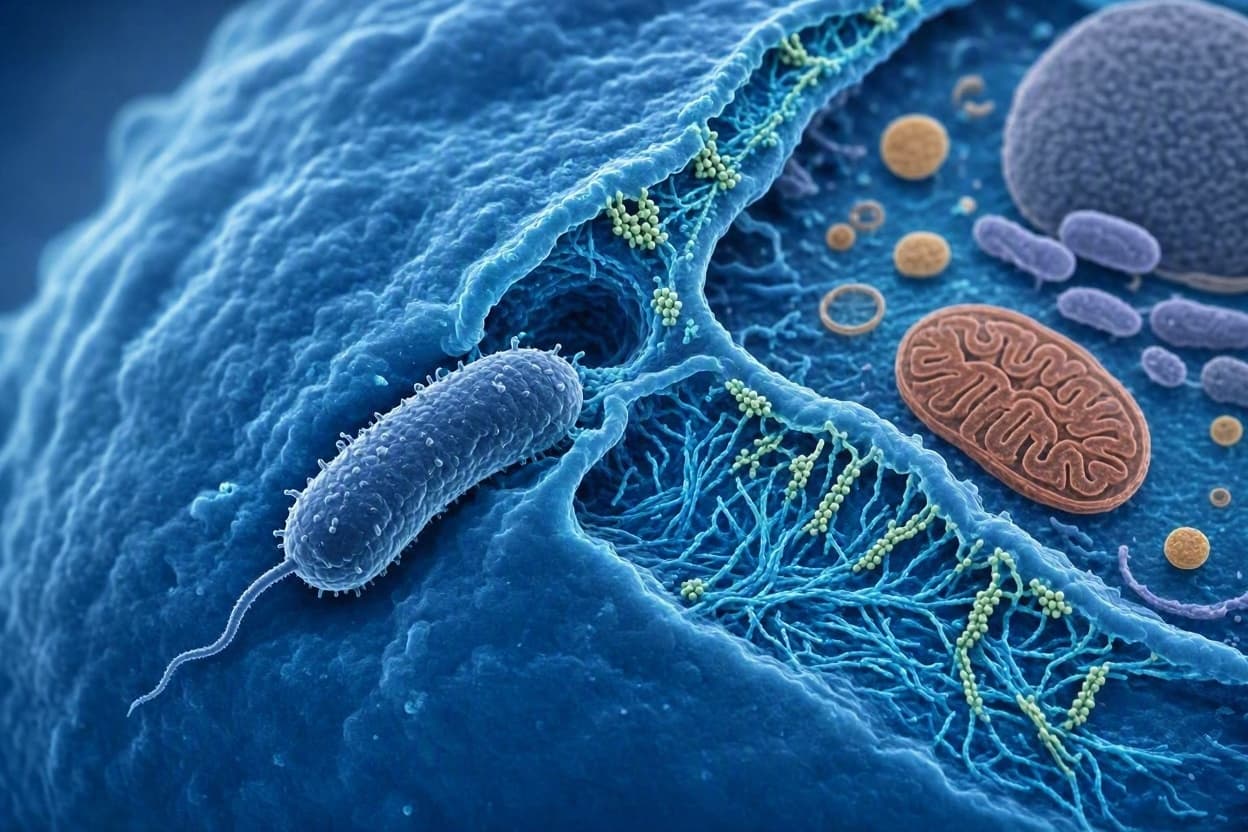
In the invisible world of microbiology, a constant struggle for survival plays out within the confines of our own bodies. Legionella pneumophila, the bacterium responsible for Legionnaires’ disease, is a master of subterfuge. Recent research has shed light on how this pathogen not only invades human cells but also cleverly adapts to hijack their internal machinery. This discovery offers a deeper understanding of bacterial virulence and opens new avenues for therapeutic intervention.
Legionella is commonly found in freshwater environments but becomes dangerous when aerosolized and inhaled. Once inside the lungs, it targets alveolar macrophages, the immune cells tasked with destroying invaders. Instead of being digested, however, Legionella manages to survive and replicate within these cells. It does so by creating a specialized compartment, known as the Legionella-containing vacuole, which protects it from the cell’s defense mechanisms.
The key to this survival lies in the bacterium’s ability to manipulate host cell processes. Researchers have identified specific proteins secreted by Legionella that interfere with the cell’s signaling pathways. These effectors mimic host molecules, tricking the cell into providing nutrients and preventing the fusion of the vacuole with lysosomes, which would otherwise break down the bacterium. It is a sophisticated form of molecular mimicry that allows the pathogen to thrive in a hostile environment.
This adaptation is not static; Legionella dynamically adjusts its strategy based on the host’s response. If the cell attempts to trigger apoptosis, or programmed cell death, the bacterium can delay this process to ensure its own replication. This flexibility makes it a formidable opponent, capable of evading multiple layers of immune defense. Understanding these adaptive mechanisms is crucial for developing treatments that can disrupt this intricate dance.
The implications for public health are significant. Legionnaires’ disease can be severe, particularly for older adults and those with compromised immune systems. Current treatments rely on antibiotics, but resistance is a growing concern. By targeting the specific mechanisms Legionella uses to adapt, researchers hope to develop more precise therapies that disable the bacterium without harming the host cells. This approach could reduce side effects and improve outcomes.
Furthermore, studying Legionella provides insights into broader cellular processes. The ways in which it manipulates membrane trafficking and protein degradation are similar to mechanisms involved in other diseases, including cancer and neurodegenerative disorders. Thus, this research has relevance beyond infectious disease, contributing to our general understanding of cell biology and pathology.
Laboratory models have been instrumental in uncovering these details. Using advanced imaging techniques and genetic screening, scientists can observe the interaction between Legionella and host cells in real time. These visualizations reveal the dynamic nature of the infection, showing how the bacterium remodels its surroundings to suit its needs. It is a testament to the power of modern microscopy in revealing the unseen.
The ability of Legionella to invade and adapt to host cells highlights the complexity of bacterial pathogenesis. As researchers continue to decode these mechanisms, the hope is to translate this knowledge into better prevention and treatment strategies. In the ongoing battle against infectious diseases, understanding the enemy’s tactics is the first step toward victory.
AI Image Disclaimer: Please note that any accompanying visuals for this article are AI-generated representations intended for illustrative purposes only.
Sources: Nature Microbiology, CDC, Cell Host & Microbe, ScienceDirect
Published by Banx Network. This article is part of the Banx decentralized media programme, powered by the BXE token on the XRP Ledger.