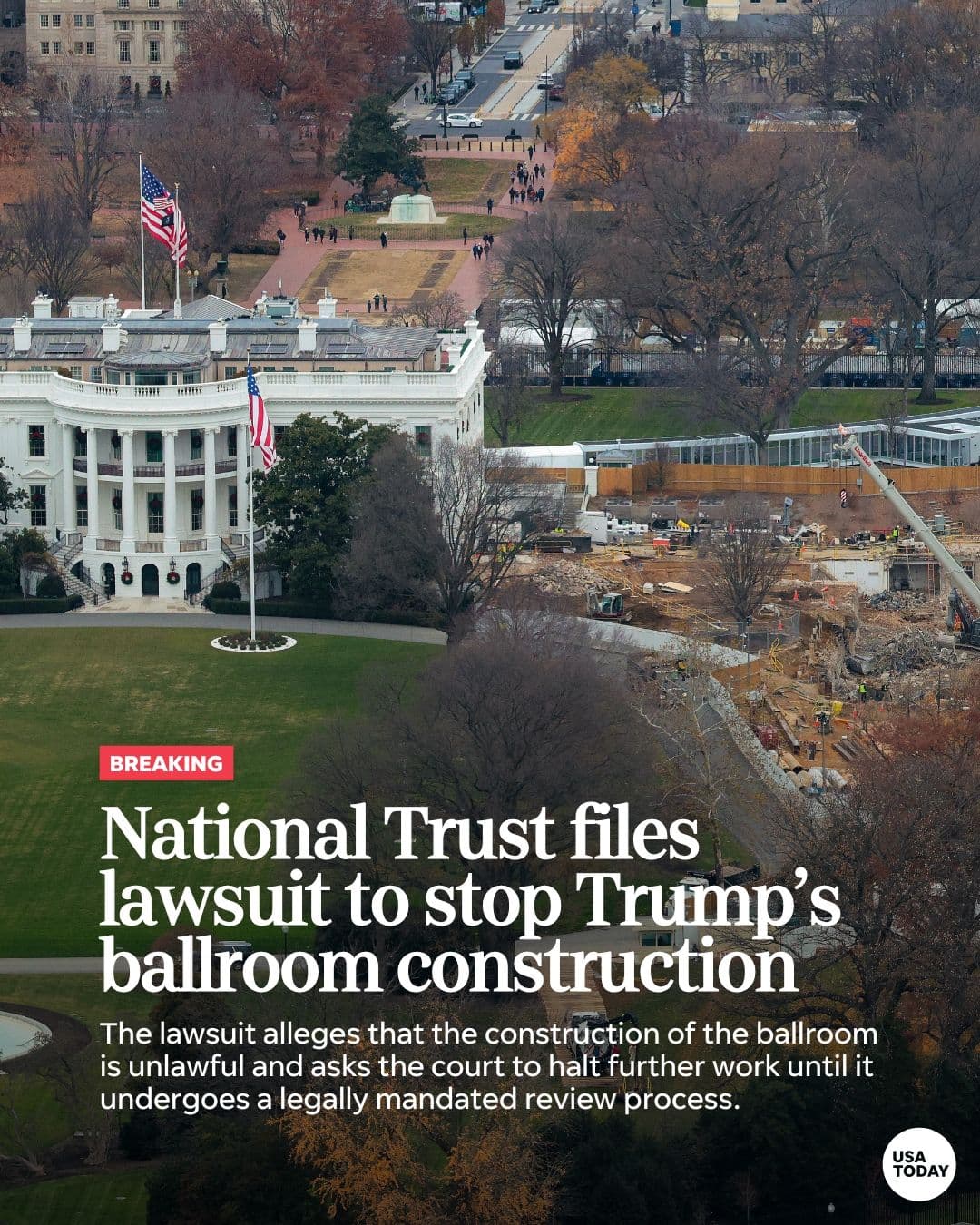
A new legal challenge has emerged in Washington, D.C., as the National Trust for Historic Preservation filed a lawsuit on December 12 seeking to block the construction of a proposed White House ballroom supported by former President Donald Trump.
The lawsuit was filed in the U.S. District Court for the District of Columbia and names Donald Trump, the National Park Service, and several other administration officials as defendants. According to the filing, the project allegedly violates federal law by moving forward without completing a legally required historic and environmental review process.
The White House is not only a seat of government but also a national historic landmark, subject to strict preservation rules. The National Trust argues that any major construction on or near the property must undergo formal review to ensure it does not damage the site’s historical integrity or set a precedent that weakens preservation protections nationwide.
Images accompanying the report show active construction near the White House grounds, with heavy equipment and cleared land visible near the historic complex. The lawsuit asks the court to immediately halt further construction until all required legal reviews are completed.
Supporters of the project argue that a new ballroom would modernize the White House’s ability to host large official events. Critics, however, say modernization cannot override laws designed to protect nationally significant landmarks.
The case highlights a broader tension between development and preservation, especially when politically influential figures are involved. It also raises questions about executive authority, regulatory compliance, and the role of independent watchdog organizations in safeguarding public heritage.
The court’s decision could have consequences beyond this single project. A ruling in favor of the National Trust may reinforce preservation laws nationwide, while a ruling against it could redefine how historic sites are altered by future administrations.
As the legal process unfolds, construction remains under scrutiny, and the future of the proposed White House ballroom now rests with the federal courts.
Published by Banx Network. This article is part of the Banx decentralized media programme, powered by the BXE token on the XRP Ledger.