
Key Highlights
- Deployment:Lebanese army begins operations in southern 'pilot zone'.
- Location:Troops entered Zawtar al-Gharbiyeh and nearby areas.
- Objective:Disarmament of Hezbollah is a key focus.
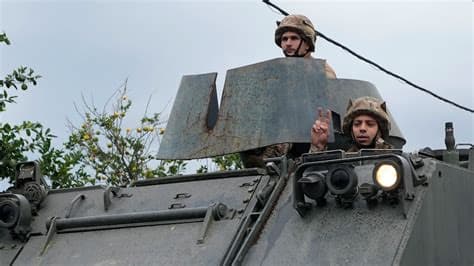
The Lebanese army has officially commenced its deployment to a designated 'pilot zone' in southern Lebanon, following Israel's recent withdrawal from a portion of occupied territory. This strategic move marks a significant shift in the region's military dynamics and is part of a broader initiative aimed at stabilizing the area and addressing security concerns.
Units of the Lebanese army have entered the village of Zawtar al-Gharbiyeh, with additional deployments reported in the neighboring towns of Froun and Srifa. This operation is seen as a response to the evolving security landscape, particularly in light of the United States' announcement regarding 'pilot zone operations' under a trilateral framework involving Lebanon, Israel, and the U.S. The framework aims to facilitate the Lebanese forces' ability to operate effectively in the region.
Israeli officials have indicated a willingness to adjust their military posture, allowing Lebanese forces to carry out their mission in the pilot zone. This development is crucial, as it underscores the importance of cooperation between the involved parties to ensure a stable environment. The Lebanese army's deployment is not merely a show of force; it is also a calculated effort to address the longstanding issue of Hezbollah's disarmament, which has been a central aim of the Lebanese government and its international partners.
The presence of the Lebanese army in these areas is expected to enhance security and provide a sense of stability for local residents who have long awaited the return of state authority. The deployment is also a response to the complex geopolitical situation in southern Lebanon, where tensions have historically run high due to the presence of armed groups, including Hezbollah.
As the Lebanese army establishes its presence in the pilot zone, officials are hopeful that this will lead to a reduction in hostilities and a more secure environment for the local population. The success of this operation will depend on the cooperation of various stakeholders, including the Lebanese government, the military, and international partners who are invested in the region's stability.
In conclusion, the deployment of the Lebanese army to the pilot zone represents a pivotal moment in the ongoing efforts to stabilize southern Lebanon and address the challenges posed by armed groups. As the situation evolves, the international community will be closely monitoring the developments to ensure that the objectives of disarmament and security are met effectively.
Published by Banx Network. This article is part of the Banx decentralized media programme, powered by the BXE token on the XRP Ledger.



