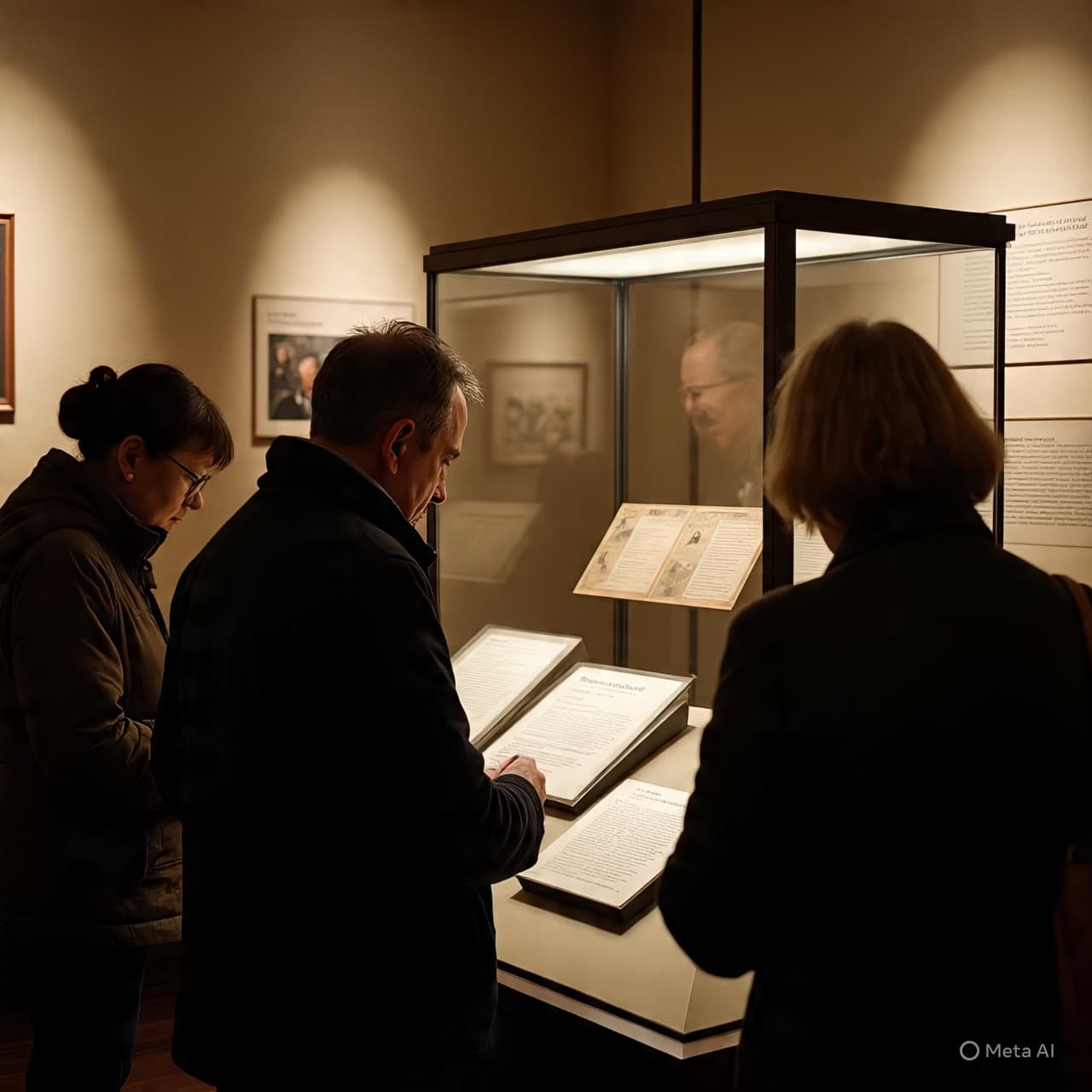
On a winter morning when the world pauses — candlelight flickering in silent squares, bells tolling and voices lowered in remembrance — the past and present seem to meet in a hush of reflection. January 27 marks International Holocaust Remembrance Day, a time when memory is both a quiet duty and a living responsibility. Yet in the digital spaces where stories now unfurl, a new kind of wind seems to be blowing: screens filled with images not of history’s truth, but of its imitation. Like an echo that misremembers its source, artificial intelligence-generated content — sometimes called “AI slop” — is raising concern that the fragile threads of decades-old memory could be stretched, bent, or even snapped in the glow of a smartphone.
Each year as the world recalls the unspeakable cruelty of the Holocaust and honors the six million Jewish lives slaughtered alongside millions of others, memorials and museums seek to ground that memory in education, testimony, and historical evidence. But this year, archivists and historians speak of a new challenge: a flood of generative AI images and depictions that mimic Holocaust scenes with invented details and fictitious figures. These creations — shared widely on social platforms — have no basis in real history yet can possess the photorealism that gives an unwary viewer a false sense of authenticity.
At the same time that candles burn at Auschwitz-Birkenau, Berlin, Rome, and countless towns around the world, a chorus of voices — from memorial foundations to UNESCO experts — cautions that digital distortions risk diluting the stark facts of the Nazi genocide. A UNESCO report released last year warned that AI could inadvertently absorb biases and falsehoods, potentially inventing events, testimonies, or imagery that never occurred, especially when trained on unchecked online data.
Memorial institutions in Germany and beyond have issued open letters urging tech platforms to act: label AI-generated material clearly, remove fabricated depictions, and build tools for reporting and education. More than 30 foundations and initiatives have raised alarm that AI content can circulate without context and be mistaken for genuine historical documentation.
These warnings come amid broader concerns about Holocaust education itself. Surveys suggest that younger generations encounter denial or distortion online at significant rates, underscoring how misinformation can compound fading first-hand memory as survivors grow fewer with each year. Scholars and educators alike underline that the struggle to preserve historical truth now includes digital literacy as a vital front.
Like a river that sometimes carries stones and sometimes debris, digital platforms can nurture knowledge or contribute to confusion. In the realm of Holocaust remembrance, this duality is stark: the same tools that can connect learners to testimony can also project a false narrative that softly erodes understanding.
As events around the world honored Holocaust victims and survivors on International Holocaust Remembrance Day, leaders and educators reiterated the shared responsibility to uphold authentic memory in an age of rapid technological change. Calls for clearer labeling of AI content, stronger moderation of fabricated material, and enhanced educational efforts were echoed alongside solemn remembrance. In this evolving landscape, attention to how history is represented — whether through testimony, artifact, or algorithm — remains central to preserving truth without judgment but with clarity and care.
AI Image Disclaimer Visuals are created with AI tools and are not real photographs; they are intended for representational use only.
Sources CBS News AP News Jerusalem Post analysis UNESCO report Media Diversity Institute survey/report
Published by Banx Network. This article is part of the Banx decentralized media programme, powered by the BXE token on the XRP Ledger.