There is a certain rhythm to life around a mill town — the steady hum of machinery, the cadence of shifts changing, and the quiet confidence that work, community, and routine intertwine. For decades in Crofton, British Columbia, the local pulp mill was more than an employer; it was a shared heartbeat that shaped neighborhood life. As news of its impending closure echoes through the region, that heartbeat has faltered — leaving workers facing looming layoffs and an uncertain future.
Yet amid the rising worry about jobs and economic stability, another story unfolded — one that draws its own kind of quiet attention. For years, mill employees have tended to a colony of feral cats that made their home around the plant. As the facility prepared to shut its doors and 350 workers learned they would soon be out of work, these animals became a focus of care, not neglect.
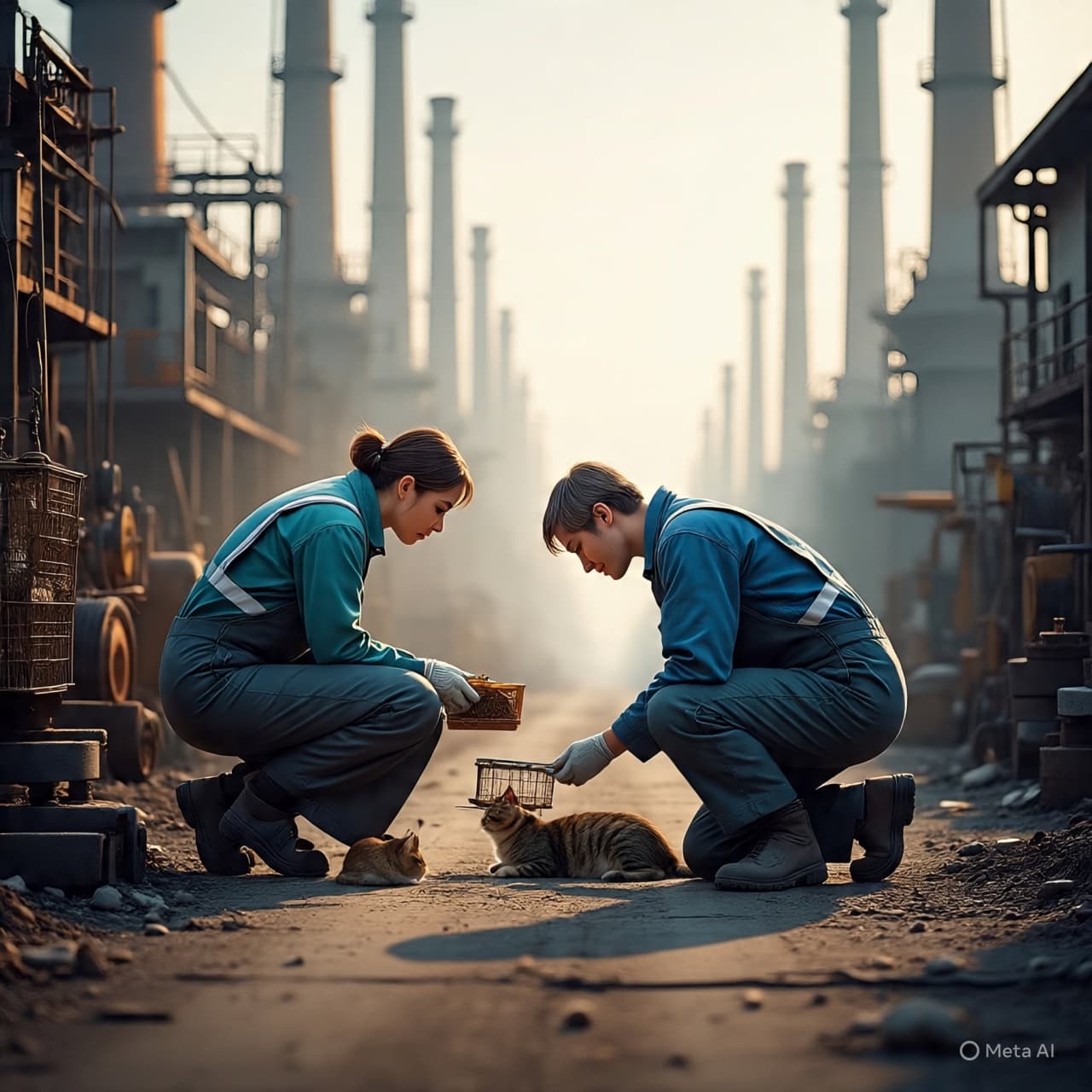
Rather than leaving the cats to fend for themselves when operations end, laid-off workers joined forces with local rescue groups to trap and rehome the colony. These are not pets in the ordinary sense; many are older cats, survivors of life on the fringes, accustomed to outdoor living without human families of their own. Still, they found shelter, food, and occasional kindness from the very people now confronting their own loss of livelihood.
Local animal welfare groups have been helping with the effort, arranging for veterinary checks, trapping, and placement in sanctuaries or with new caregivers. The initiatives reflect an impulse that goes beyond employment — a reminder that compassion often finds expression in the smallest of lives.
For the workers involved, the project has offered something more than a distraction. In the face of economic anxiety and the uncertainty of what comes next, caring for the animals has been a way to preserve a sense of purpose and community. It is a gesture that acknowledges vulnerability not only in themselves but in those creatures who depend on human kindness for survival.
Government and industry responses to the mill’s closure have focused on economic relief, retraining, and broader support for affected families. Yet in quiet corners of Crofton, the rescue of these cats has become a symbol of resilience — a story of communal tenderness amid the practical challenges of transition.
As the mill’s doors prepare to close for good, and as workers plan next steps for careers and stability, the traces of their care will linger in the lives they helped preserve. In the intertwined narratives of industry and empathy, there lies a reminder: even when jobs are lost and futures feel unsettled, the act of looking after one another — human or animal — offers a kind of continuity that no closure can entirely erase.
AI Image Disclaimer Visuals are created with AI tools and are not real photographs.
Sources CBC News Australia The Guardian Australia 9News Australia Australian Associated Press Additional local reporting on the Crofton mill closure and feral cat rescue efforts.
Published by Banx Network. This article is part of the Banx decentralized media programme, powered by the BXE token on the XRP Ledger.