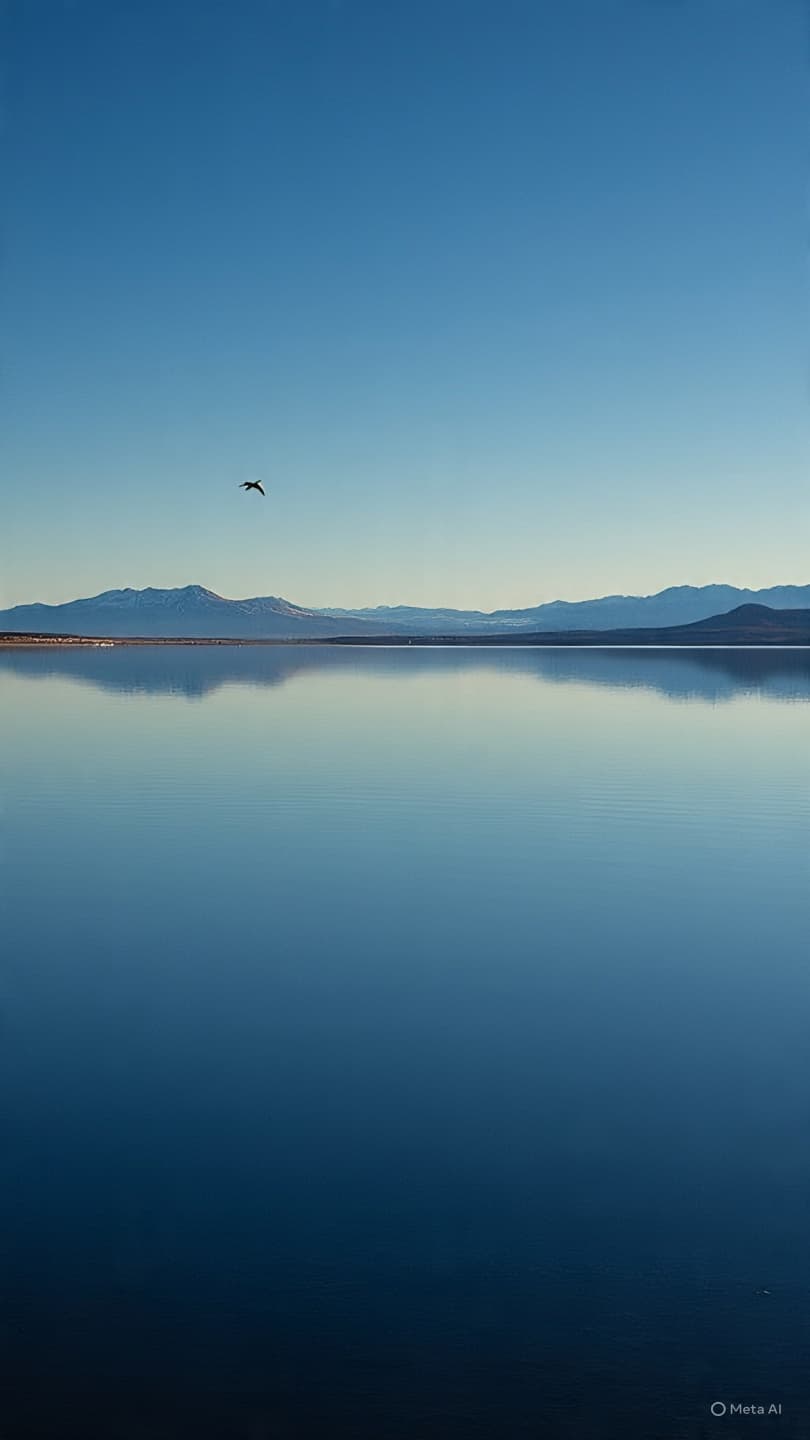
There are landscapes that seem to hold their secrets in plain sight. A lake, especially one as expansive and luminous as the , appears at first to be entirely understood—its surface reflecting the sky, its salinity defining its character, its boundaries mapped and measured. And yet, beneath that familiar surface, the earth often keeps quieter stories, layered and patient, waiting to be recognized.
Recent research suggests that beneath the Great Salt Lake lies something unexpected: a substantial reservoir of freshwater, hidden below the lakebed and contained within the sediments that have accumulated over time. It is not a visible body of water, nor a cavernous underground lake, but rather a network of saturated layers—porous sediments that hold freshwater distinct from the saline waters above.
The presence of such a reservoir introduces a gentle complexity to what might otherwise seem straightforward. Lakes, particularly saline ones, are often understood through their surface characteristics. But this finding shifts attention downward, to the interactions between water, sediment, and geological structure. It suggests that the lake is not a closed system, but part of a broader hydrological network, where fresh and saltwater coexist in subtle balance.
Scientists have identified this freshwater through a combination of geophysical measurements and sampling techniques, allowing them to distinguish between different types of water stored within the ground. The freshwater is thought to originate from surrounding sources—rainfall, snowmelt, and groundwater flows—that gradually move into the sediments beneath the lake.
What makes this discovery particularly meaningful is not only its existence, but its potential role. The freshwater reservoir may influence how the lake responds to environmental changes, including fluctuations in water levels and salinity. It could act as a buffer, moderating certain processes even as surface conditions shift.
There is also a broader context to consider. The Great Salt Lake has experienced significant changes in recent years, with water levels declining due to a combination of climate factors and human use. In this setting, the presence of an underground freshwater system invites questions about resilience—how natural systems store and redistribute water, and how these hidden reserves might contribute to long-term stability.
At the same time, the discovery is approached with careful consideration. The freshwater is not readily accessible in the way surface water is, nor is it necessarily available for extraction without consequences. The sediments that hold it are part of a delicate system, and any changes to that system would need to be understood in detail.
There is a certain quiet elegance in the idea that beneath a salt lake—a place defined by its mineral concentration—there exists a layer of fresh water. It is a reminder that natural systems often contain contrasts, that beneath what appears uniform, there can be variation and depth.
For scientists, this finding opens new avenues of study. Understanding how the freshwater reservoir formed, how it interacts with the lake above, and how it may change over time will require further research. Each question leads to another, extending the inquiry rather than concluding it.
In the broader sense, the discovery contributes to an evolving understanding of how water moves through landscapes. It highlights the importance of looking beyond the surface, of considering the layers that are not immediately visible but nonetheless essential.
As research continues, scientists emphasize that the presence of this freshwater reservoir is an important piece of a larger system, not a standalone solution to current challenges. Ongoing studies will aim to clarify its extent, dynamics, and role within the region’s hydrology.
For now, the finding stands as a thoughtful addition to our knowledge—a reminder that even in places we believe we know well, there are still quiet reservoirs of insight waiting beneath the surface.
AI Image Disclaimer Visuals are created with AI tools and are not real photographs.
Source Check (Credible Media Mentions)
Nature Science BBC The Guardian Reuters
Published by Banx Network. This article is part of the Banx decentralized media programme, powered by the BXE token on the XRP Ledger.