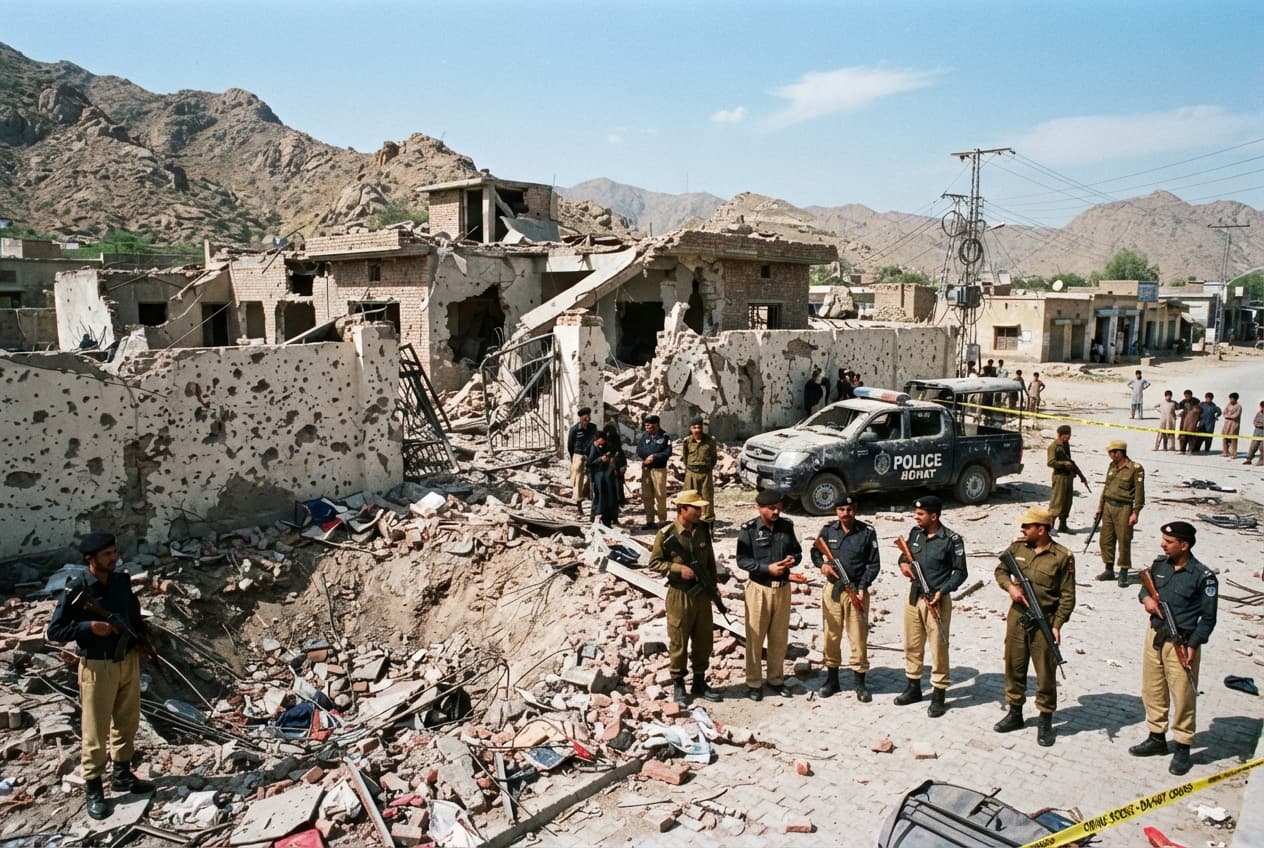
Kohat, Pakistan—At least thirty-one people, including sixteen police officers, died when heavily armed militants launched a coordinated suicide bombing and gun assault on a major police headquarters compound. The violence began Friday afternoon at the Old Police Lines complex located in the northern province of Khyber Pakhtunkhwa. Attackers drove an explosive-laden vehicle directly into the perimeter before gunmen fanned out across the multi-building facility. Emergency responders faced ongoing gunfire as they attempted to reach dozens of wounded individuals trapped inside the compound.
District health officials confirmed that over one hundred people sustained injuries during the multi-layered assault. The compound houses critical regional infrastructure, including the Counter Terrorism Department and the Special Branch offices. Plumes of thick black smoke rose above the wreckage as military reinforcements rushed to secure the perimeter. Several attackers entrenched themselves within administrative blocks, triggering an hours-long exchange of gunfire with security forces.
A splinter faction of the Pakistani Taliban claimed responsibility for orchestrating the deadly raid. Ambulances lined nearby access roads as medical teams worked under heavy armed guard to evacuate the critically wounded. Local hospitals issued urgent appeals for blood donations to cope with the sudden influx of trauma cases. Investigators began recovering explosive remnants and forensic evidence from the primary blast craters once tactical units cleared the immediate courtyards.
State leaders condemned the operation, vowing to intensify counterterrorism sweeps across the volatile border region. Intelligence analysts pointed to increasing security vulnerabilities across provincial law enforcement facilities. Army demolition squads moved in to sweep unexploded ordnance from the damaged structures as daylight faded. Regional authorities implemented strict curfews around the perimeter to facilitate ongoing clearance operations.
Rescue workers combed through collapsed masonry and shattered glass inside the administrative wings. Senior security commanders coordinated tactical maneuvers from a mobile command post established near the site. Families of missing personnel gathered outside police barricades waiting for casualty lists. The assault underscores the persistent threat posed by insurgent networks operating within the northwestern tribal corridors.
Federal ministers convened an emergency security session to evaluate regional threat levels following the breach. Intelligence agencies initiated tracking protocols to identify facilitators who aided the assault team. Hospitals reported that several of the hospitalized officers remain in critical condition. Military engineers prepared heavy equipment to stabilize structurally compromised buildings threatened by total collapse.
International monitors expressed grave concern over the rising frequency of targeted attacks against security personnel. Local administrative offices remained closed as security sweeps extended into neighboring districts. Police cordons pushed curious onlookers further away from the active conflict zone. Federal agencies pledged financial support for the families of the slain officers.
The investigation remains in its initial phase as forensic teams map the trajectory of the assault. Security forces continue to comb the perimeter for hidden explosive devices left behind by the attackers. Further operational updates from the interior ministry are expected once the compound is fully secured.
Published by Banx Network. This article is part of the Banx decentralized media programme, powered by the BXE token on the XRP Ledger.