Diplomacy, at times, resembles a long corridor lined with closed doors—some quietly waiting, others firmly sealed, and a few perhaps only appearing locked. The act of negotiation, then, becomes less about force and more about patience, about knowing which door to approach and when to knock. In the evolving landscape of international relations, such moments often emerge when tension and opportunity move side by side.
In recent developments, the administration of Donald Trump has introduced a structured proposal aimed at easing long-standing tensions with Iran. The reported 15-point framework reflects an attempt to shape a pathway that balances security concerns with the possibility of renewed engagement. Though details remain measured in their release, the outline suggests a combination of nuclear oversight, regional de-escalation, and phased adjustments to economic restrictions.
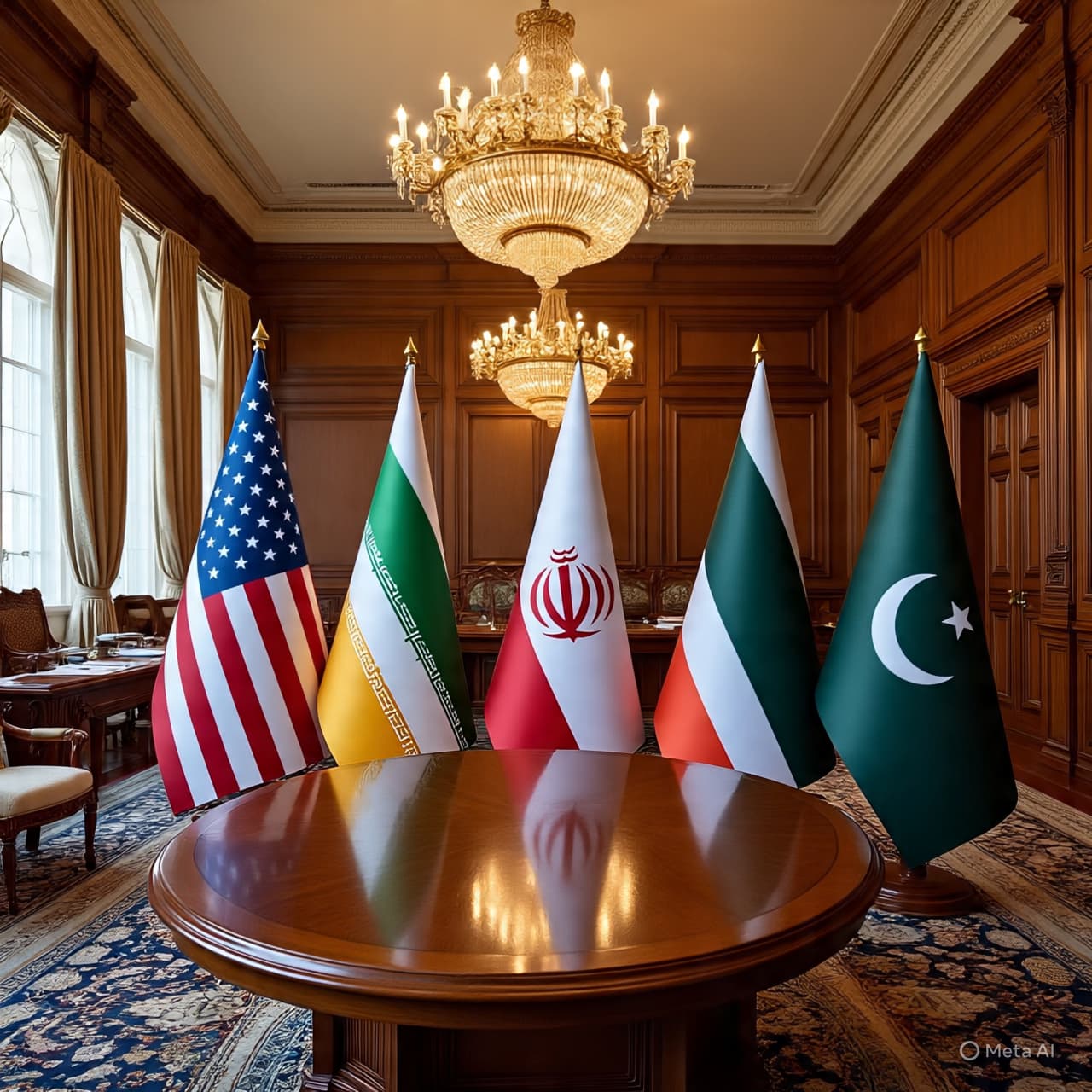
At nearly the same moment, Pakistan has stepped forward with an offer to host discussions, positioning itself as a potential bridge in a dialogue that has often lacked neutral ground. The gesture, while diplomatic in tone, carries its own significance. It reflects not only regional interest in stability but also a recognition that dialogue sometimes requires a setting removed from the immediate pressures of conflict.
The convergence of these two developments—the proposal and the offer—creates a subtle shift in the broader narrative. For years, relations between Washington and Tehran have been defined by cycles of strain and pause, with each side navigating a complex interplay of domestic priorities and international expectations. A structured proposal introduces a sense of direction, while the possibility of talks introduces a sense of space.
Yet, like many diplomatic initiatives, the path forward is neither linear nor assured. Iran’s response remains cautious, shaped by its own strategic considerations and historical experiences with similar overtures. The memory of past agreements, their promises, and their unraveling continues to inform how new proposals are received.
Meanwhile, the international community observes with a blend of attentiveness and restraint. For some, the proposal represents a reopening of channels that have long been constrained. For others, it is a reminder of how delicate such efforts can be, particularly in a region where alliances and rivalries are deeply intertwined.
Pakistan’s involvement adds another layer to this unfolding scenario. Its offer to host talks does not guarantee dialogue, but it introduces an option—an alternative setting where discussions might unfold with fewer immediate pressures. In diplomacy, even the availability of such a space can carry quiet significance.
What emerges from these parallel developments is not a conclusion, but a possibility. The proposal outlines terms; the offer suggests a venue. Between them lies the essential element that has yet to take shape: agreement.
For now, officials continue to signal openness, while also maintaining their respective positions. The process appears to be in its early stages, defined more by preparation than by commitment.
As the situation evolves, the emphasis remains on whether these initial steps can lead to sustained engagement. The presence of a framework and a potential host may not resolve longstanding differences, but they do mark a moment where dialogue, however tentative, is once again part of the conversation.
AI Image Disclaimer Illustrations were produced with AI and serve as conceptual depictions.
Source Check Credible sources covering this development:
Reuters Associated Press (AP News) Al Jazeera BBC News The Washington Post
Published by Banx Network. This article is part of the Banx decentralized media programme, powered by the BXE token on the XRP Ledger.