
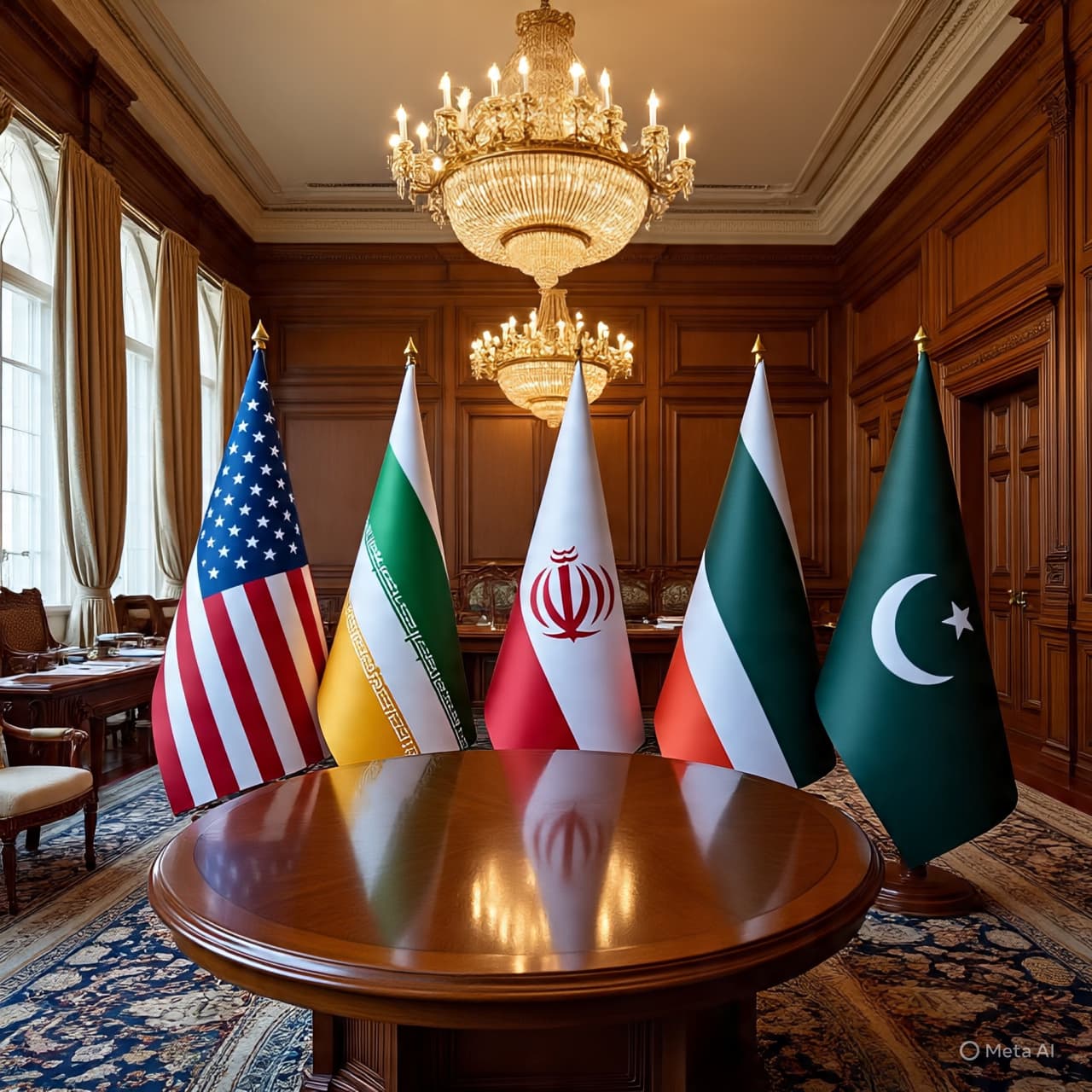
Key Highlights
- New Proposal:The U.S. has introduced a structured 15-point proposal aimed at easing tensions with Iran.
- Pakistan's Role: Pakistan has offered to host discussions, positioning itself as a neutral ground for dialogue.
- Diplomatic Landscape:The convergence of these developments suggests a potential shift in U.S.-Iran relations.
In the intricate world of international diplomacy, moments of opportunity often arise amidst tension, resembling a corridor lined with closed doors. The recent introduction of a structured proposal by the U.S. administration aims to ease long-standing tensions with Iran, presenting a 15-point framework that seeks to balance security concerns with renewed engagement. While details of the proposal remain limited, it suggests a combination of nuclear oversight, regional de-escalation, and phased adjustments to economic restrictions.
Simultaneously, Pakistan has stepped forward with an offer to host discussions, positioning itself as a potential bridge in a dialogue that has often lacked neutral ground. This diplomatic gesture reflects not only regional interest in stability but also acknowledges that effective dialogue sometimes requires a setting removed from the immediate pressures of conflict.
The convergence of these two developments—the U.S. proposal and Pakistan's offer—creates a subtle shift in the broader narrative surrounding U.S.-Iran relations. For years, interactions between Washington and Tehran have been characterized by cycles of strain and pause, with each side navigating a complex interplay of domestic priorities and international expectations. The introduction of a structured proposal provides a sense of direction, while the possibility of talks introduces a sense of space for negotiation.
However, the path forward is neither linear nor assured. Iran's response to the proposal remains cautious, shaped by its own strategic considerations and historical experiences with similar overtures. The memory of past agreements, their promises, and their unraveling continues to inform how new proposals are received by Tehran.
The international community watches these developments with a blend of attentiveness and restraint. For some, the proposal represents a reopening of channels that have long been constrained, while for others, it serves as a reminder of the delicate nature of such efforts, particularly in a region where alliances and rivalries are deeply intertwined.
Pakistan's involvement adds another layer to this unfolding scenario. Its offer to host talks does not guarantee dialogue, but it introduces an option—an alternative setting where discussions might unfold with fewer immediate pressures. In diplomacy, even the availability of such a space can carry significant weight.
What emerges from these parallel developments is not a conclusion, but a possibility. The proposal outlines terms; the offer suggests a venue. Between them lies the essential element that has yet to take shape: agreement. For now, officials continue to signal openness while maintaining their respective positions. The process appears to be in its early stages, defined more by preparation than by commitment.
As the situation evolves, the emphasis remains on whether these initial steps can lead to sustained engagement. The presence of a framework and a potential host may not resolve longstanding differences, but they mark a moment where dialogue, however tentative, is once again part of the conversation.
Published by Banx Network. This article is part of the Banx decentralized media programme, powered by the BXE token on the XRP Ledger.



