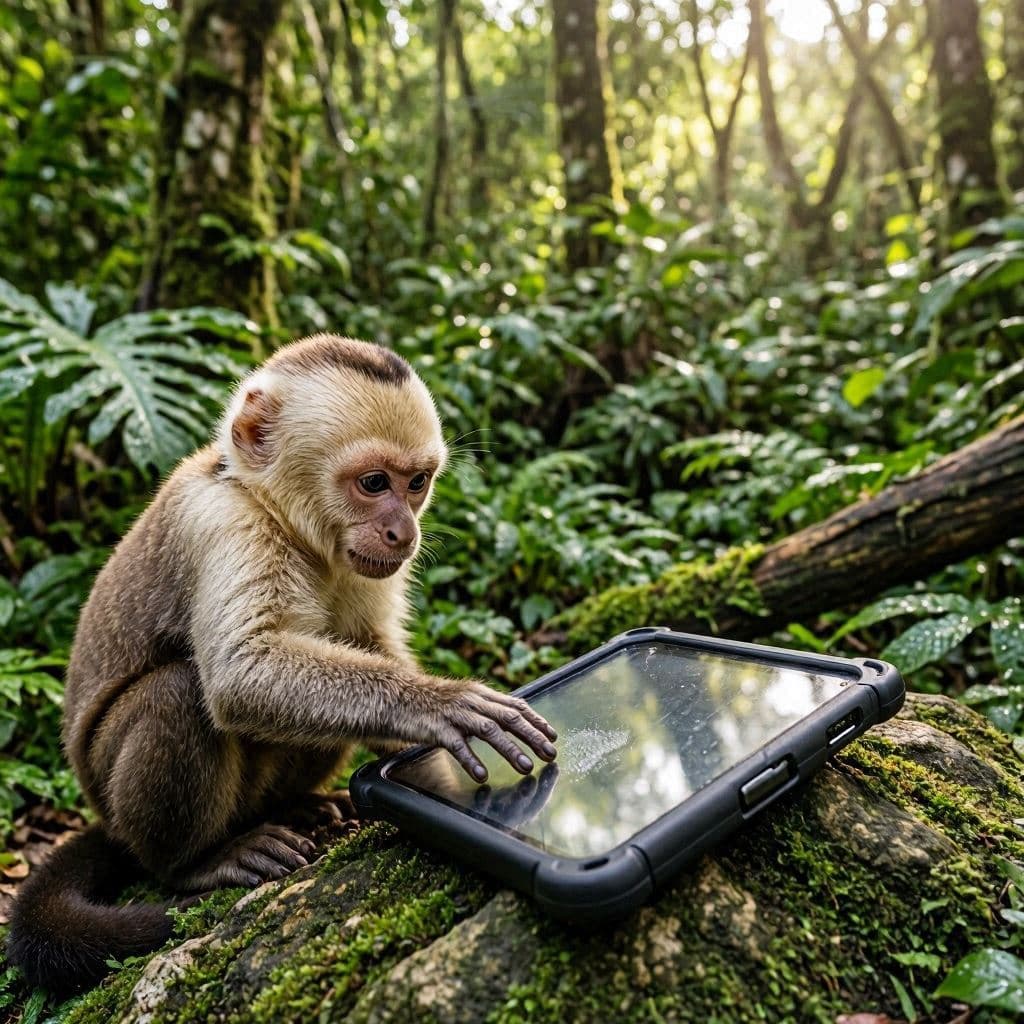
In the verdant canopy of the Taboga Forest Reserve in Costa Rica, a quiet revolution in scientific observation is taking place. Here, amidst the calls of birds and the rustle of leaves, sixteen wild capuchin monkeys have encountered a device that bridges the gap between nature and technology: an AI-powered touchscreen. This innovative setup, known as CapuchinAI, allows researchers to study primate cognition in their natural habitat without the constraints of captivity. It is a fascinating intersection of biology and engineering, offering a glimpse into the minds of our distant cousins through the gentle glow of a digital interface.
The project, led by researchers from Emory University and local partners, involves a ruggedized testing station equipped with facial recognition software. When a monkey approaches, the system identifies the individual in real time, allowing for personalized interactions. The primary incentive for participation is simple yet effective: banana rewards. By tapping specific areas on the screen, the monkeys can unlock these treats, turning the learning process into a game of curiosity and reward.
Sixteen monkeys engaged with the device, but it was ten who successfully figured out the mechanism of tapping the glass to receive food. What makes this study remarkable is not just the participation, but the spontaneous behaviors that emerged. Some monkeys, particularly a male named Papi, began to interact with the screen in unexpected ways, including kissing it. These actions suggest a level of social or exploratory engagement that goes beyond mere operant conditioning, hinting at complex cognitive processes.
The use of artificial intelligence in this context is transformative. Traditional methods of studying wild primates often require long periods of observation and can be intrusive. CapuchinAI automates the identification process, reducing human presence and allowing for continuous, unbiased data collection. The machine learning model achieves high accuracy in recognizing individual faces, even in the challenging lighting and angles of a forest environment.
This technology opens new avenues for understanding primate intelligence. By providing a standardized testing platform in the wild, scientists can compare cognitive abilities across different populations and species. It allows for the study of problem-solving, memory, and social learning in a setting where animals are free to choose whether or not to participate, ensuring that the data reflects natural behavior rather than captive adaptation.
The ethical considerations of such projects are carefully managed. The devices are designed to be non-invasive and do not disrupt the social structure or daily routines of the troop. The rewards are supplemental and do not create dependency. Researchers emphasize the importance of respecting the autonomy of the animals, viewing them as active participants in the scientific process rather than passive subjects.
As the study continues, the data collected will help refine our understanding of primate evolution and cognition. The ability to track individual learning trajectories over time provides insights into how intelligence develops in the wild. It also highlights the adaptability of capuchins, known for their tool use and complex social systems, to novel technological challenges.
The image of a wild capuchin kissing a touchscreen is more than a curious anecdote; it is a symbol of the evolving relationship between humans, technology, and the natural world. As AI tools like CapuchinAI become more prevalent, they offer promising ways to deepen our appreciation and understanding of wildlife, fostering a connection that is both scientific and deeply humane.
AI Image Disclaimer: The visuals accompanying this article are AI-generated illustrations designed to represent the themes of primate cognition and technological integration in nature.
Sources: The New York Times, Emory University News, Times of India, PMC
Published by Banx Network. This article is part of the Banx decentralized media programme, powered by the BXE token on the XRP Ledger.