There is a particular irony that attends a quarantine center built to keep a virus out, when the very systems meant to track and contain that virus have been dismantled. In Kenya, the first cluster of Ebola cases has emerged—eight people infected with the Bundibugyo strain, seven of them close contacts of a man who traveled from the Democratic Republic of the Congo and died in a Nairobi hospital . The outbreak is the second-largest in history, with more than 4,300 dead and 9,000 sickened across the region . And the American response, critics say, has made the work of containing it harder.
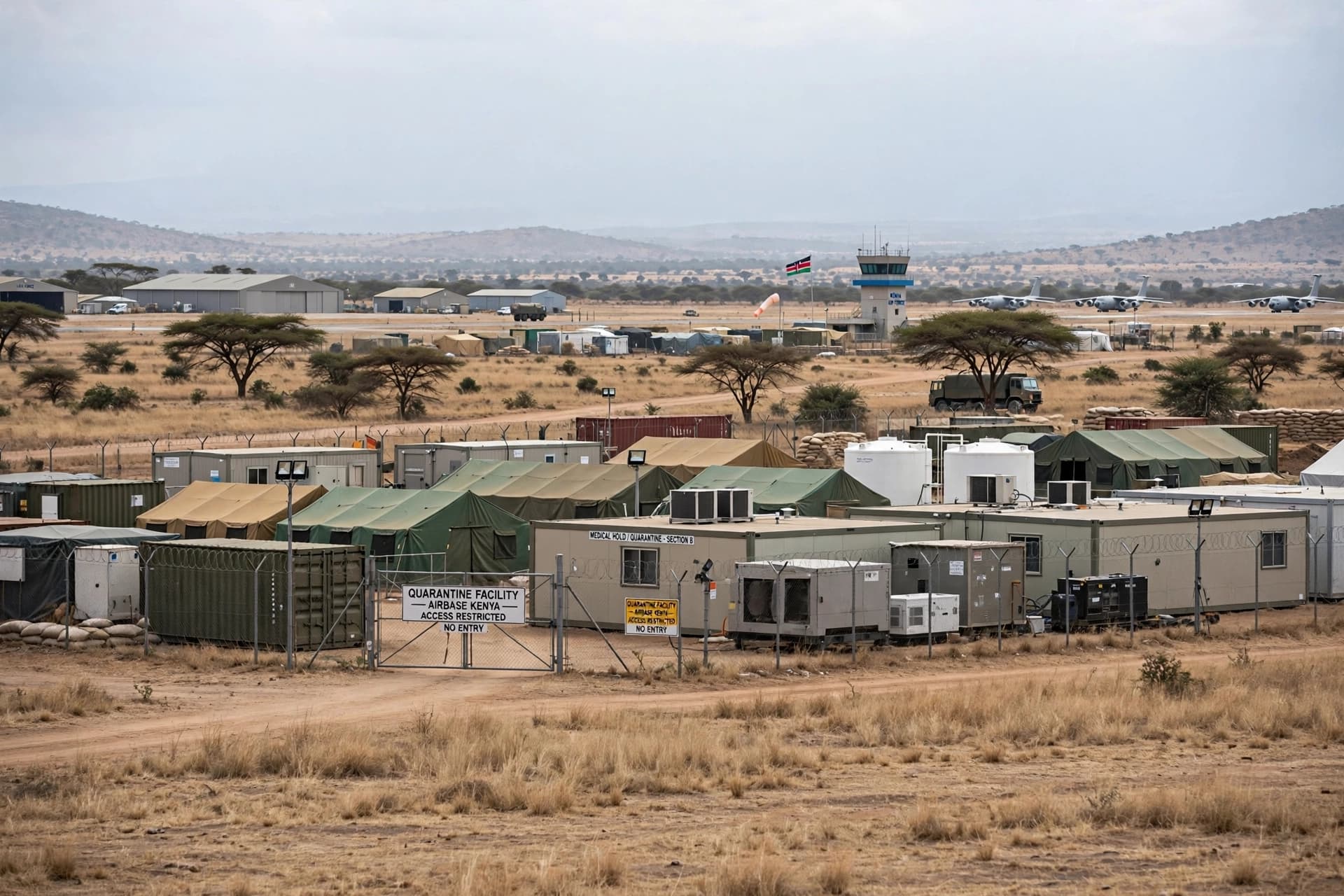
The United States built a controversial quarantine center at Laikipia airbase, intended for Americans returning from the DRC. But the facility was opposed by locals, sparked protests, and was halted by a Kenyan court pending a legal challenge . Allan Maleche, executive director of the Kenya Legal & Ethical Issues Network on HIV and AIDS, said Kenyans were concerned because "there was no information and people did not know why the quarantine place was being set up, who was actually going to use it, and what had informed that" . The litigation will be decided in November.
The unease runs deeper than one facility. The Trump administration has dismantled USAID, cut funding and staff at the CDC, and withdrawn the United States from the World Health Organization . On October 1, the CDC closed HIV prevention offices in Angola and South Sudan . Funding for programs in the DRC—where the Ebola outbreak is centered—has been slashed. "When you pull back on those, not only do you leave those countries less prepared to deal with that day-to-day threat, but it also means that they're less prepared to deal with future emergencies," said Jennifer Nuzzo, director of the pandemic center at Brown University's school of public health .
Nuzzo also questioned the logic of the quarantine center itself. The United States already has "world-class" Ebola treatment units, she noted. "American taxpayers built these units for precisely this purpose, and it's mind-boggling to me that we're going to leave them empty" . In previous outbreaks, actively ill patients were evacuated safely to these centers and recovered without further spread. This time, two American physicians exposed to the virus were sent to the Czech Republic and Germany rather than home .
The Kenyan government has pointed to the success of its contact tracing and quarantine, with about 108 people quarantined in Nairobi. Maleche said the "general feeling is that the contact tracing systems are working" . But he also noted that Kenyans are wondering why there were "many lapses" that allowed a sick person to travel across countries in the first place. The border between the DRC and Uganda, and the routes beyond, are not easily sealed.
The outbreak continues to widen. The United States is negotiating bilateral health agreements with individual countries, but the process has been mired in secrecy. "It's not very clear what's the plan, who's rolling it out, and what will be involved," Maleche said . For Kenya, facing its first Ebola cases, the question is not whether the United States has a role to play, but whether that role is helping or hindering. The answer, for now, is both.
The imagery accompanying this report is generated by AI.
Sources: The Guardian, CNN, Citizen Digital, The Standard, MS NOW
Published by Banx Network. This article is part of the Banx decentralized media programme, powered by the BXE token on the XRP Ledger.