Key Highlights
- Kaja Kallas seeks EU envoy role for peace talks.
- Moscow reportedly does not want her as a representative.
- EU member states to decide on the envoy's appointment.
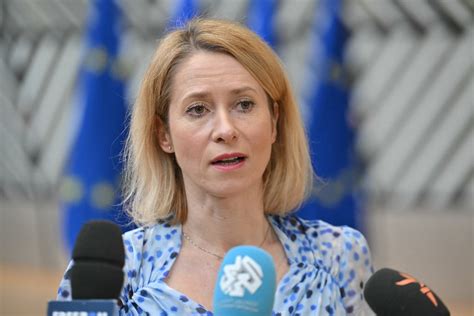
Kaja Kallas, the EU's foreign policy chief, has publicly expressed her ambition to serve as the European Union's envoy for negotiations aimed at resolving the ongoing conflict in Ukraine. During a recent summit in Dublin, Kallas emphasized the importance of selecting a representative with an institutional role, contrasting this with the United States' approach of appointing special envoys. Her remarks come amid ongoing discussions among EU leaders regarding the appointment of a peace envoy, a role that remains undecided.
In her statements, Kallas acknowledged a significant hurdle: Moscow's apparent reluctance to engage with her as a potential envoy. "The Russians don’t want me at the table," she stated, highlighting the complexities of diplomatic negotiations in the context of the war. This admission raises questions about the EU's strategy in mediating peace talks and the influence of Russian preferences on the selection of representatives.
The summit in Dublin marked a critical moment for EU leaders as they deliberated on the best approach to facilitate peace talks. Kallas's call for an envoy with a formal institutional role reflects a broader desire within the EU to establish a cohesive and unified front in its foreign policy, particularly concerning the ongoing conflict in Ukraine. The EU's approach has often been scrutinized, especially in comparison to the US, which has utilized special envoys in various diplomatic efforts.
Kallas's candid acknowledgment of Russia's stance underscores the challenges faced by the EU in its diplomatic efforts. The decision regarding the appointment of a peace envoy ultimately lies with the member states, and Kallas's push for a representative who can effectively engage with all parties involved is a crucial aspect of the ongoing discussions. As the situation evolves, the EU's ability to navigate these diplomatic waters will be pivotal in shaping the future of peace negotiations.
The role of the EU envoy for peace talks remains a topic of significant interest, with various stakeholders weighing in on the qualifications and approach needed to effectively mediate between conflicting parties. Kallas's insights and the ongoing discussions among EU leaders will likely influence the direction of these negotiations in the coming weeks.
Published by Banx Network. This article is part of the Banx decentralized media programme, powered by the BXE token on the XRP Ledger.