
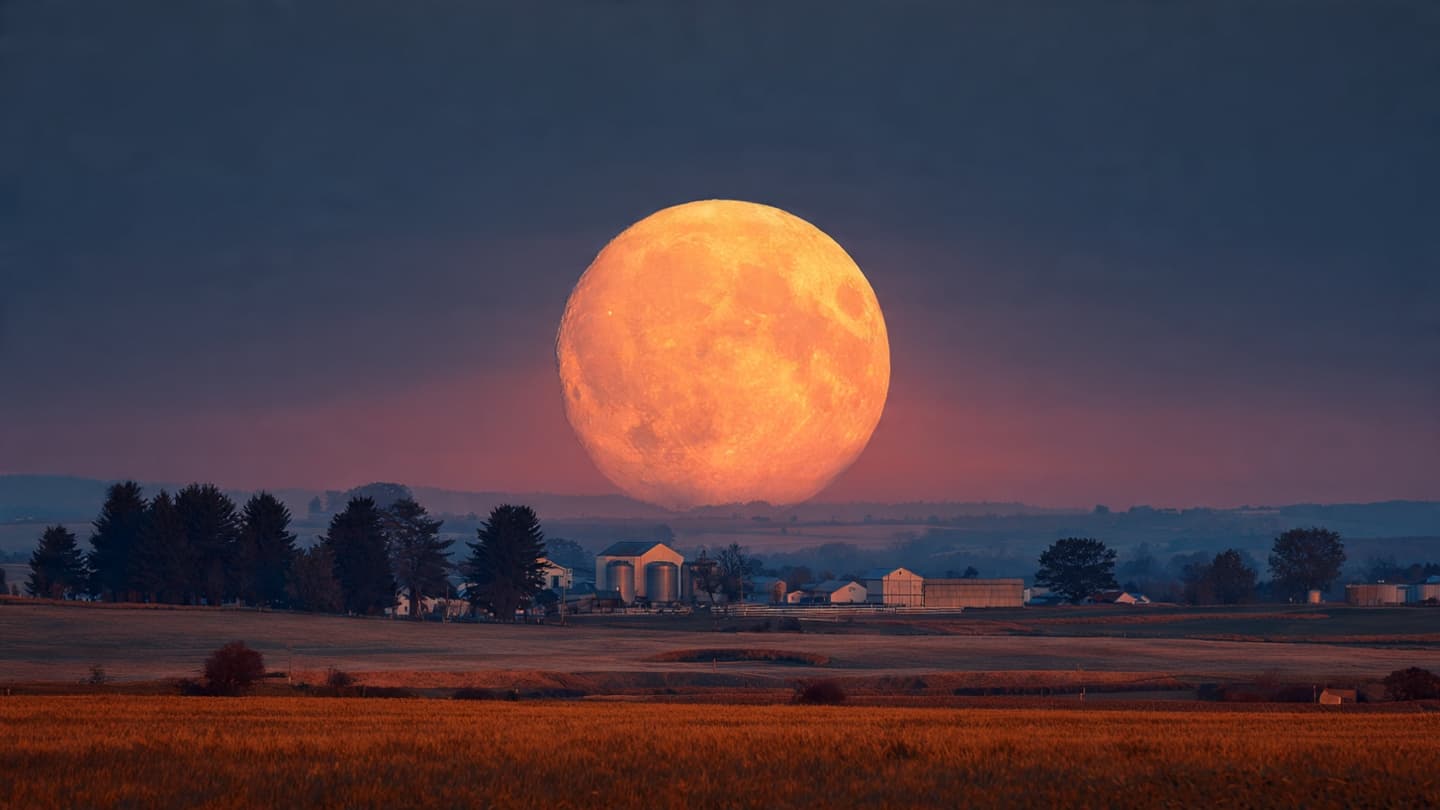
The Moon has long served as humanity's quiet companion, rising faithfully above changing landscapes and generations alike. In June, that familiar presence takes on a special significance as the annual Strawberry Moon prepares to illuminate evening skies.
The term "Strawberry Moon" does not refer to the Moon's color. Instead, the name originates from Native American traditions, particularly among Algonquin peoples, who associated June's full Moon with the brief season for harvesting wild strawberries.
This year's Strawberry Moon will reach full illumination during June, offering skywatchers an opportunity to observe one of the year's most recognizable lunar events. Depending on local conditions, observers may notice the Moon appearing unusually low on the horizon.
Because the Moon often rises shortly after sunset, the best viewing opportunities typically occur during moonrise. Atmospheric conditions near the horizon can sometimes give the Moon golden, orange, or reddish hues, creating particularly striking views.
Astronomers recommend choosing locations with clear views toward the eastern horizon and minimal light pollution. Parks, open fields, coastlines, and elevated areas generally provide favorable viewing conditions.
Unlike meteor showers or eclipses, observing a full Moon requires no specialized equipment. Binoculars or small telescopes may enhance details such as lunar craters and maria, but the event remains easily visible to the naked eye.
The Strawberry Moon also holds cultural significance in many traditions around the world, reflecting humanity's enduring relationship with seasonal cycles and the night sky.
As evening settles and the Moon ascends above the horizon, observers may once again find that even familiar celestial events can inspire quiet reflection and renewed curiosity.
AI Image Disclaimer: Illustrative images featured with this report were generated using artificial intelligence for visual support.
Sources: NASA, EarthSky, The Old Farmer's Almanac, Space.com
Published by Banx Network. This article is part of the Banx decentralized media programme, powered by the BXE token on the XRP Ledger.



