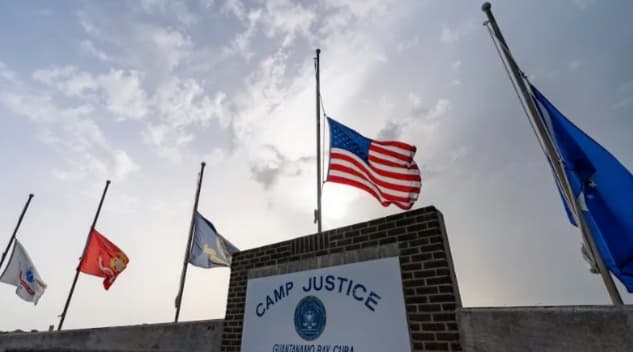
In a significant legal decision, a federal judge has ruled against the Trump administration's attempt to dismiss a lawsuit that questions the legality of migrant detentions at Guantánamo Bay. This lawsuit hinges on arguments surrounding human rights and the proper treatment of individuals seeking asylum.
The case, brought by multiple advocacy groups, alleges that the government's actions violate both U.S. law and international treaties. Detainees at Guantánamo are challenging the conditions of their confinement, asserting that they have been subjected to inhumane treatment and held without due process.
Judge Sparkle L. Sooknanan, who presided over the case, emphasized the importance of ensuring that all individuals, regardless of their immigration status, are afforded due process under the law. The ruling signals that the courts may play a crucial role in addressing the contentious policies surrounding immigration enforcement.
As the lawsuit proceeds, it could lead to heightened scrutiny of the administration's approach to migration, bringing attention to the ongoing humanitarian crisis faced by many at the U.S. borders. Advocacy groups are viewing this ruling as a vital step towards holding the government accountable for its treatment of migrants.
The implications of this decision extend beyond this case, potentially influencing other legal challenges against immigration policies. The ruling sets a precedent for future cases that seek to protect the rights of vulnerable populations in the face of stringent government measures.
As the legal landscape evolves, the ongoing debate over Guantánamo Bay and the nation's immigration policies remains a point of contention, underscoring the challenges and complexities that lie ahead for policymakers and advocates alike.
Published by Banx Network. This article is part of the Banx decentralized media programme, powered by the BXE token on the XRP Ledger.