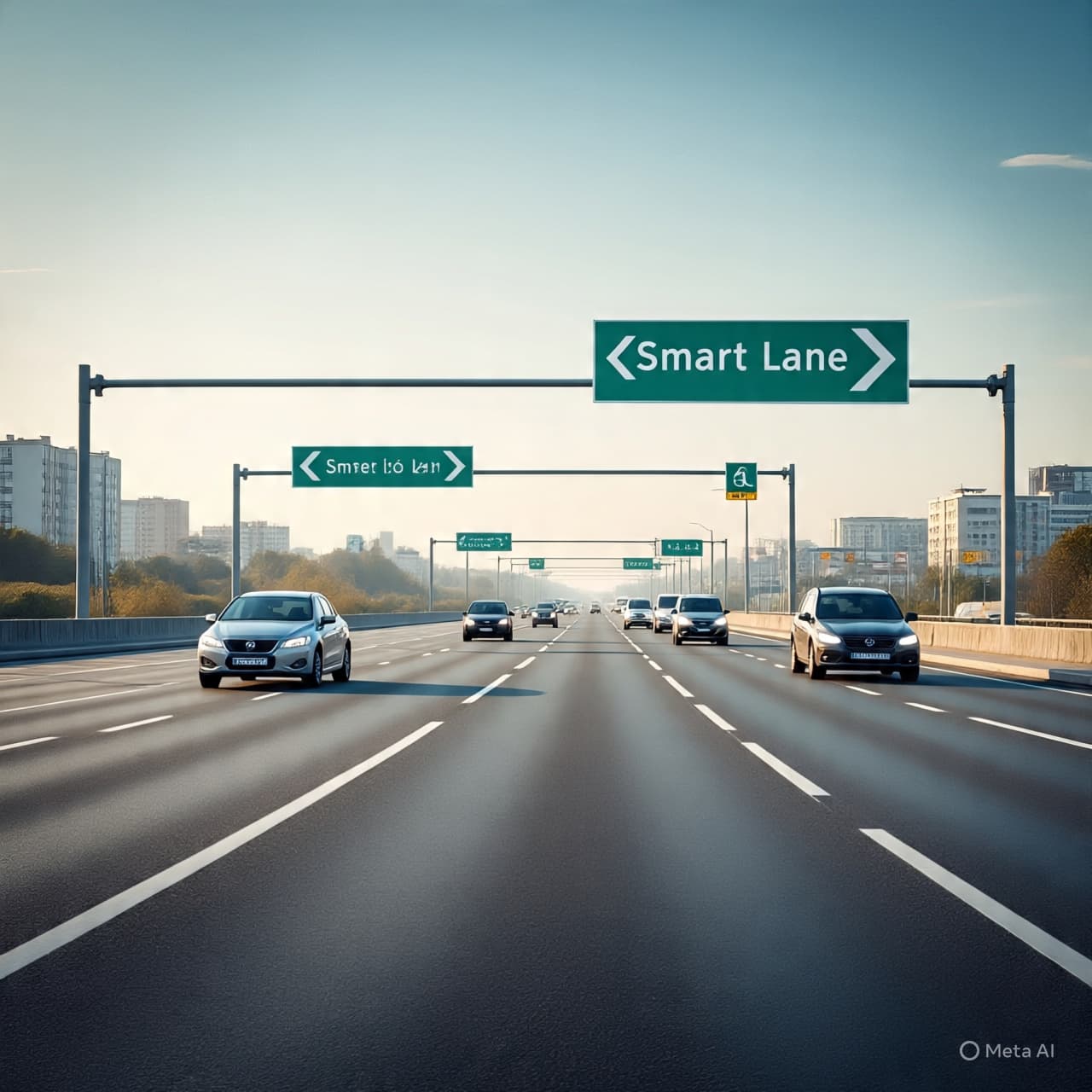
There are parts of a journey that are shaped not by distance, but by reassurance — the sort that settles in when travellers feel they’re moving not just forward, but safely. On Malaysia’s highways this week, that sense of calm on the asphalt was reinforced in Parliament when Works Minister Datuk Seri Alexander Nanta Linggi highlighted the performance of smart lanes in reducing accident rates.
Smart lanes — stretches of highway where emergency shoulders are temporarily opened for traffic during peak periods — have been introduced to ease congestion and make better use of available road space. But beyond moving vehicles, they have prompted questions about how safety is measured and maintained when patterns of travel change.
In his remarks, Nanta noted that accident rates in smart lane zones are very low relative to the number of vehicles using them. He pointed to examples where accident figures declined after smart lanes were activated: a 22 per cent drop on the stretch from Putra Mahkota to Southville, and a 74 per cent reduction between the Rawang rest and service area and the Rawang interchange compared with the period before such lanes were in use.
But he was careful to frame these improvements within a broader context of driver behaviour. According to the minister, most accidents that occur in smart lanes are linked to human error — such as speeding, unsafe lane changes without signalling, or using the lanes outside designated operation hours — rather than flaws in the road design itself.
To support safe travel, highway authorities carry out pre‑activation safety patrols and use real‑time monitoring tools like closed‑circuit cameras and variable message signs to inform motorists about smart lane status. Cooperation with the police and the Road Transport Department also aims to keep heavy vehicles out of smart lanes and manage enforcement when needed.
The approach reflects an idea that innovation and oversight can work hand in hand: smart lanes are not simply extra space on the road, but part of a managed system designed to respond to traffic conditions while keeping safety standards high.
For everyday travellers, it’s a reminder that while technology and planning can shape safer journeys, the choices made behind the wheel — from observing speed limits to signalling lane changes — remain central to making that safety a reality.
AI Image Disclaimer “Visuals are created with AI tools and are not real photographs.”
Sources The Star — Smart lanes are safer for motorists, says Nanta Paul Tan’s Automotive News — SmartLanes on highways are safer for motorists The Vibes — Human error, not road design, behind most accidents in smart lane zones RTM — Kadar kemalangan di zon smart lane rendah Sinar Harian — Pelaksanaan ‘smart lane’ discussed in Parliament
Published by Banx Network. This article is part of the Banx decentralized media programme, powered by the BXE token on the XRP Ledger.