
Key Highlights
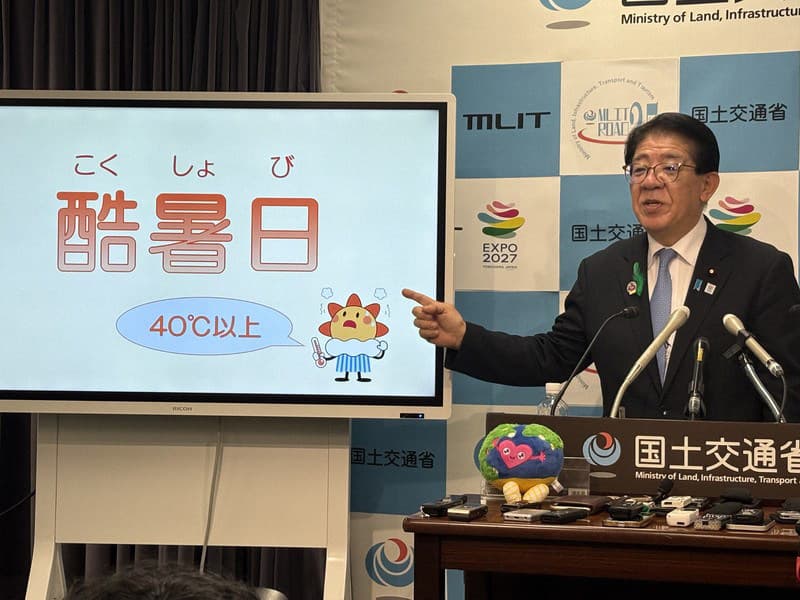
- New Term:Japan's Meteorological Agency introduces 'kokushobi' for days exceeding 40°C.
- Record Heat:2025 marked the hottest summer on record, with temperatures reaching 41.8°C.
- Public Awareness:The term aims to enhance communication about heat dangers and encourage safety measures.
Japan's Meteorological Agency (JMA) has officially introduced a new term, 'kokushobi,' which translates to 'cruelly hot day,' to describe days when temperatures reach or exceed 40 degrees Celsius. This decision comes in response to the unprecedented heat experienced during the summer of 2025, which was recorded as the hottest summer since records began, with temperatures soaring to 41.8°C in Isesaki, Gunma Prefecture.
The term 'kokushobi' was selected through an online survey that garnered nearly 478,000 responses, with 202,954 votes in favor of this designation. It significantly outperformed other suggested terms such as 'super-extremely hot day' ('cho-moshobi') and 'drastically hot day' ('gokushobi'). The JMA's goal with this new terminology is to improve public understanding of the dangers associated with extreme heat and to encourage individuals to take necessary precautions during such weather conditions.
Japan has been experiencing consecutive years of temperatures surpassing 40°C, a trend that the JMA attributes to global climate change. The agency has noted an increasing frequency and intensity of heatwaves, prompting them to take proactive measures in raising public awareness and providing guidance during extreme weather events. This new classification is part of a broader strategy to address the challenges posed by climate change and its impact on public health.
In addition to 'kokushobi,' the JMA has established a system of categorizing days based on temperature thresholds. For instance, 'natsubi' refers to summer days exceeding 25°C, 'manatsubi' denotes midsummer days over 30°C, and 'moshobi' is used for extremely hot days that exceed 35°C. The introduction of 'kokushobi' represents a significant advancement in the agency's efforts to communicate the severity of Japan's evolving climate challenges and the associated health risks.
As Japan prepares for the upcoming summer, climate experts and health officials emphasize the critical need for preparedness. With temperatures expected to remain above normal levels, there is a heightened urgency for effective public health strategies to mitigate the impacts of extreme heat, particularly on vulnerable populations. The JMA's initiative to introduce 'kokushobi' is a crucial step in fostering a culture of awareness and safety in the face of rising temperatures.
Published by Banx Network. This article is part of the Banx decentralized media programme, powered by the BXE token on the XRP Ledger.



