
Key Highlights
- Japan's Prime Minister Sanae Takaichi asserts the country's claim over Dokdo.
- Takaichi plans to elevate Japan's presence at Takeshima Day events.
- South Korea firmly rejects Japan's renewed claims, maintaining control over the islets.
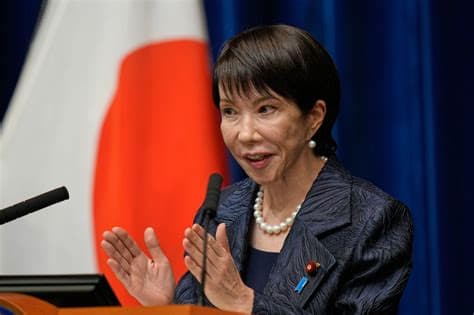
In a recent session of the House of Representatives Budget Committee, Japanese Prime Minister Sanae Takaichi reiterated Japan's claim that Dokdo, known as Takeshima in Japan, is Japanese territory. Takaichi expressed her intention to clearly communicate this stance to the international community, emphasizing Japan's historical and legal assertions regarding the islets. Her remarks come at a time when the territorial dispute remains a significant point of contention between Japan and South Korea.
Takaichi's comments coincide with annual observances like Takeshima Day, a day dedicated to Japan's claim over the islets. This year, she indicated her desire to escalate Japan's position by potentially sending a cabinet minister to attend upcoming Takeshima Day events, which traditionally see lower-ranking officials representing Japan. This move signals a more assertive approach from the Japanese government regarding its territorial claims.
The Prime Minister conveyed her commitment to ensuring that Japan's claims are recognized globally. "We will actively inform the international community that Takeshima is Japanese territory," she stated, highlighting Japan's intention to garner international support for its position. This assertion is part of a broader strategy to reinforce Japan's claims amid ongoing tensions with South Korea.
However, the situation remains contentious. South Korea's foreign ministry swiftly responded, asserting that Dokdo is an integral part of Korean territory, robustly rejecting Japan's renewed claims. South Korea maintains effective administrative control over the islets, deploying a small police presence to uphold its sovereignty. The South Korean government has consistently emphasized its historical ties to the territory, which it refers to as Dokdo.
The longstanding territorial dispute has strained Japan-South Korea relations, complicating efforts for diplomatic improvement. Both nations have faced challenges in addressing historical grievances, and the Dokdo issue remains a flashpoint in their interactions. As tensions simmer, the focus will be on how both nations navigate this sensitive issue moving forward, particularly in light of Takaichi's recent statements and the potential for increased diplomatic friction.
The international community's response to this renewed assertion by Japan will also be crucial. Observers are watching closely to see if other nations will take a stance on the matter or if they will remain neutral, as the implications of this territorial dispute extend beyond the two nations involved.
Published by Banx Network. This article is part of the Banx decentralized media programme, powered by the BXE token on the XRP Ledger.



