
Key Highlights
- Date of Agreement:March 28, 2026, marking a pivotal moment in international relations.
- Focus Areas:Joint military exercises, intelligence sharing, and strategies against common security threats.
- Broader Implications:Strengthening global security architectures and addressing non-traditional security issues.
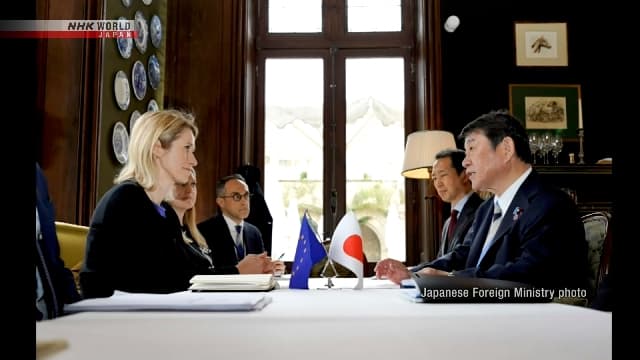
On March 28, 2026, Japan and the European Union announced a significant agreement aimed at bolstering cooperation and dialogue on security and defense matters. This agreement highlights the growing recognition of the importance of collaborative efforts in addressing evolving security threats in an increasingly complex geopolitical landscape.
The agreement comes in light of rising tensions in various regions, including the Asia-Pacific and Eastern Europe, and the necessity for allied nations to work together to ensure mutual security. Both Japanese and EU officials emphasized the importance of fostering strong partnerships to enhance crisis response mechanisms and defense capabilities. This collaboration is seen as essential in a world where security challenges are becoming more multifaceted and interconnected.
Key areas of focus will include joint military exercises, intelligence sharing, and the development of comprehensive strategies to tackle common security challenges, such as cyber threats, terrorism, and regional conflicts. The partnership aims to strengthen relations not only between Japan and the EU but also among other allied nations, creating a united front against shared threats.
In addition to traditional security issues, the dialogue will extend to discussions on non-traditional security challenges, including climate change and its impacts on global stability. Both parties are committed to addressing these challenges through sustainable practices and international collaboration, recognizing that climate change poses a significant risk to security and stability worldwide.
As Japan and the EU move forward with this agreement, the implications for international security governance will be significant. This partnership could lead to new frameworks for cooperation among like-minded democratic nations, enhancing both regional and global security architectures. The agreement is expected to foster a more stable and resilient international environment, as countries work together to navigate the complexities of modern security threats.
The commitment to strengthen security cooperation between Japan and the EU reflects a broader trend of nations recognizing the need for collective action in the face of global challenges. As geopolitical dynamics continue to evolve, this partnership may serve as a model for future collaborations aimed at ensuring peace and security in an uncertain world.
Published by Banx Network. This article is part of the Banx decentralized media programme, powered by the BXE token on the XRP Ledger.



