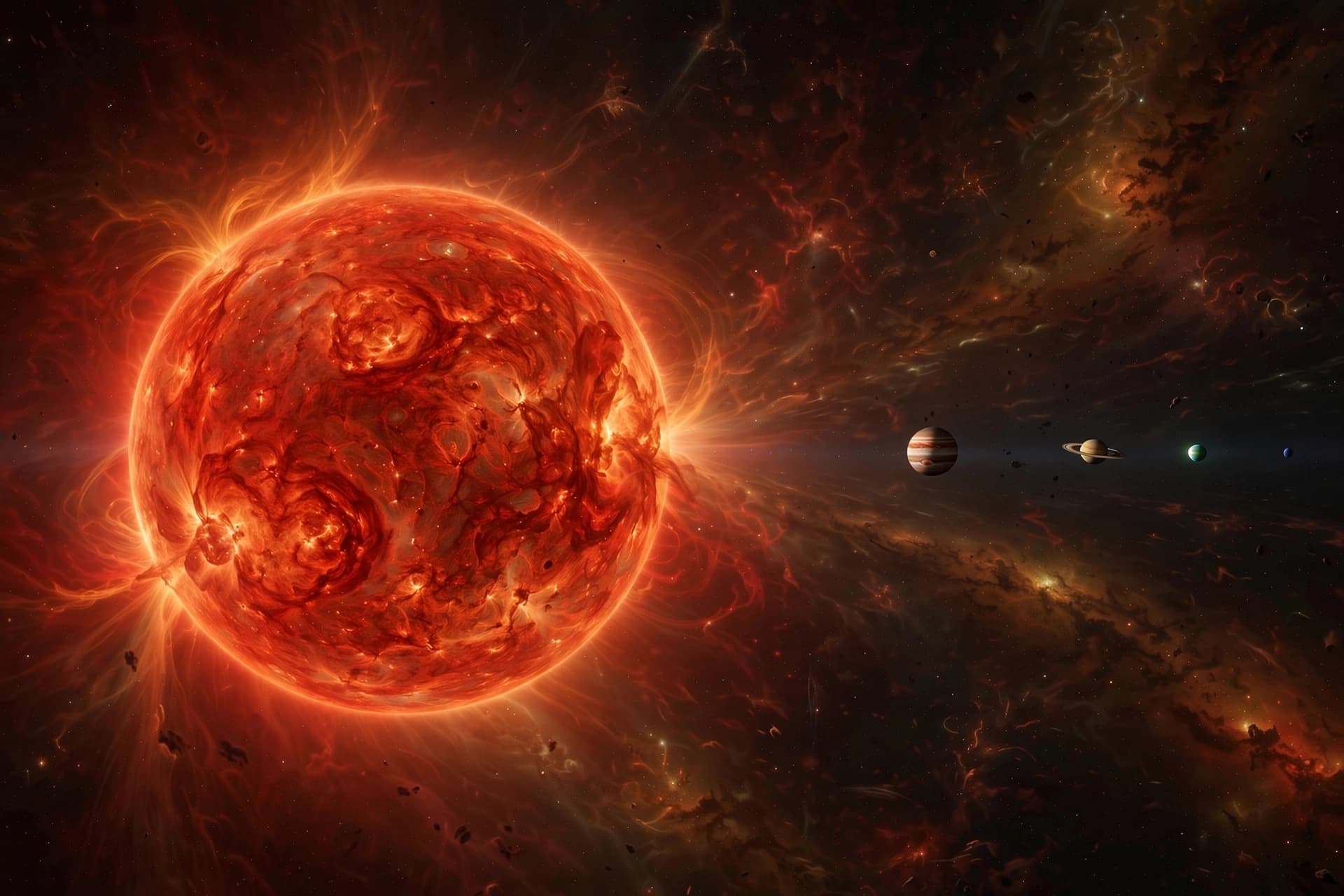
In the deep, silent archives of the early universe, light travels for billions of years to reach our eyes, carrying stories of creation that are often difficult to decipher. The James Webb Space Telescope (JWST) has recently peered into this ancient past, identifying a luminous anomaly that defies simple classification. Appearing as a massive star, this object radiates with the intensity of one hundred billion suns, yet its heart beats not with nuclear fusion, but with the hungry gravity of a black hole.
Discovered in data from just 660 million years after the Big Bang, this object challenges our understanding of how celestial bodies form and evolve. At first glance, it mimics the appearance of a supermassive star, glowing with intense brightness. However, detailed spectral analysis reveals a different truth: the light is generated by an accretion disk surrounding a black hole, where matter spirals inward at tremendous speeds, heating up and releasing vast amounts of energy before crossing the event horizon.
This discovery is significant because it offers a glimpse into the "cosmic dawn," a period when the first stars and galaxies were beginning to illuminate the darkness. Finding such a powerful engine so early in the universe’s history suggests that black holes may have grown much faster than previously thought. It raises questions about the seeds of these cosmic giants—whether they started small and grew rapidly, or formed from the collapse of massive primordial clouds.
The distinction between a star and an accreting black hole is fundamental to astrophysics. Stars shine by fusing hydrogen into helium, a process that takes millions of years to stabilize. In contrast, an accreting black hole shines through friction and gravitational potential energy, a mechanism that can produce extreme luminosity in a relatively short time. This object, therefore, represents a different pathway to brilliance, one driven by consumption rather than creation.
For astronomers, this finding is akin to finding a fossil that rewrites the timeline of evolution. It suggests that the early universe was more dynamic and violent than models had predicted. The presence of such a bright source implies that gas was available in dense concentrations, feeding the black hole and allowing it to outshine entire galaxies. This abundance of fuel may have been common in the young cosmos, facilitating rapid growth.
The JWST’s infrared capabilities were crucial in detecting this object. Because the universe has expanded over billions of years, the light from this distant era has been stretched into longer wavelengths, invisible to optical telescopes. By capturing this infrared signal, Webb allows scientists to look further back in time than ever before, uncovering objects that would otherwise remain hidden in the cosmic fog.
As researchers continue to analyze the data, they hope to find more examples of these hybrid objects. Each discovery helps refine the models of galaxy formation and black hole growth. It is a reminder that the universe is full of surprises, and that our current knowledge is merely a snapshot of a much larger, more complex reality.
The story of this bizarre object is one of hidden power. It reminds us that appearances can be deceiving, even on a cosmic scale. What looks like a star may actually be a void, consuming everything around it to shine with borrowed light. In studying these ancient beacons, we learn not only about the past but also about the fundamental forces that shape the cosmos today.
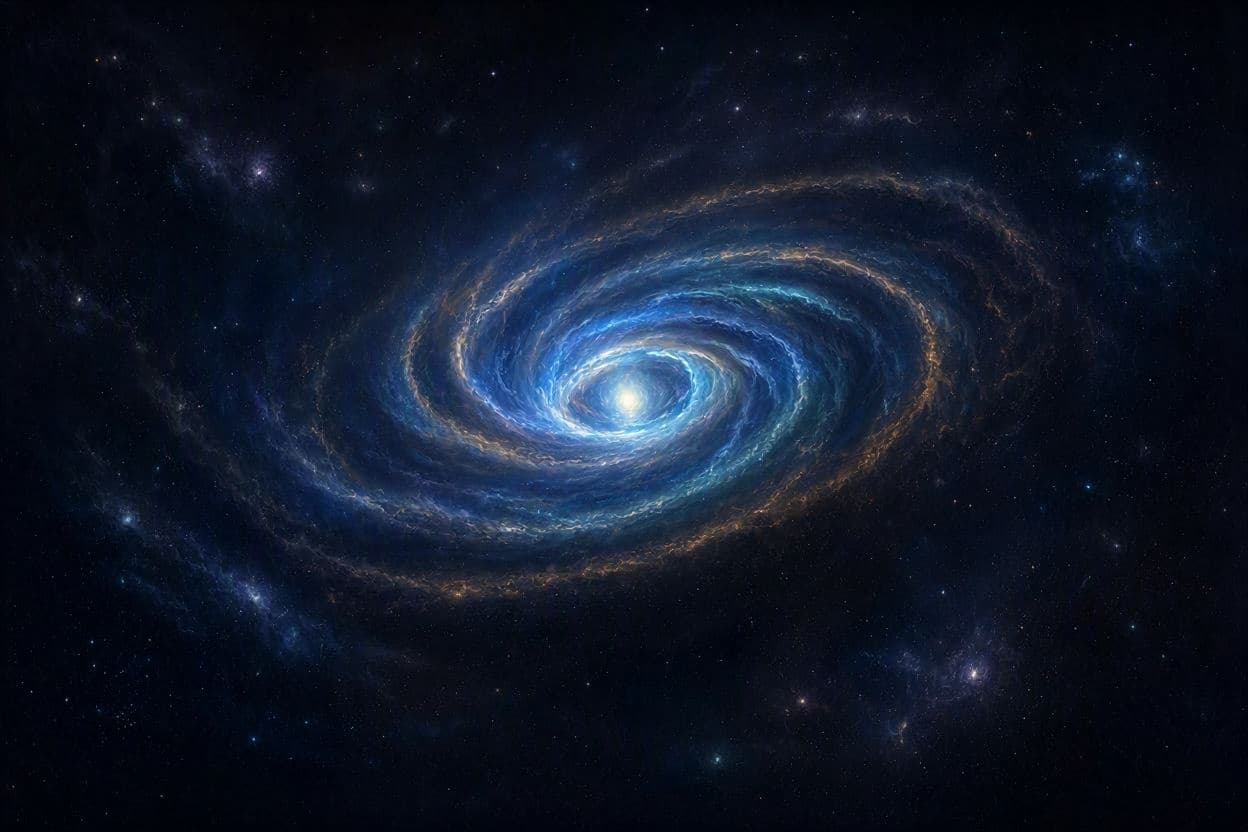
AI Image Disclaimer: The visual elements in this article are AI-generated illustrations depicting abstract representations of early universe phenomena and black hole accretion, designed to visualize complex astronomical concepts without claiming photographic accuracy.
Sources: NASA, Space.com, Scientific American, Phys.org
Published by Banx Network. This article is part of the Banx decentralized media programme, powered by the BXE token on the XRP Ledger.