
Key Highlights
- Incident:A massive fire in Jakarta's informal settlement killed four family members.
- Response:Twenty fire engines struggled to control the blaze amid narrow alleyways.
- Aftermath:Over one hundred residents displaced, receiving emergency aid.
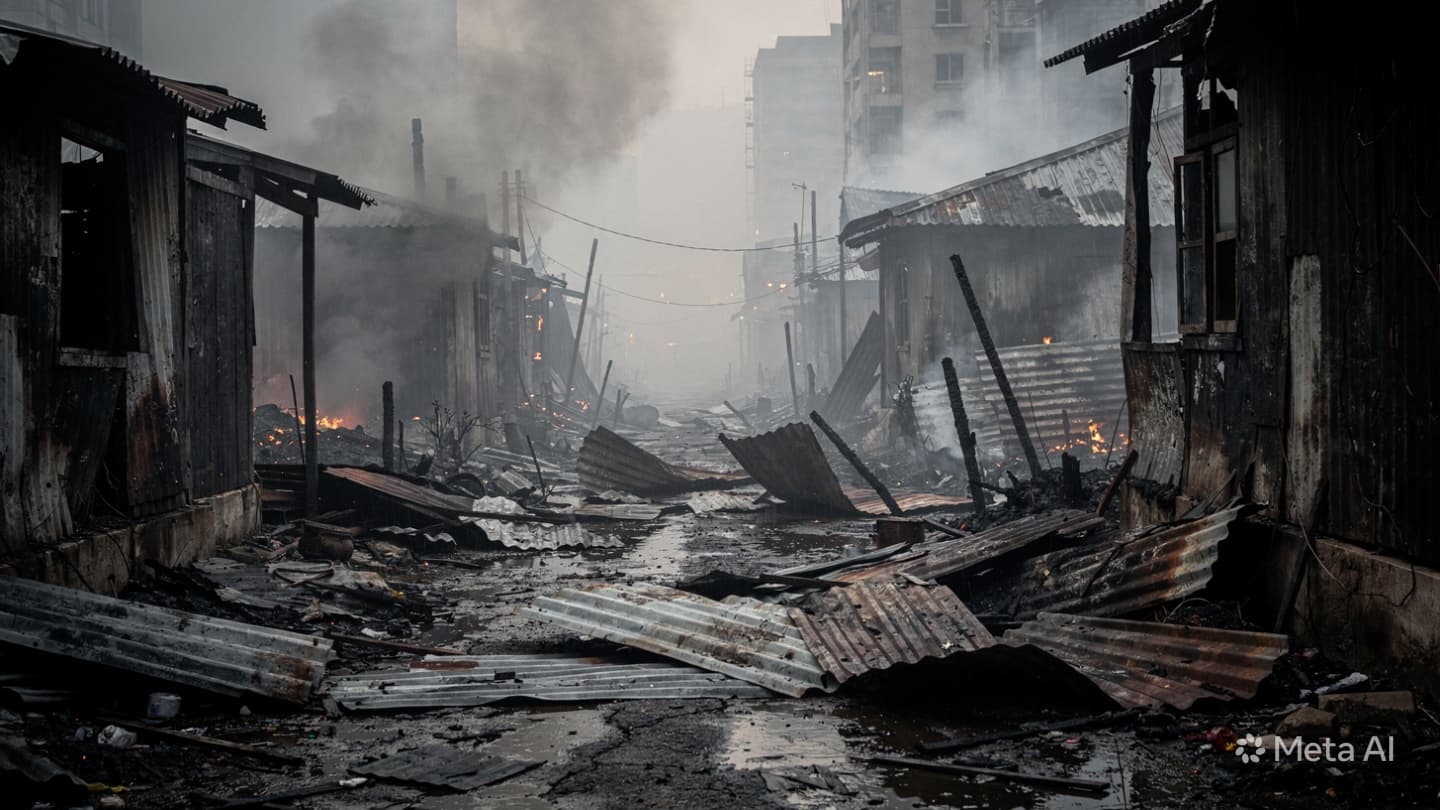
A tragic fire swept through an informal residential settlement in Jakarta, Indonesia, late Thursday night, resulting in the deaths of four family members. The blaze erupted shortly before midnight, rapidly engulfing wooden structures in a densely populated area. Firefighters faced significant challenges due to the narrow alleyways that hindered emergency access, with twenty fire engines deployed to combat the flames.
The victims were trapped inside a small two-story home at the heart of the settlement. Neighbors reported hearing desperate screams as the roof collapsed, and firefighters struggled to reach the site due to the tightly packed buildings. After two hours of battling the inferno, responders recovered the remains of two adults and two children from the wreckage.
Preliminary investigations by city electrical inspectors suggest that a faulty wiring connection in a makeshift shop may have sparked the fire. The local electrical grid is notorious for its illegal connections, with many homes tapping into overhead utility lines without proper safety measures. When the transformer overloaded, it ignited a stack of plastic crates stored along the public walkway, leading to the rapid spread of the fire.
The settlement's narrow corridors, measuring less than one meter wide, made it difficult for municipal rescue vehicles to access the fire's origin. Fire crews had to manually transport hoses over two hundred meters through thick smoke while residents evacuated with only a few personal belongings. The high density of the area allowed embers to leap across streets, igniting additional structures almost instantly.
In the aftermath, displaced families gathered at a municipal sports hall converted into an emergency shelter. Social services workers and volunteer groups provided blankets, bottled water, and medical supplies to over one hundred residents who lost their homes. Many survivors escaped with only the clothes they wore, highlighting the urgency of the situation.
The city's emergency management agency confirmed that forty-two homes were completely destroyed in the fire. The structural damage extended along the canal bank, with iron framing warped from the intense heat. Investigators are currently assessing remaining structures to ensure no hidden hot spots remain active within the debris.
Local police have cordoned off the area to allow forensic teams to safely clear the rubble. Medical examiners transported the victims to the central morgue for identification on Friday morning. Municipal officials have promised a thorough review of safety codes in the area, although similar commitments following past incidents have often resulted in minimal changes.
As the burnt district remains under close surveillance, municipal utility workers are cutting power lines to prevent further electrical hazards. Smoke continues to rise from the charred remains, revealing the full extent of the devastation. City planners are now under pressure to address the rebuilding process in an area that lacks legal residential zoning, raising concerns about future safety and compliance.
Published by Banx Network. This article is part of the Banx decentralized media programme, powered by the BXE token on the XRP Ledger.



