
Key Highlights
- Incident Date:March 17, 2026, Italy issues warnings about the Arctic Metagaz.
- Environmental Threat:The tanker is described as an 'environmental bomb' with significant fuel onboard.
- International Response:European nations are urging coordinated action to prevent a disaster.
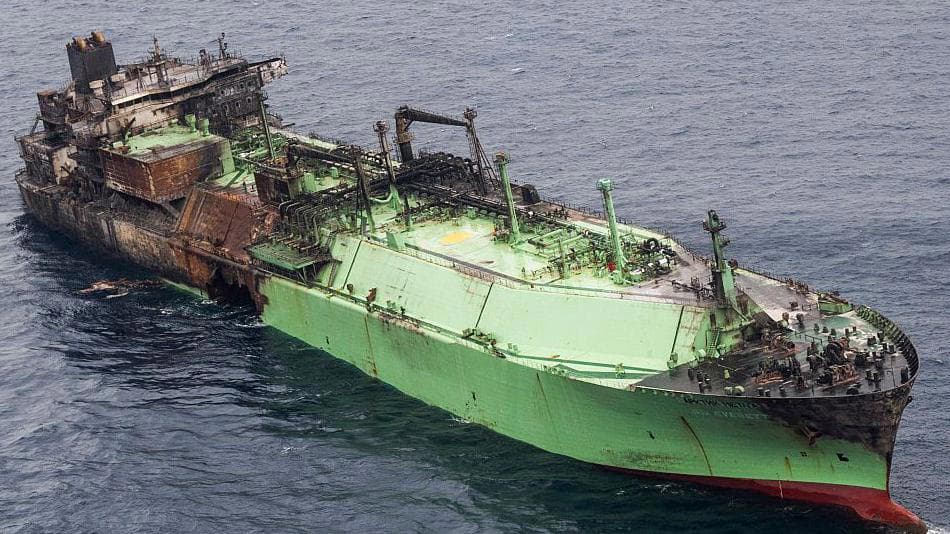
On March 17, 2026, Italy raised alarms regarding the Arctic Metagaz, a Russian liquefied natural gas (LNG) tanker that has drifted uncontrollably in the Mediterranean Sea following a suspected drone attack. The vessel, which has a substantial breach on its side and is currently unmanned, has been labeled an 'environmental bomb' by Alfredo Mantovano, the secretary of Italy's Council of Ministers. The situation has prompted urgent discussions among European nations about the potential risks involved.
The Arctic Metagaz, initially believed to have sunk, remains afloat between Malta and the Italian islands of Lampedusa and Linosa. It is now approximately 45 nautical miles from Italian territorial waters, carrying a dangerous cargo that includes significant amounts of LNG, 450 tonnes of fuel oil, and 250 tonnes of diesel. As the tanker drifts southward towards Libya, officials from both Italy and Malta are closely monitoring its trajectory to assess the potential for disaster.
This incident is set against a backdrop of escalating geopolitical tensions, particularly following Russian assertions that the vessel was damaged by Ukrainian naval drones. However, the Ukrainian government has not claimed responsibility for the attack, while Russia has labeled the incident a 'terrorist attack.' This conflicting narrative adds complexity to an already precarious situation in the Mediterranean region.
In response to the potential environmental catastrophe, multiple European nations have engaged with the European Commission, advocating for a coordinated response to mitigate the risks posed by the Arctic Metagaz. The World Wildlife Fund has also voiced concerns, warning that a spill from the tanker could lead to extensive pollution in a region renowned for its ecological significance. The Mediterranean Sea is home to diverse marine life and is a critical area for biodiversity, making the stakes particularly high.
As the condition of the Arctic Metagaz continues to deteriorate, fears of a maritime disaster are mounting. The situation calls for immediate attention and collaborative action from European governments to avert a catastrophe that could have dire implications for the Mediterranean environment. The urgency of the matter cannot be overstated, as the potential for an explosion or spill poses a significant threat not only to marine ecosystems but also to coastal communities and economies dependent on the sea.
In conclusion, the Arctic Metagaz incident serves as a stark reminder of the vulnerabilities associated with maritime transport of hazardous materials, especially in politically charged environments. The need for robust international cooperation and proactive measures is essential to safeguard the Mediterranean and its surrounding regions from the looming threat posed by the drifting tanker.
Published by Banx Network. This article is part of the Banx decentralized media programme, powered by the BXE token on the XRP Ledger.



