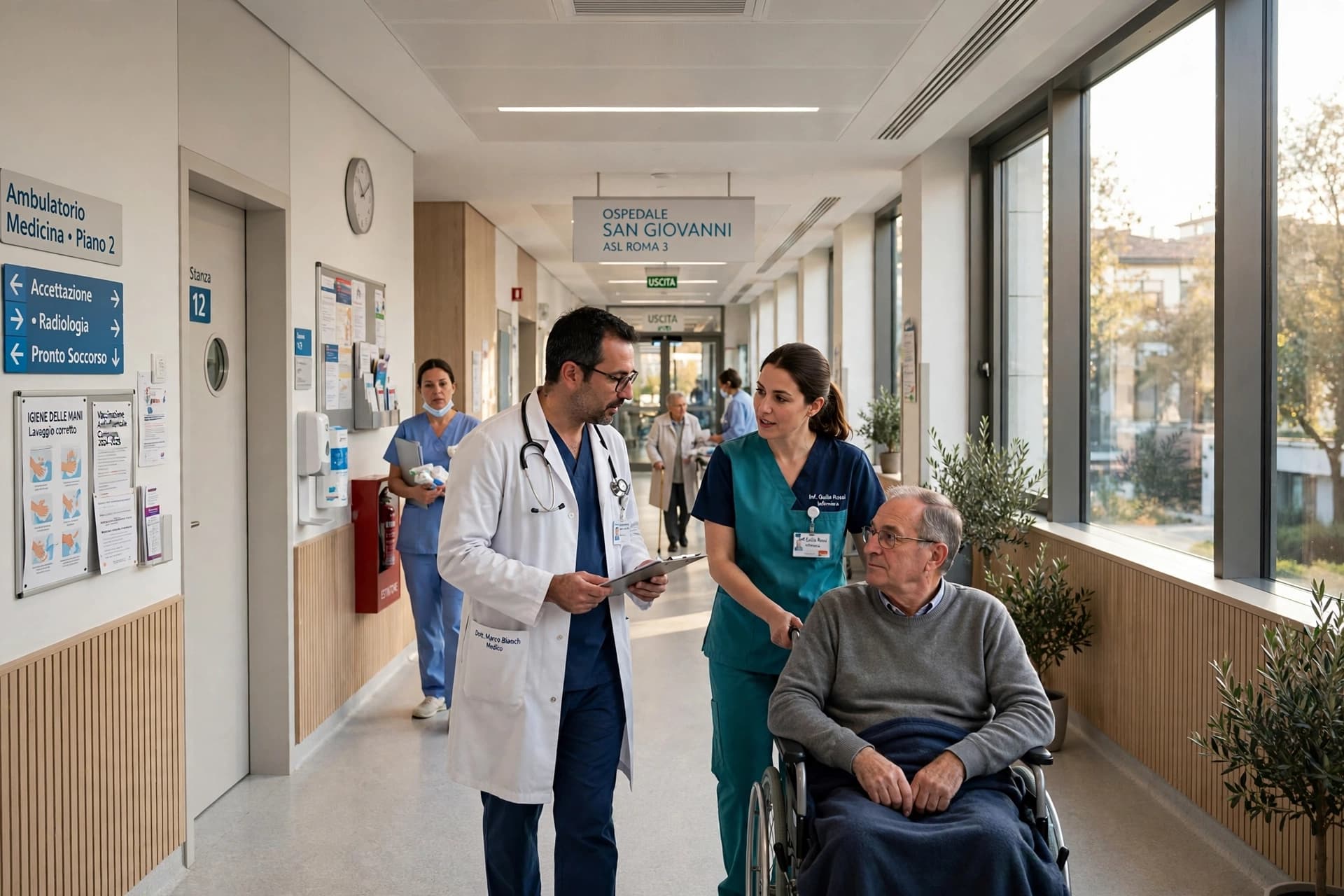
Italy’s healthcare system is facing a difficult period of reflection. The country has built a broad public health structure that remains central to everyday life, but changing demographics and rising medical needs are placing new demands on its resources. The discussion is increasingly focused not only on how much is spent, but also on how effectively support reaches people across the country.
An aging population is one of the most important factors shaping healthcare demand. Older citizens are more likely to require regular treatment, long-term care, medication, and support for chronic conditions. As life expectancy changes and family structures evolve, the responsibility for care is becoming more complex for both public institutions and households.
Healthcare spending must also respond to technological progress. New diagnostic tools, advanced treatments, digital records, and medical devices can improve outcomes, but they may require substantial investment. The challenge is to make useful innovations accessible while ensuring that resources remain available for basic and essential services.
Regional differences add another layer to the debate. Italy’s healthcare system operates across regions with varying economic conditions, infrastructure, staffing levels, and administrative capacity. As a result, patients may experience different waiting times or access to specialists depending on where they live.
The availability of medical professionals is another concern. Doctors, nurses, technicians, and other healthcare workers are essential to the system’s daily operation. When staffing levels fall short, pressure can appear through longer waiting lists, heavier workloads, and reduced capacity to provide timely care.
Public hospitals and community-based services must also adapt to changing patterns of need. Not every medical issue requires hospital treatment, but effective alternatives depend on local clinics, primary-care providers, home support, and reliable referral systems. Strengthening these connections could help reduce pressure on emergency departments and major hospitals.
For families, healthcare is closely linked to financial security. Even where public services remain available, transportation, medicines, private consultations, and time away from work can create additional burdens. The experience of a healthcare system is therefore measured not only in hospitals and budgets, but also in the daily choices households must make.
Italy’s healthcare debate is ultimately connected to the country’s broader social priorities. Investment in prevention, staffing, digital infrastructure, and regional coordination may influence how effectively the system responds to future challenges. Delays or imbalances today could become more difficult to address as demand continues to evolve.
A healthcare system is often most visible when people are vulnerable, uncertain, or in need of immediate assistance. Italy’s task is to ensure that public protection remains dependable while adapting to new realities. The question is not simply how to preserve an existing structure, but how to renew its capacity to care for a changing society.
AI IMAGE DISCLAIMER:
This article’s illustrations are AI-generated visual concepts created for editorial presentation. They do not represent exact photographs of specific patients, hospitals, or medical events.
SOURCES:
ANSA Italian Ministry of Health Italian National Institute of Statistics OECD European Commission World Health Organization
Published by Banx Network. This article is part of the Banx decentralized media programme, powered by the BXE token on the XRP Ledger.