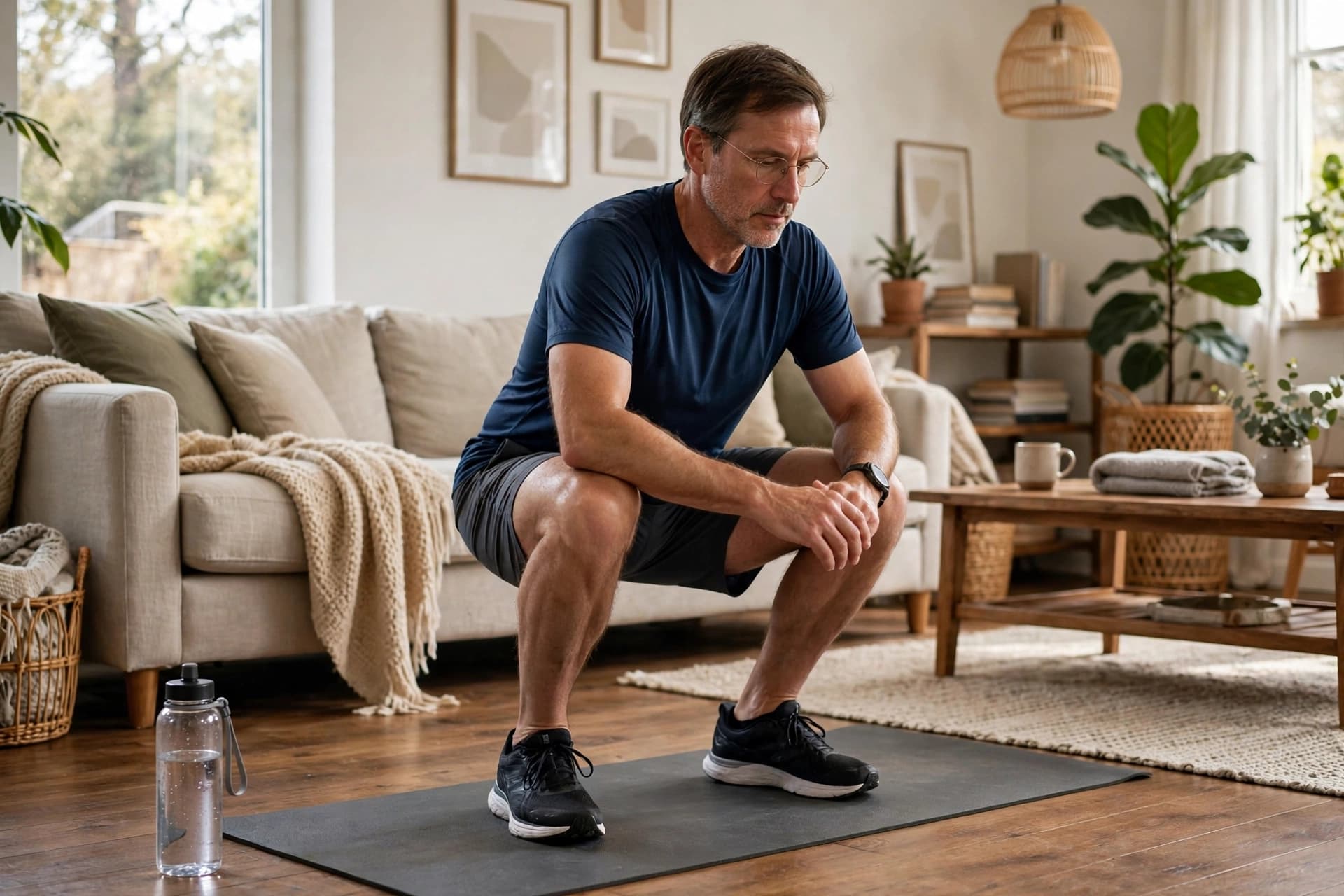
There is a particular arithmetic to aging that many people do not see until it has already been calculated in their own bodies—a slow subtraction of muscle, of strength, of the physical confidence that once felt like a given. After age 50, adults can lose muscle mass at a rate of roughly 0.5 to 1 percent per year, a process called sarcopenia, and strength may decline even faster . The result is not merely a change in appearance but a loss of function: poorer balance, slower reaction times, a greater risk of falling. And falls, for older adults, are not a minor inconvenience. Nearly 300,000 older Americans are hospitalized for hip fractures each year, and the one-year mortality rate after such a fracture is often estimated at 20 to 30 percent .
The good news, increasingly supported by research, is that the defense against this decline does not require hours in a gym. It may require only ten minutes a day. Carl Daikeler, a 63-year-old fitness entrepreneur, has spent years refining what he calls the "minimum effective dose" of exercise for adults in midlife. His recommendation is short, targeted resistance workouts at home—ten minutes a day, rotating muscle groups—rather than lengthy sessions that most people struggle to sustain . "Ten minutes a day, and you can establish and build and maintain muscle," he told Fox News Digital .
The science behind the approach is more robust than it might sound. Large cohort studies have linked regular muscle-strengthening activity to lower risk of all-cause mortality, cardiovascular disease, and some cancers in older adults . Meta-analyses show that resistance training and multicomponent exercise improve lower-limb strength, gait speed, and functional capacity—all critical factors for fall prevention . A 2022 study in Nature Medicine found that small amounts of vigorous intermittent lifestyle physical activity were associated with markedly lower cardiovascular mortality in non-exercisers . And for adults over 40, particularly women navigating menopause, a short strength routine can support metabolic health, posture, and bone density in ways that hours of cardio may not .
The practical advice is straightforward. Daikeler recommends rotating muscle groups—chest one day, upper body the next, then legs and glutes—rather than attempting a full-body workout every day . A simple routine can include slow bodyweight squats, bent-over rows with water bottles or a backpack, glute bridges on the floor, and shoulder presses with bottles or elastic bands . The key is consistency, not intensity. "Do that consistently, and you're going to find your strength return, your muscles return, your joints will start to respond appropriately," Daikeler said .
The deeper argument for this habit is not about aesthetics. It is about independence. Daikeler describes visiting his father in an assisted living facility and watching residents struggle with basic movement, relying on walkers and canes, fearing a crack in the pavement. "This is no longer about my abs," he said. "I need to work out in order to be able to walk and talk at the same time into my 90s. It's really about mobility" . Ten minutes is not a cure for aging. But it is a small, daily act of resistance against a process that otherwise accelerates. The muscle you preserve now is the mobility you keep later.
AI Image Disclaimer: The visual elements in this article were created using AI generation tools and are intended for illustrative purposes only.
Sources: Fox News, BODi, Women's Health, CDC
Published by Banx Network. This article is part of the Banx decentralized media programme, powered by the BXE token on the XRP Ledger.