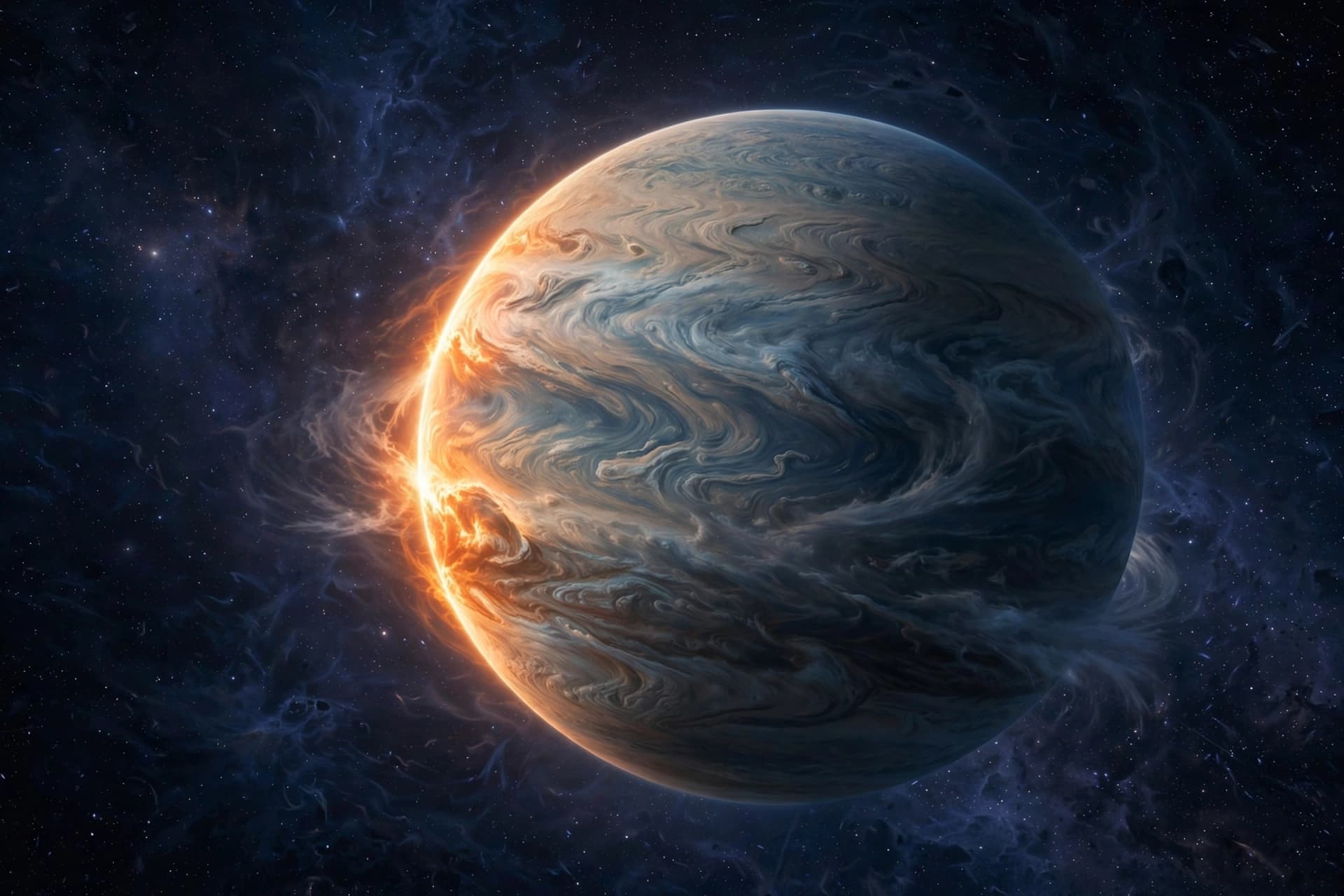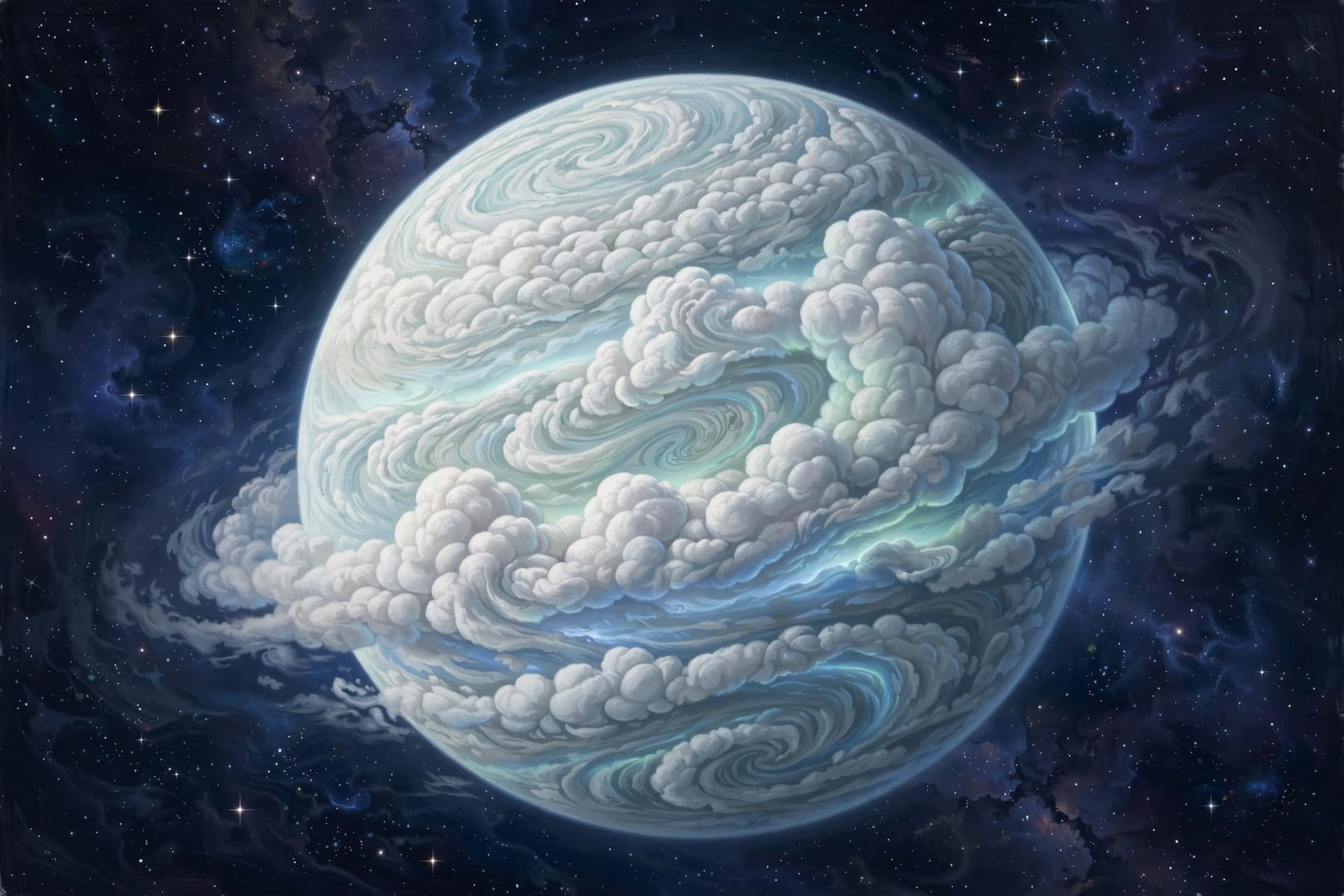
There is a particular wonder that arrives when scientists look at a world so distant and so strange that the language of everyday experience fails us. WASP-107b is one of those worlds—a gas giant so puffy and so light that astronomers have compared its consistency to a marshmallow. Now, the James Webb Space Telescope has revealed that its atmosphere contains clouds made of silicate minerals, the stuff of sand and gemstones, swirling in a cycle that mirrors Earth's water cycle but with molten rock in place of rain .
The planet is about the size of Jupiter but only a fraction of its mass, making it one of the least dense planets ever studied. This unusual fluffiness has allowed astronomers to peer deeper into its atmosphere than would normally be possible. Using Webb's infrared instruments, researchers detected water vapor, sulfur dioxide, and silicates. The presence of silicate clouds high in the atmosphere suggests a remarkable process: sand evaporates in the deeper, hotter layers, rises as vapor, and then condenses into clouds before raining back down .
This cycle is eerily familiar. On Earth, water evaporates from the oceans, forms clouds, and falls back as rain. On WASP-107b, the same principle applies, but the droplets are made of sand rather than water. As the research team explained, the sand rain droplets evaporate in the deeper layers, and the resulting silicate vapor is efficiently moved back up, where it recondenses to form clouds once more .
The discovery marks the first direct chemical analysis of clouds on a planet beyond our solar system. While clouds have been inferred on other exoplanets before, usually through climate models, this is the first time scientists have directly identified their composition . Previous studies have hinted at clouds made of rocks, gemstones like rubies and sapphires, or even titanium that reflects starlight like giant mirrors. But WASP-107b offers something new: a detailed, chemical portrait of an alien sky.
For astronomers, the findings are more than a curiosity. Understanding cloud formation on other worlds helps refine models of how atmospheres behave under extreme conditions. It also raises questions about how common such exotic cycles might be. WASP-107b is a unique laboratory, as one scientific presentation put it, offering a window into atmospheric chemistry that no laboratory on Earth could replicate . The marshmallow planet, it turns out, has a sky full of gemstones—and scientists are just beginning to understand what that means.
AI Image Disclaimer: The accompanying visual is AI-generated and does not depict the actual exoplanet or its atmospheric conditions.
Sources: Hype.aero, ZME Science, Space.com, Nature, Refractor.io
Published by Banx Network. This article is part of the Banx decentralized media programme, powered by the BXE token on the XRP Ledger.