There are grievances that build slowly, in the neglected corners of institutions—a broken toilet, a fan that does not spin, a classroom where the internet never arrives. They are small things, easily dismissed, until they are no longer small at all. In Indonesia this year, those grievances have erupted into something larger: students taking to the streets, not over ideology or national politics, but over the condition of the places where they are meant to learn.
Across the archipelago, demonstrations have become a recurring feature of student life. In Jepara, hundreds of students from SMKN 1 Kalinyamatan protested to demand better facilities—broken toilets, a computer lab without functioning equipment . In Pasuruan, students at SMA 1 Taruna Madani staged demonstrations after ceremonies, with demands that one observer described as “almost identical” to those in Jonggat: facilities they deemed unfit . The pattern repeats: students organize, banners are unfurled, and authorities respond with a mixture of promises and, at times, force.
The violence that has occasionally accompanied these protests—flames, tear gas, stun grenades—reflects a deeper breakdown. Students feel they have no channel for their concerns other than public demonstration. Schools feel they are being attacked by those they are meant to educate. And the communities that watch these confrontations unfold are left to wonder how a dispute over classrooms and toilets became a flashpoint for something far more volatile.
What makes this moment distinct is the age of those protesting. These are not university students, traditionally the vanguard of political activism in Indonesia. They are teenagers, some as young as fourteen or fifteen, organizing themselves and speaking in a language of rights and accountability that their elders might not have expected . Their grievances are concrete, but their willingness to voice them publicly suggests a generational shift—a rising expectation that institutions should respond to those they serve, not merely command them.
The government’s response has been uneven. In some cases, officials have engaged with student demands, launching investigations and holding meetings . In others, the response has been disciplinary—suspensions, character-building sanctions, and, in at least one instance, a suggestion from a provincial governor that students who mocked a teacher should be made to clean toilets as punishment . That proposal, made by West Java Governor Dedi Mulyadi, reflected a view that the problem is one of student discipline rather than institutional neglect .
But the protests have also raised uncomfortable questions about whether student movements are entirely organic or whether they are being shaped by adults with their own agendas. In Makassar, demonstrations against a school principal were followed by revelations of conflict between that principal and teachers—suggesting that student anger, however genuine, may sometimes be channeled into pre-existing disputes . The line between authentic student grievance and adult manipulation is not always clear.
For the students who have taken to the streets, the stakes are personal. They are asking for toilets that function, classrooms that are safe, and facilities that allow them to learn. Whether those demands are met with investment or suppression may determine not only the condition of Indonesia’s schools but the relationship between its young people and the institutions that shape their lives.
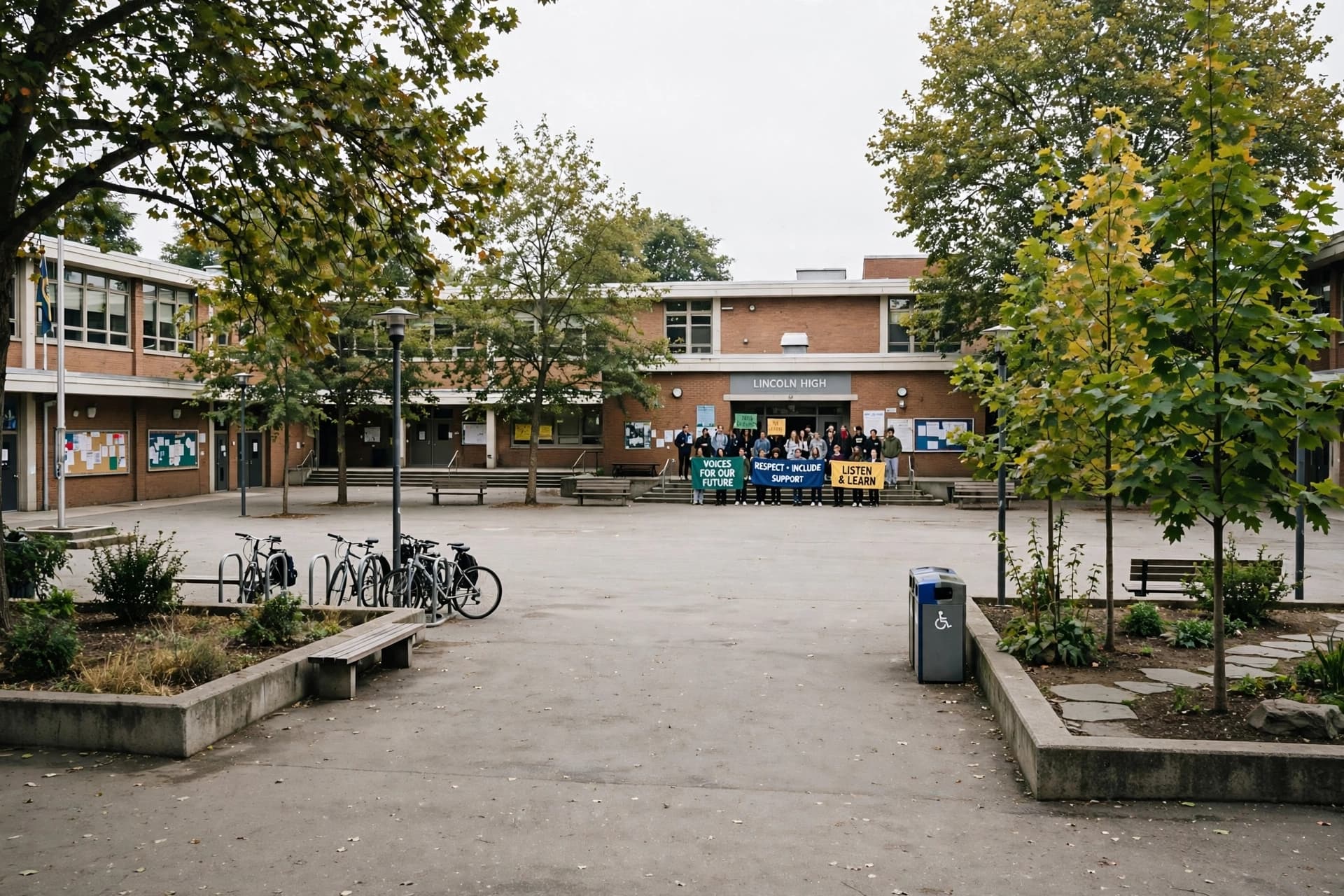
AI Image Disclaimer: Visuals in this article are AI-generated and do not depict actual events or persons.
Sources: Qolama.com, Harianmuria.com, Tribunnews.com, Detik News
Published by Banx Network. This article is part of the Banx decentralized media programme, powered by the BXE token on the XRP Ledger.