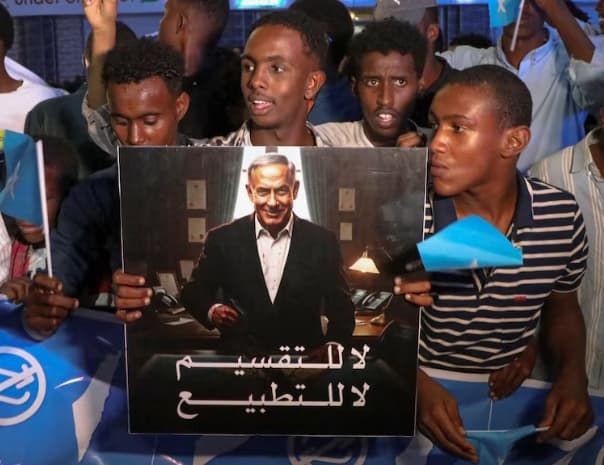
In a recent address at the United Nations, Israeli officials have robustly defended their decision to engage diplomatically with Somaliland, asserting that this move is a standalone initiative and not an attempt to divert attention from the ongoing conflict in Gaza. The remarks aim to quell growing concerns regarding Israel's intentions in the horn of Africa.
Israel's recognition of Somaliland, a self-declared independent state in northern Somalia, has raised eyebrows, particularly in the context of its complex political landscape and ongoing tensions in the Gaza Strip. Critics argue that this diplomatic outreach may serve to distract the international community from Israel's actions in Gaza amid severe humanitarian crises.
Foreign Ministry spokesperson David Cohen emphasized that Israel's involvement with Somaliland is part of a broader strategy to strengthen security and economic ties in the region. "We believe in fostering stability and partnership in Africa," Cohen stated. "Our engagement with Somaliland is about mutual benefit, not an evasion of our responsibilities elsewhere."
Despite this, many observers remain skeptical. Some argue that the timing of Israel's diplomatic outreach is suspicious, given the heightened scrutiny over its military actions in Gaza. "This could be seen as a strategic move to shift media focus and international scrutiny away from the current situation," commented political analyst Fatima Ibrahim.
Further complicating the matter is Somaliland's status, which is not internationally recognized as a sovereign nation. Israel's engagement raises questions about geopolitical alliances and the implications for regional stability.
In response to the accusations, Israeli officials assert that their commitment to the peace process in the Middle East remains steadfast. They argue that the engagement in Somaliland is separate and aimed at enhancing Israel's role in African diplomacy.
As the debate unfolds, the international community continues to monitor both the situation in Gaza and Israel's strategic movements in Africa, raising critical questions about the intertwined nature of global politics and regional conflicts. The coming days will likely reveal more about the implications of this diplomatic engagement and how it intersects with ongoing humanitarian issues.
Published by Banx Network. This article is part of the Banx decentralized media programme, powered by the BXE token on the XRP Ledger.