
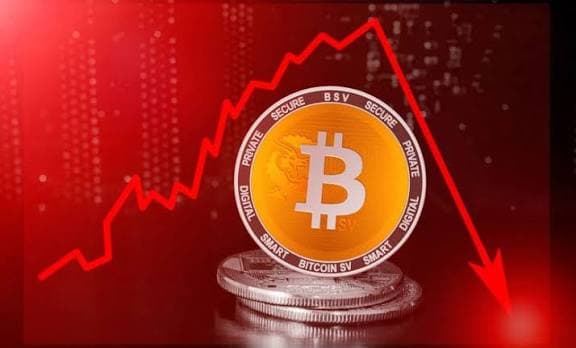
Key Highlights
- Market manipulation remains a significant concern in the crypto space.
- Liquidity challenges are exacerbated by global economic conditions.
- Investors are advised to focus on long-term fundamentals amidst volatility.
The recent volatility in the cryptocurrency market has sparked intense debate among investors and analysts alike: Are we witnessing deliberate market manipulation, or is the industry grappling with a genuine liquidity crisis? Understanding the dynamics behind these movements is crucial for anyone trying to interpret short-term price action or anticipate long-term trends.
Market manipulation has long been a concern in the crypto space, primarily due to its relatively unregulated nature compared to traditional financial markets. Large holders of cryptocurrencies, often referred to as 'whales,' institutional traders, and even project teams can significantly influence short-term price movements through coordinated buying, selling, or disseminating speculative news. Common forms of manipulation include pump-and-dump schemes, where prices are artificially inflated before a rapid sell-off, wash trading to create the illusion of trading volume, and spoofing orders that pressure the market in a specific direction. These tactics can distort market sentiment and trigger emotional trading, leading to sudden price spikes or drops.
Conversely, liquidity has emerged as a major challenge in the current market environment. Factors such as global economic uncertainty, rising interest rates, and increasing regulatory scrutiny have prompted many retail and institutional investors to reduce their exposure to risk assets, including cryptocurrencies. Key liquidity pressures include reduced trading volumes across exchanges, which leave fewer buyers and sellers to absorb large orders, capital flowing into safer investments like bonds or money market funds, and delays in new project launches that diminish overall market activity. In low liquidity conditions, even moderate sell-offs can lead to exaggerated price movements, making the market appear manipulated when it is merely responding to thin trading conditions.
The interplay between manipulation and liquidity challenges is complex. Often, the current turbulence in the market is a result of both factors. Thin liquidity environments make it easier for market movers to influence prices with relatively small amounts of capital. Consequently, investors may perceive every price fluctuation as suspicious, and in some cases, they are justified in their concerns. However, it is essential to recognize that weak liquidity is not inherently indicative of a collapsing market; it is often cyclical, influenced by macroeconomic conditions, investor sentiment, and regulatory developments.
To navigate this challenging environment more safely, investors should focus on long-term fundamentals rather than short-term price swings. Caution is advised when dealing with low-liquidity tokens that are more susceptible to manipulation. Diversifying into projects with strong utility and transparent development teams can also mitigate risks. Additionally, keeping abreast of global regulatory updates is crucial, as these often influence liquidity and institutional participation in the market.
In summary, the cryptocurrency market today is facing a complex blend of questionable price movements and structural liquidity weaknesses. While manipulation remains a concern, the broader issue lies in reduced market participation and macroeconomic uncertainty. Understanding the distinction between manipulation and liquidity challenges can help investors avoid emotional decisions and remain focused on long-term opportunities.
Published by Banx Network. This article is part of the Banx decentralized media programme, powered by the BXE token on the XRP Ledger.



