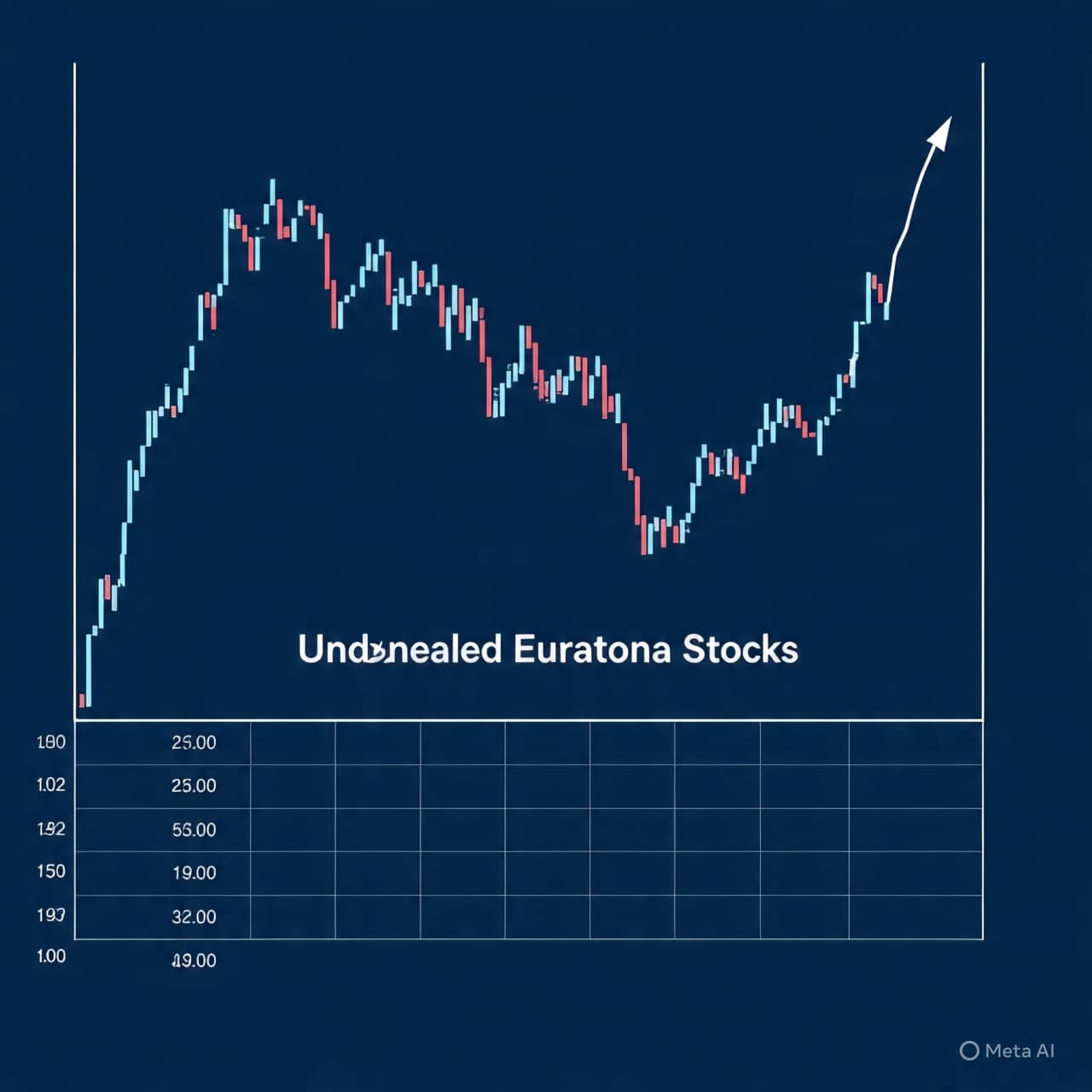
In the vast landscape of global investment, there are moments when the market’s pulse slows, and opportunities quietly emerge from the shadows. Imagine walking through a bustling marketplace where certain items are overlooked, gathering dust, while others are feverishly fought over. These overlooked treasures, much like undervalued stocks, often carry hidden potential. One such treasure trove lies within Europe, where a number of stocks are trading far below their intrinsic value. The question, however, remains: what makes these stocks so undervalued, and more importantly, how can investors recognize the opportunity before it’s too late?
The concept of intrinsic value is a fundamental pillar of investing, often compared to the true worth of a piece of art or a rare gem—its value is constant, irrespective of short-term market trends. When stocks trade significantly below this intrinsic value, they offer a potential windfall for investors who are willing to look beyond the noise of the market. With estimates placing certain European stocks up to 49.4% below their intrinsic value, it’s no wonder that many investors are beginning to take notice.
Article Body:
The phenomenon of undervaluation in European stocks can be traced to several factors, ranging from economic slowdowns to geopolitical uncertainties. European markets, which have been experiencing a series of challenges, including fluctuating economic growth and the aftermath of global disruptions, have led to several companies being traded at a steep discount. Yet, for those with a discerning eye, these undervalued stocks present a unique opportunity to acquire quality assets at a fraction of their true worth.
Among the stocks estimated to be up to 49.4% below their intrinsic value, companies in the industrial and consumer goods sectors stand out. Firms with solid revenue histories, established market positions, and strong management teams are trading far below what their fundamentals suggest. This gap often arises from short-term pessimism surrounding economic conditions or concerns about external factors such as regulation or political instability.
One such company in this category is Siemens AG. Despite its leadership in industrial automation, the stock has been trading at a significant discount compared to its long-term growth prospects. The company’s robust earnings, innovative technologies, and diversification across several industries suggest that its current stock price does not fully reflect its true worth. Similarly, Nestlé, a titan in the consumer goods sector, has also found itself undervalued. Despite its consistent revenue and strategic acquisitions, the stock remains overlooked, offering investors an opportunity to buy into a globally recognized brand at a reduced price.
Similarly, SAP, the German multinational software company, is another example of a high-quality European stock that is estimated to be significantly undervalued. Known for its enterprise resource planning (ERP) software, SAP has weathered numerous challenges in the tech space and continues to show strong growth potential. However, recent market sentiment has driven its price lower than what its future earnings and innovations suggest.
Why do these stocks remain undervalued, even when their long-term fundamentals remain strong? A primary reason lies in the overall market sentiment, which often overreacts to short-term economic news or temporary setbacks. Investors who are driven by fear or uncertainty may fail to recognize the inherent value in these stocks, leading to price discrepancies that can last for months or even years. But for those with a long-term perspective, these gaps represent buying opportunities that could yield substantial returns once the market corrects itself.
The key to capitalizing on these opportunities is patience and an understanding of the company’s intrinsic value. It requires going beyond the headlines and looking at the fundamental drivers of a company’s success—its earnings growth, competitive advantages, and market position. The undervaluation of European stocks presents a compelling case for long-term investors who are able to hold their nerve and ride out temporary market fluctuations.
Closing:
The undervaluation of European stocks, particularly those up to 49.4% below their intrinsic value, presents a rare opportunity for astute investors. While short-term market conditions may have led to price discounts, the true worth of these companies remains intact. As economic stability returns and market sentiment shifts, these undervalued stocks are likely to see a correction, offering a potential windfall for those who have the patience to wait. Investing in undervalued stocks requires a steady hand and a keen eye for long-term value, but for those willing to look beyond the temporary noise, the rewards could be significant.
AI Image Disclaimer (Rotated Wording): "Images in this article are AI-generated illustrations, meant for concept only." "Visuals are created with AI tools and are not real photographs." "Illustrations were produced with AI and serve as conceptual depictions." "Graphics are AI-generated and intended for representation, not reality." Sources: Financial Times Bloomberg Reuters The Wall Street Journal MarketWatch
Published by Banx Network. This article is part of the Banx decentralized media programme, powered by the BXE token on the XRP Ledger.