In a region where history, alliances, and security concerns are deeply connected, every military action can create waves far beyond its immediate location. The Middle East has long been a place where borders meet competing interests, and nations often find themselves carefully navigating between cooperation and caution. Iraq’s recent statement reflects this delicate balance as it responds to reports of US-Saudi military actions.
Iraq said it had no prior knowledge of the reported attacks involving the United States and Saudi Arabia, according to statements from Iraqi officials. The government’s response emphasized that Iraqi territory and institutions should not be drawn into conflicts without official coordination.
The statement comes during a period of heightened tensions across the Middle East, where military exchanges and diplomatic disagreements have increased concerns about possible wider instability. Governments in the region have been closely monitoring developments as they seek to protect national interests and maintain security.
For Iraq, the issue carries particular importance because of its geographic position and its relationships with multiple regional and international partners. The country has worked in recent years to maintain a careful approach, balancing security cooperation with efforts to preserve national independence.
Regional conflicts often create difficult choices for countries located near areas of confrontation. Iraq has previously expressed concerns about becoming a place where outside powers settle disputes, emphasizing the importance of respecting its sovereignty and avoiding further escalation.
The broader situation also highlights the complicated network of relationships that shape Middle Eastern politics. Partnerships between countries can provide security cooperation, but they can also create diplomatic challenges when tensions rise between different actors.
International observers continue to watch how governments respond to military developments and whether diplomatic channels can help reduce tensions. Statements from countries such as Iraq often become important indicators of how regional governments view unfolding events.
Beyond immediate political reactions, the situation reflects a larger question facing many nations: how to maintain stability when conflicts between powerful actors create pressure across borders. Diplomacy, communication, and careful decision-making remain central tools in managing these challenges.
As events continue to develop, Iraq’s position underscores the importance of national sovereignty and regional dialogue. In a landscape shaped by uncertainty, governments across the Middle East continue searching for ways to protect security while preventing further expansion of conflict.
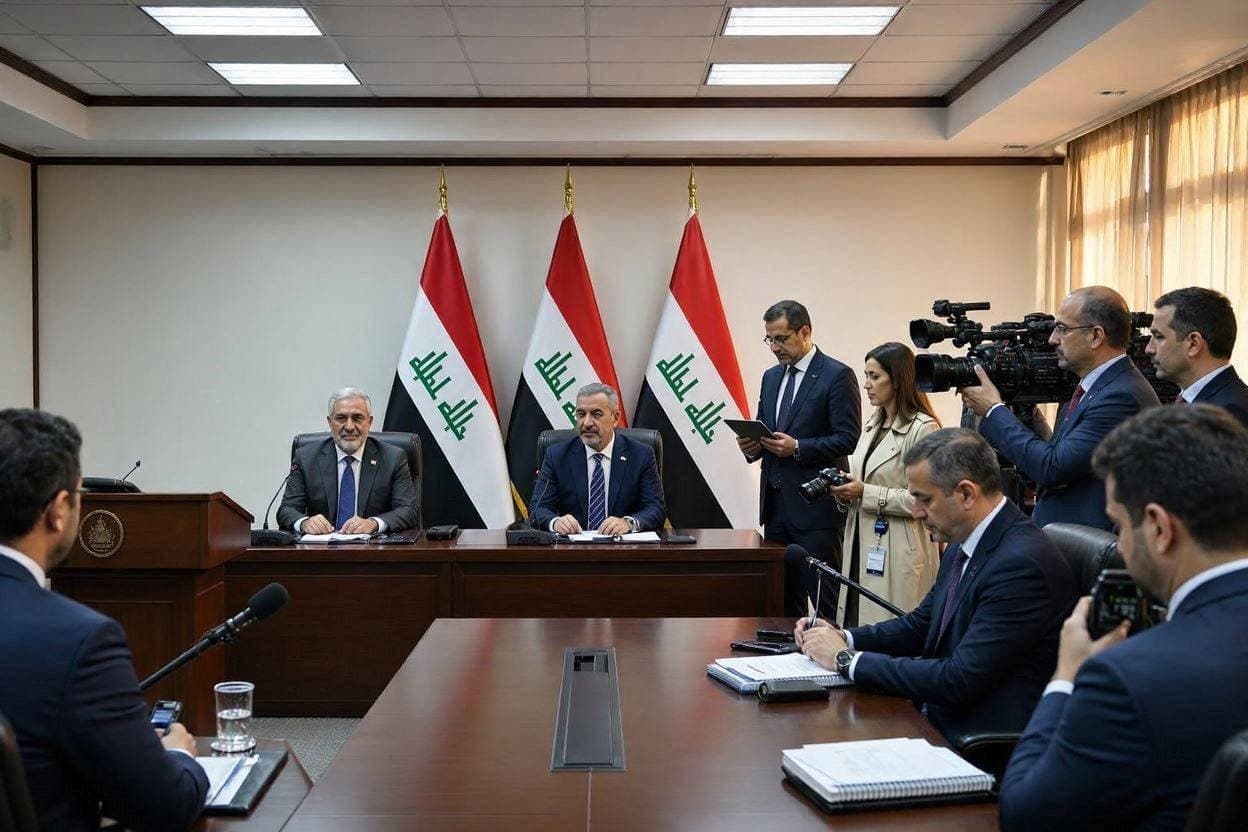
AI Image Disclaimer: The images accompanying this article are AI-generated illustrations depicting diplomatic discussions, regional security meetings, and Middle East political landscapes. They are conceptual representations and are not actual images of the events.
Sources:
Reuters Associated Press BBC News Al Jazeera The Guardian
Published by Banx Network. This article is part of the Banx decentralized media programme, powered by the BXE token on the XRP Ledger.