

Key Highlights
- Incident Date:Three U.S. F-15E Strike Eagles were shot down on March 1, 2026.
- Casualties:All six aircrew members ejected safely and were recovered.
- Operational Context:The jets were supporting Operation Epic Fury against Iranian military assets.
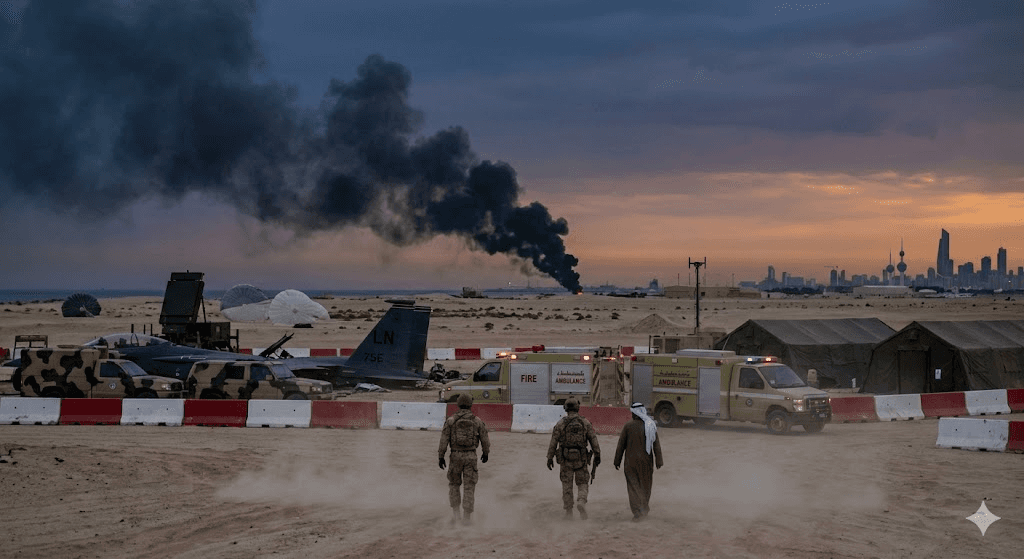
In a significant escalation of military tensions in the Gulf region, three U.S. Air Force F-15E Strike Eagle fighter jets were shot down over Kuwait on March 1, 2026. This incident, confirmed by U.S. Central Command (CENTCOM), occurred during active combat operations involving Iranian aircraft, missiles, and drones. The situation highlights the increasing dangers faced by U.S. forces in a rapidly evolving conflict landscape.
Iranian state media claimed responsibility for the downing of a U.S. fighter jet, but CENTCOM clarified that the aircraft were mistakenly engaged by Kuwaiti air defenses in a tragic friendly fire incident. Fortunately, all six aircrew members successfully ejected and were recovered in stable condition. This incident underscores the complexities and risks inherent in modern warfare, particularly in a region where multiple actors are engaged in combat.
The friendly fire incident raises critical questions about the effectiveness of air defense systems under pressure. Kuwaiti authorities have acknowledged the mishap and are cooperating with U.S. officials to investigate the circumstances surrounding the incident. The jets were part of Operation Epic Fury, a multinational effort aimed at targeting Iranian military assets, and were misidentified by Patriot and other air defense systems amidst a barrage of incoming threats.
Experts emphasize that such incidents are more likely to occur in chaotic battle environments where radar signatures can overlap, leading to rapid misidentifications. The recent deployment of advanced air defense systems, including Patriot missiles, by regional governments reflects the urgent need to counter Iranian ballistic missiles and drones targeting U.S. bases and allied infrastructure. However, the downing of the F-15s illustrates the inherent risks of operating in a high-threat environment where misidentifications can have dire consequences.
The incident has raised alarms in Washington and among U.S. allies, as it highlights the vulnerabilities of U.S. air operations amid escalating hostilities. Analysts warn that enhanced precautions and improved communication protocols are essential to prevent future friendly fire incidents as the conflict continues to evolve. The situation remains fluid, and the international community is closely monitoring developments in the region as tensions between the U.S., Israel, and Iran escalate further.
Published by Banx Network. This article is part of the Banx decentralized media programme, powered by the BXE token on the XRP Ledger.




