
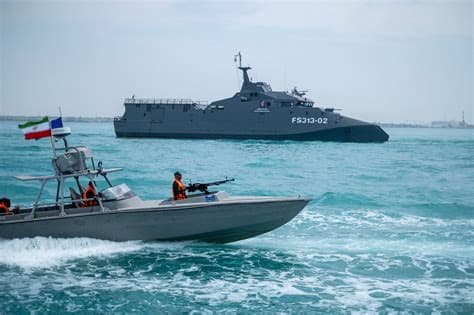
Key Highlights
- Incident:Iran's attack on a vessel in the Gulf of Oman prompted the UN to pause evacuation efforts.
- Evacuation Plan:The IMO's initiative aimed to assist around 11,000 seafarers affected by the closure of the Strait of Hormuz.
- Safety Concerns:The IMO is reassessing safety guarantees for vessels in the region following the attack.
The United Nations' International Maritime Organization (IMO) has temporarily suspended its evacuation efforts for ships and crews stranded due to the closure of the Strait of Hormuz. This decision follows an attack on a vessel in the Gulf of Oman, which has raised significant safety concerns for maritime operations in the region.
IMO Secretary-General Arsenio Dominguez confirmed that a vessel had passed through the Strait of Hormuz before being struck by an “unknown projectile” in the Gulf of Oman. In light of this incident, Dominguez stated that the organization would “temporarily pause its implementation” of the evacuation plan until safety guarantees for the ships on the IMO evacuation list could be reconfirmed.
Reports from a UK maritime tracking operation indicated that the cargo vessel sustained damage to its bridge due to the attack, although no casualties were reported. The identity of the ship has not been disclosed, adding to the uncertainty surrounding the incident.
In a related development, Iran issued a warning regarding the safety of vessels navigating outside routes approved by the Islamic Republic. Iranian authorities stated that such vessels “will be dealt with accordingly,” further complicating the UN-backed evacuation plan amid ongoing tensions between the US and Iran regarding maritime security in the region.
The IMO's evacuation initiative, which was announced earlier in the week, aimed to assist approximately 11,000 seafarers trapped due to the closure of the Strait of Hormuz. The plan had begun to roll out at the start of the week, with some ships already transiting before the attack prompted the pause in operations.
The Strait of Hormuz is a critical maritime corridor, with a significant percentage of the world's oil supply passing through it. The recent escalation of hostilities in the region underscores the fragile security situation and the potential for further disruptions to maritime trade. As the IMO reassesses its evacuation strategy, the international community is closely monitoring developments to ensure the safety of seafarers and the stability of shipping routes.
Published by Banx Network. This article is part of the Banx decentralized media programme, powered by the BXE token on the XRP Ledger.



