
Key Highlights
- Iran openly ridicules EU's Kaja Kallas' calls for reopening the Strait of Hormuz.
- Iranian officials assert territorial rights amid regional tensions.
- The Strait of Hormuz remains a critical route for global oil shipments.
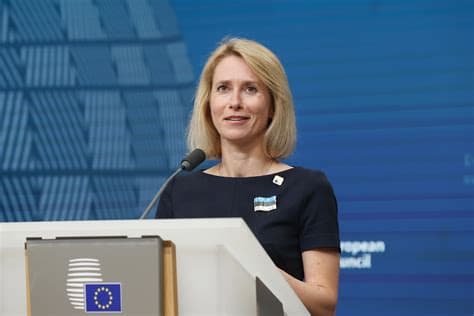
The Iranian government has openly ridiculed the recent statements made by Kaja Kallas, the European Union's top diplomat, who urged for the reopening of the Strait of Hormuz and adherence to international law. Iranian officials responded by questioning the effectiveness of such calls, emphasizing the ongoing tensions in the region and Iran's strategic interests in this vital maritime corridor.
In her remarks, Kallas highlighted the importance of maintaining free and safe passage through the Strait of Hormuz, a critical route for global oil shipments. However, Iranian authorities dismissed her statements, suggesting that they reflect a lack of understanding of the complexities surrounding the region's geopolitical landscape. An Iranian official stated, "Iran will not be dictated to by external powers regarding our rights in our own waters," underscoring Tehran's commitment to asserting its territorial sovereignty while navigating pressures from the international community.
The Strait of Hormuz has long been a flashpoint for tensions, especially given its significance for oil transportation. The waterway is a crucial passage for approximately 20% of the world's oil supply, making it a strategic asset for both Iran and global energy markets. Iran's maritime activities, including military exercises and confrontations with foreign vessels, have heightened concerns about security in the area, prompting responses from international actors advocating for stability.
Iran's dismissal of Kallas’ appeals may reflect its broader strategy of projecting strength and resilience against perceived external pressures. The Iranian leadership appears to be leveraging the situation to reinforce its domestic narrative of sovereignty and resistance against foreign intervention. As geopolitical dynamics continue to evolve, the situation in the Strait of Hormuz remains critical for global energy security, necessitating ongoing dialogue and negotiation among involved parties.
The Iranian government’s stance signals a complex interplay of defiance and strategic posturing, raising questions about future maritime safety and the role of international diplomacy in mitigating conflict in one of the world's most crucial waterways. As tensions simmer, calls for negotiation and adherence to international norms grow ever more significant, highlighting the delicate balance between national interests and global stability.
Published by Banx Network. This article is part of the Banx decentralized media programme, powered by the BXE token on the XRP Ledger.



