
Key Highlights
- Agreement Reached:Iran and Oman have finalized geographical coordinates for a maritime route through the Strait of Hormuz.
- Joint Management:The two nations are working on arrangements for jointly managing the passage.
- Ongoing Concerns:Iran's foreign ministry warns that the strait remains unsafe due to external factors, particularly actions by the United States.
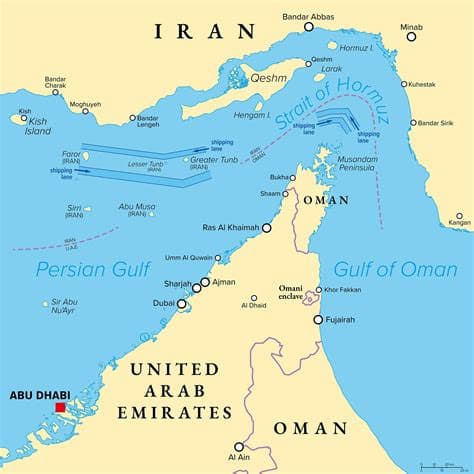
Iran has announced that it and Oman have reached an agreement on the geographical coordinates for a maritime route through the strategically vital Strait of Hormuz. This agreement, confirmed by Tehran’s foreign ministry, marks a significant step in enhancing navigation safety in one of the world’s busiest shipping lanes. The spokesman for the ministry, Esmaeil Baqaei, stated that the two countries are in the process of finalizing arrangements for jointly managing the passage, which is crucial for international trade and energy supplies.
The Strait of Hormuz is a narrow waterway that connects the Persian Gulf with the Gulf of Oman. It is a critical chokepoint for global oil shipments, with approximately 20% of the world's oil passing through it. The agreement between Iran and Oman comes amid heightened tensions in the region, particularly concerning maritime security and the presence of foreign naval forces. Baqaei emphasized that while the understanding is a positive development, it does not guarantee the safety of all vessels transiting the strait.
In his remarks, Baqaei attributed ongoing security concerns to actions taken by the United States, including what he described as a naval blockade. He indicated that these external pressures continue to pose risks to maritime navigation in the region. The Iranian government has been vocal about its opposition to foreign military presence in the Gulf, viewing it as a destabilizing factor that complicates regional security dynamics.
The joint statement detailing the main points of the agreement is still being drafted, and further discussions are expected to take place in the coming weeks. This collaboration between Iran and Oman reflects a broader trend of regional countries seeking to enhance their security cooperation in the face of external threats. Both nations have historically maintained a cordial relationship, and this agreement could pave the way for more extensive maritime cooperation in the future.
As the situation develops, the international community will be watching closely to see how this agreement impacts shipping routes and regional stability. The Strait of Hormuz remains a focal point for geopolitical tensions, and any changes in its management could have far-reaching implications for global trade and energy markets.
Published by Banx Network. This article is part of the Banx decentralized media programme, powered by the BXE token on the XRP Ledger.



