
Key Highlights
- Iranian President Masoud Pezeshkian asserts resistance to U.S. pressure.
- Tensions escalate with significant U.S. military presence in the Gulf.
- Ongoing nuclear negotiations face challenges amid geopolitical uncertainty.
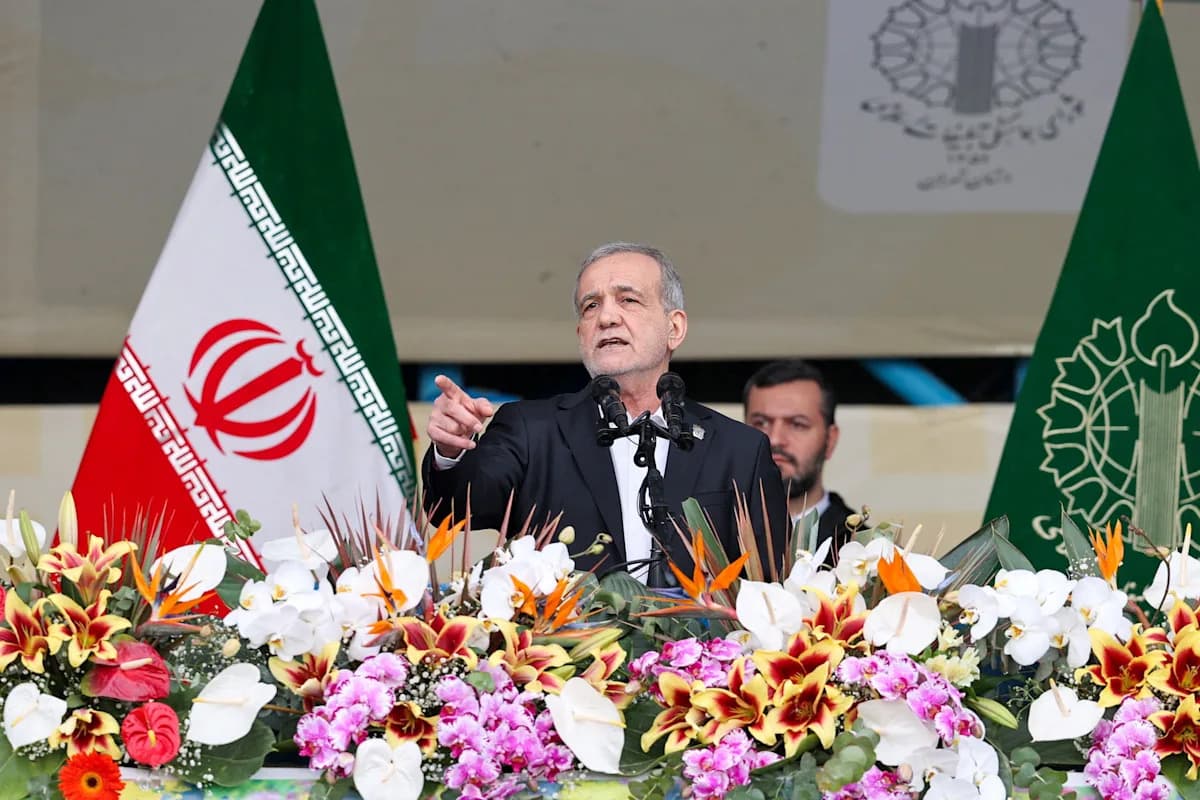
Iranian President Masoud Pezeshkian recently delivered a defiant speech asserting that Iran will not submit to pressures from global powers, particularly the United States. His remarks come at a time of heightened tensions surrounding nuclear negotiations, where he emphasized, "World powers are lining up to force us to bow our heads. But we will not bow our heads despite all the problems that they are creating for us."
These statements were made against the backdrop of increased military activity in the Gulf region, where the United States has deployed significant resources, including two aircraft carriers and over 120 fighter jets. This military buildup represents the largest U.S. presence in the area since the invasion of Iraq in 2003, raising concerns about potential conflict.
The urgency of the situation is underscored by a deadline set by former President Donald Trump, who warned Iran to reach a nuclear deal within approximately ten days or face severe consequences. Trump's aggressive rhetoric has intensified the U.S. stance as it seeks leverage in negotiations regarding Iran's nuclear program, which has been a point of contention for years.
Despite the resumption of indirect talks earlier this month, no significant breakthroughs have been reported. Iranian officials, however, remain hopeful for a diplomatic resolution. Foreign Minister Abbas Araghchi has indicated that a draft deal could be finalized soon, although the path forward remains fraught with challenges.
Domestically, the Iranian populace is increasingly anxious about the implications of potential military conflict. Many citizens fear the repercussions of escalating geopolitical tensions, which have been exacerbated by recent protests against the Iranian regime. This environment of uncertainty has placed additional pressure on the government to navigate the complex landscape of international relations while addressing domestic concerns.
Pezeshkian's statements reflect Iran's commitment to maintaining its sovereignty and resisting external demands, even as diplomatic efforts continue amid military threats. The international community is closely monitoring the situation, recognizing the risks of further escalation in an already volatile region. As the deadline for negotiations approaches, the stakes are high for both Iran and the United States, with the potential for significant consequences on the global stage.
Published by Banx Network. This article is part of the Banx decentralized media programme, powered by the BXE token on the XRP Ledger.



