
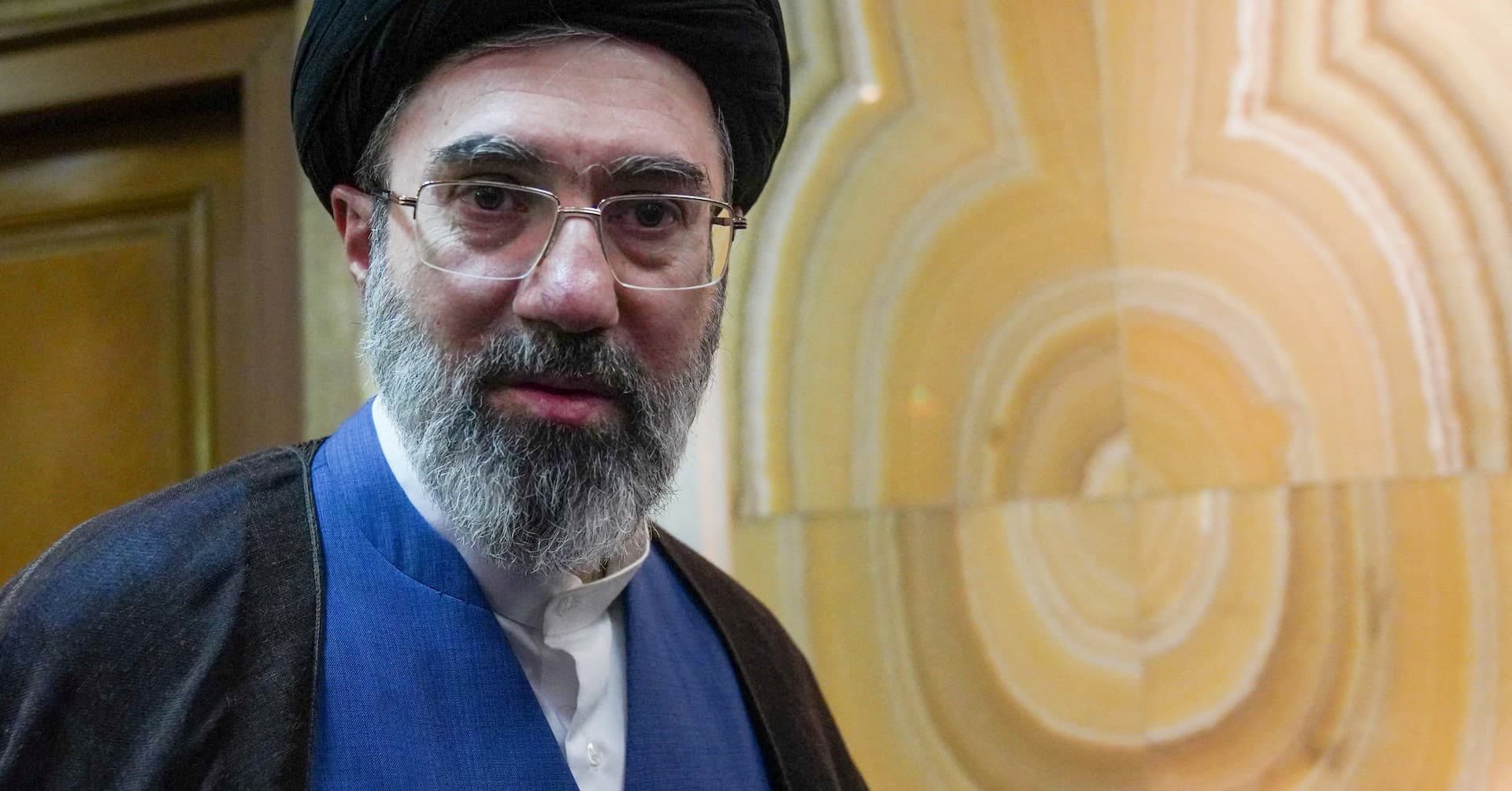
Key Highlights
- New Leader:Mojtaba Khamenei appointed as Iran's supreme leader.
- Public Reaction:Mixed feelings and protests emerge across the country.
- Revolutionary Guards:Their influence remains strong in the new regime.
On March 1, 2026, Iranian authorities announced the appointment of Mojtaba Khamenei as the new supreme leader of Iran, following the passing of his father, Ayatollah Ali Khamenei, during a US-Israeli military operation. This significant transfer of power occurred with minimal public engagement from Mojtaba, whose visibility has largely been confined to state-sponsored events.
Mojtaba's ascent is closely linked to the Islamic Revolutionary Guard Corps (IRGC), which has been instrumental in supporting his rise. Despite his silence on major issues, Iranian state media has highlighted endorsements from various hardline factions within the government, praising him for his loyalty and revolutionary credentials. This backing underscores the IRGC's pivotal role in shaping Iran's political landscape.
While official media portray a celebratory atmosphere surrounding Mojtaba's leadership, the general public's response has been more complex. Reports indicate that protests have erupted in various parts of the country, with citizens expressing dissent against the regime and mourning the loss of the previous leader. This public sentiment reflects a growing discontent with the ruling authorities, raising questions about the stability of Mojtaba's leadership.
Analysts suggest that Mojtaba's rise signals a continuation of hardline policies, particularly in terms of resistance against external pressures. His leadership is expected to exacerbate concerns regarding internal repression and external aggression, especially given the ongoing military tensions in the region. The international community is closely monitoring these developments, as they may influence diplomatic relations and regional stability.
As Iran navigates this leadership transition, the influence of the Revolutionary Guards remains substantial. Sources indicate that the Guards have reinforced their operational decision-making structure to maintain a unified front amid challenges both domestically and internationally. This consolidation of power within the IRGC could have significant implications for Iran's future direction.
The implications of Mojtaba's leadership for Iran's domestic and foreign policies will be closely scrutinized. As the balance of power within the regime shifts, the likelihood of diplomatic engagement or heightened conflict remains uncertain. Observers are keen to see how Mojtaba will navigate the complexities of governance in a time of unrest and international scrutiny.
Published by Banx Network. This article is part of the Banx decentralized media programme, powered by the BXE token on the XRP Ledger.



