

Key Highlights
- Iran's IRGC and Hezbollah launched missile strikes on Israel's heartland.
- The coordinated assault involved long-range missiles and projectiles from Lebanon.
- Israeli defense systems intercepted many missiles, but some damage was reported.
TEL AVIV / BEIRUT / TEHRAN — In a significant escalation of the ongoing conflict in the Middle East, Iran’s Islamic Revolutionary Guard Corps (IRGC), in coordination with Hezbollah, has launched a wave of missile strikes targeting central and northern Israel. This operation marks a notable shift in the dynamics of the conflict, as both groups have intensified their military actions against Israel.
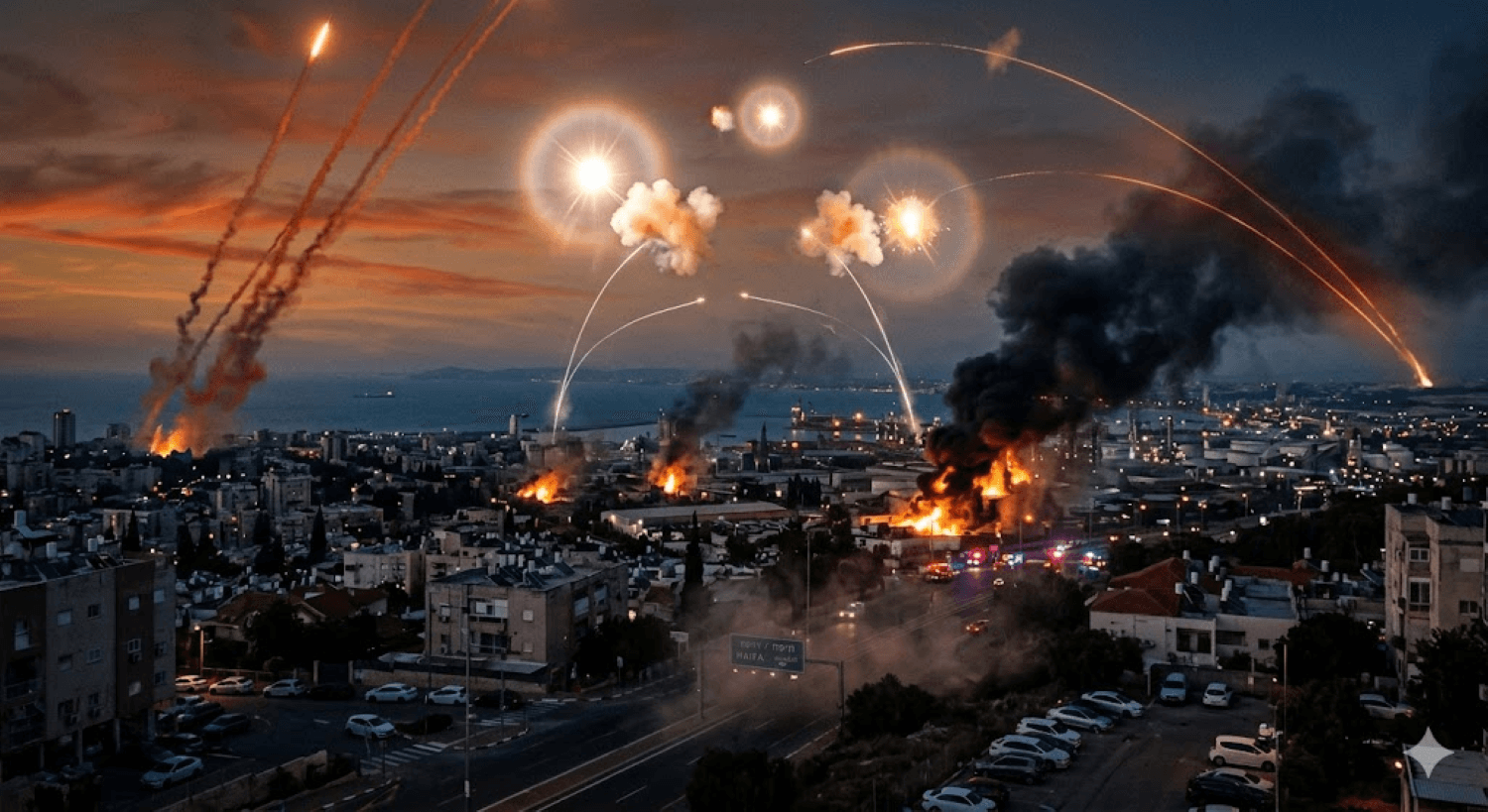
Reports from Iranian state-linked media describe the operation as a “joint” or “integrated” assault, utilizing both long-range Iranian missiles and projectiles fired by Hezbollah from southern Lebanon. Air raid sirens were activated across large parts of Israel as missiles were launched toward key population centers and strategic infrastructure. Major cities in central Israel, as well as northern regions like Haifa and the Galilee, were among the targets, reflecting a dangerous escalation in hostilities.
Israeli defense systems managed to intercept many of the incoming projectiles; however, some missiles did manage to hit their targets. Notably, a missile strike caused damage to an oil refinery in Haifa, leading to brief disruptions in power supplies in the surrounding area. This incident underscores the increasing risk to critical infrastructure as the conflict escalates.
Hezbollah has significantly ramped up its military involvement, launching thousands of rockets and missiles at Israel since the conflict intensified. Reports indicate that some days have seen sustained barrages exceeding 100 projectiles, with attacks reaching deeper into Israeli territory, including areas near Tel Aviv. This expansion of the geographic scope of Hezbollah's attacks signals a new phase in the conflict, where the group is no longer limited to border skirmishes.
The IRGC has also showcased its growing military capabilities, deploying increasingly advanced missile systems in successive waves of attacks. This development not only highlights Iran's military advancements but also its intent to widen the scope of the conflict beyond its borders. Iranian officials have framed these strikes as retaliation for Israeli and U.S. military operations targeting Iranian infrastructure and leadership, including recent attacks on energy facilities and military sites.
The coordinated assault represents a significant shift from proxy engagements to more direct and synchronized operations between Iran and its regional allies. Analysts warn that the scale and coordination of these attacks could risk escalating the conflict into a broader regional war involving multiple state and non-state actors. The ongoing exchange of missile fire has placed millions of civilians in jeopardy, disrupted critical infrastructure, and raised concerns over global energy stability, particularly as strikes increasingly target oil and gas facilities.
In response, Israel has intensified its airstrikes targeting Hezbollah positions in Lebanon and Iranian-linked assets across the region. Israeli officials have vowed to continue their operations until the threat posed by these coordinated attacks is neutralized. With both sides signaling a readiness for further escalation, diplomatic efforts to contain the conflict remain limited, raising fears that the region is edging closer to a prolonged and wider war.
Published by Banx Network. This article is part of the Banx decentralized media programme, powered by the BXE token on the XRP Ledger.




