In times of mourning, even the most fractured families often find a brief respite in shared grief. For Iran’s political leadership, the funeral of a senior official or religious figure serves as a stage for displaying unity. Yet, beneath the solemn rituals and coordinated speeches, deep ideological and strategic divisions persist. This juxtaposition of public solidarity and private discord highlights the complex dynamics within the Islamic Republic, where survival often depends on balancing competing factions while maintaining a facade of cohesion.
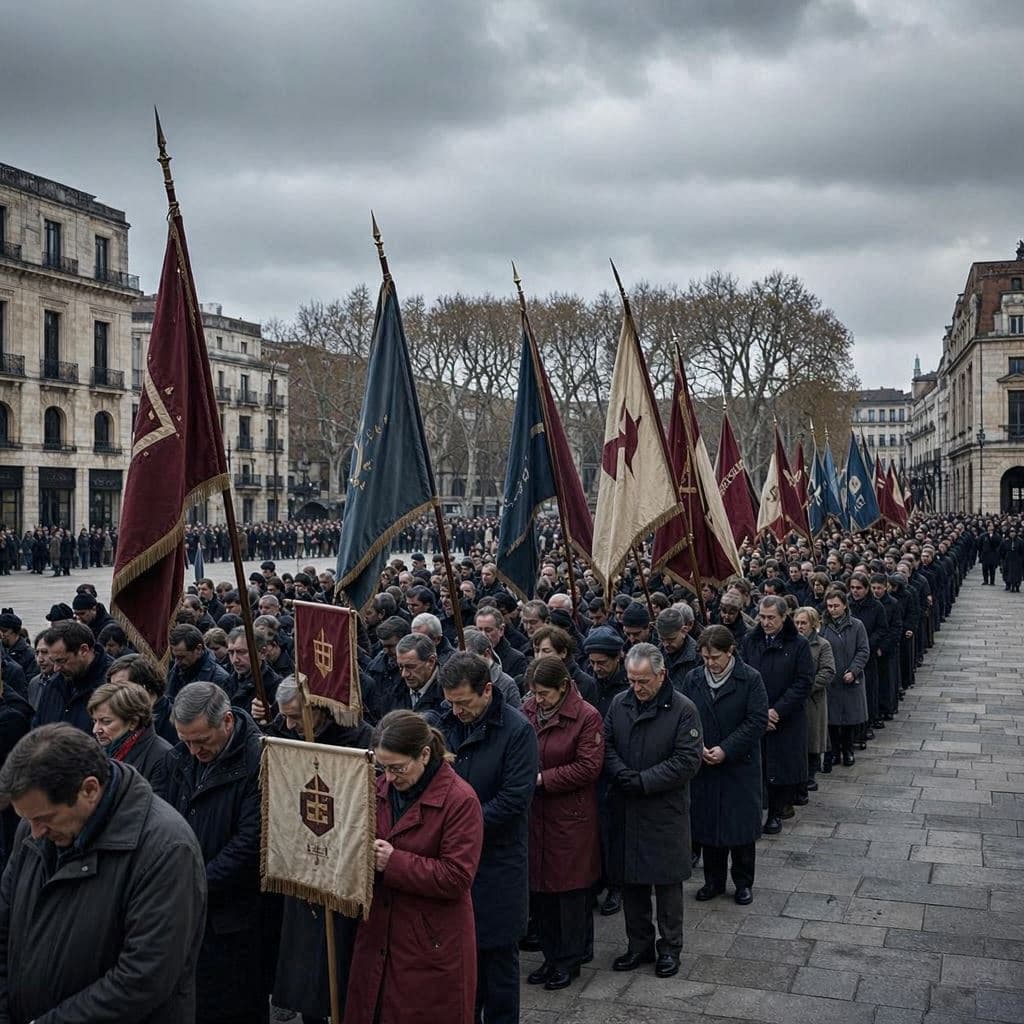
Body: The funeral proceedings were marked by large crowds and high-profile attendance, including President Masoud Pezhaei and Supreme Leader Ayatollah Ali Khamenei. Such events are carefully choreographed to project strength and stability to both domestic and international audiences. The presence of rival factions side by side suggests a temporary truce, a momentary suspension of political maneuvering in respect for the deceased. However, analysts note that these displays are often superficial, masking underlying tensions that influence policy decisions.
Iran’s political landscape is characterized by a struggle between hardliners, who advocate for strict adherence to revolutionary principles and resistance against Western influence, and pragmatists, who seek economic relief and diplomatic engagement. Recent elections and policy debates have exposed these fault lines, particularly regarding relations with the West and management of the economy. The funeral setting provides a neutral ground where these groups can coexist publicly, but it does not resolve their fundamental disagreements.
The death of key figures often triggers a reshuffling of power, as different factions vie for influence in the vacuum left behind. While the immediate response is one of collective mourning, the subsequent period is often marked by intense behind-the-scenes negotiations and positioning. The unity seen at the funeral is thus a transitional phase, a pause before the next chapter of political competition begins. Understanding this cycle is crucial for interpreting Iran’s internal dynamics.
International observers watch these events closely for clues about future direction. A show of unity might signal a consolidated front against external pressure, while visible cracks could indicate vulnerability. However, the Iranian leadership is adept at managing perceptions, ensuring that public displays remain orderly regardless of internal strife. This ability to maintain control is a testament to the regime’s resilience, even amidst significant challenges.
The role of the Supreme Leader remains central in mediating these divisions. Ayatollah Khamenei acts as the ultimate arbiter, balancing the interests of various power centers, including the military, the judiciary, and the elected government. His authority helps prevent open conflict, but it does not eliminate the friction. The funeral serves as a reminder of his pivotal role in holding the system together, even as differences simmer below the surface.
Public sentiment also plays a part in this dynamic. While the state projects unity, many Iranians face economic hardships and social restrictions that fuel discontent. The gap between the elite’s ceremonial solidarity and the people’s daily struggles can widen trust deficits. For the leadership, managing this disconnect is as important as navigating internal political rivalries. The funeral, therefore, is not just a political event but a social one, reflecting broader societal tensions.
As the mourning period ends, the focus will shift back to governance and policy. The divisions that were masked will reemerge, influencing decisions on nuclear negotiations, regional proxy conflicts, and domestic reforms. The momentary unity of the funeral will fade, replaced by the usual push and pull of Iranian politics. Yet, the ritual itself remains a powerful symbol of the system’s endurance.
Closing: The funeral of a senior Iranian figure showcased a moment of public unity among the country’s leaders, despite deep-seated political divisions. This display highlights the complex interplay of factionalism and cohesion within the Islamic Republic. As mourning gives way to politics, the underlying tensions will once again shape Iran’s domestic and foreign policies.
AI Image Disclaimer: The images associated with this article are AI-generated interpretations designed to visualize the context of political mourning and leadership.
Sources: Reuters Al Jazeera BBC News The New York Times
Published by Banx Network. This article is part of the Banx decentralized media programme, powered by the BXE token on the XRP Ledger.